Litter-Robot EVO: Is the $599 Compact Model Worth It?
Whisker retired the Litter-Robot 3, the machine we ran for five years, and slotted the compact EVO into the entry tier at $599. We haven’t run one — here’s the research verdict on the successor, and exactly what it gives up against the Litter-Robot 4.
Some links below are affiliate links. If you buy through them, MeowTested may earn a small commission at no extra cost to you, including as an Amazon Associate, where we earn from qualifying purchases, and as a partner of Whisker, the maker of Litter-Robot. We only recommend products that pass our Fit Analysis — and we publish the ones that don't.
Up front, the honest framing: we haven’t run a Litter-Robot EVO. What we have run — for five years, bought refurbished — is the machine the EVO just replaced: our Litter-Robot 3 long-term review is the first-hand context behind this page, and the verdict itself is built from spec sheets, Whisker’s own comparison chart, and early owner reports. Read it that way.
The research verdict: the EVO is the right buy for exactly the homes Whisker aims it at — one or two average-sized cats, tighter spaces, a first automatic litter box — and the wrong buy for everyone else. At $599 it’s the cheapest way into the Litter-Robot platform and its parts-and-support ecosystem, and most of what it gives up against the Litter-Robot 4 — two extra rated cats, a laser entry sensor, a slightly bigger drawer — is stuff a small household may never miss. But the 19-pound weight cap and the smaller globe are walls, not marketing tiers: if your cat is big, or a third cat is plausible, the extra $100 for the LR4 is the better spend.
As Whisker partners, our link takes $50 off any Litter-Robot unit or bundle at checkout, and Whisker advertises a 90-day in-home trial on direct orders — which, after watching one of our two cats veto our LR3 for five straight years, we consider the most important line on the whole spec sheet.
Where the EVO came from, and what it actually is
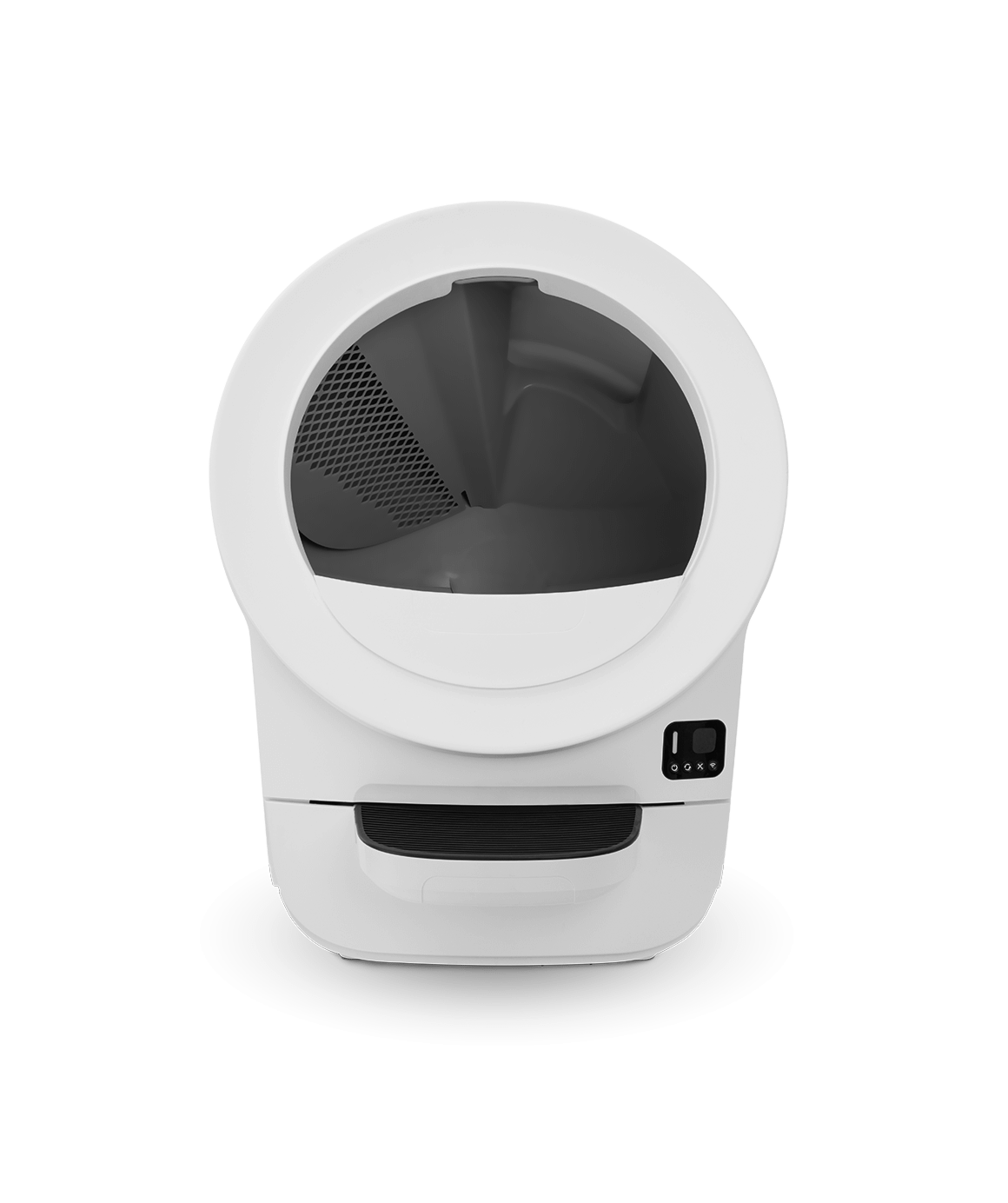
The EVO arrived in late 2025 as the replacement for the discontinued Litter-Robot 3 Connect — the entry model, and the exact machine running in our house. Whisker’s lineup now stacks cleanly by price: EVO at $599, Litter-Robot 4 at $699, Litter-Robot 5 at $799, 5 Pro at $899.
The pitch is compactness, and the numbers back it up:
- Footprint 20.6" wide × 24.3" deep, 27.6" tall — against the LR4’s 22" × 27" × 29.5". That’s roughly an inch and a half narrower, nearly three inches shallower, and two inches shorter. If the machine is going in a closet, a bathroom corner, or under a counter, those are the inches that decide it.
- The lowest step in the lineup at 5.6" (the LR4’s is 6.9", the 5’s is 7").
- 21.5 lb empty, light enough to move for cleaning without a second person.
- The same core loop as its bigger siblings: your cat leaves, a countdown runs (adjustable 3–30 minutes), the globe rotates and sifts clumps into a sealed, carbon-filtered drawer. Whisker brands the EVO’s cycle QuietSift, and it carries a color status display on the base plus the standard Whisker app over 2.4 GHz Wi-Fi: weight-based cat identification, visit and cycle tracking, and remote control.
What it is *not* is a shrunken Litter-Robot 4. The sensing package is simpler in ways that matter, which is the next section.
EVO vs Litter-Robot 4 vs Litter-Robot 5, on paper
| Litter-Robot EVO | Litter-Robot 4 | Litter-Robot 5 | |
|---|---|---|---|
| List price | $599 | $699 | $799 |
| Rated cats | Up to 2 | Up to 4 | Up to 5 |
| Cat weight range | 3–19 lb | 3–25 lb | 3–30 lb |
| Footprint | 20.6" × 24.3" | 22" × 27" | 22" × 27" |
| Height | 27.6" | 29.5" | 29.9" |
| Globe opening | 14.85" | 15.75" | 15.75" |
| Interior headroom | 14.5" | 16.5" | 17.5" |
| Step height | 5.6" | 6.9" | 7" |
| Waste drawer (1 cat) | ~7 days | ~8 days | ~10 days |
| Waste-level sensing | Notifies when full | Continuous | Continuous |
| WasteID + SmartScale | No | No | Yes |
| Display | Color status screen | Indicator lights | Color LCD |
| Carpet-ready base | Built in | Needs add-on tray | Built in |
| Trial / warranty | 90-day trial, 1 yr | 90-day trial, 1 yr | 90-day trial, 1 yr |
What the $100 saving actually costs you
The EVO’s cuts are well chosen, but they are cuts. In rough order of how likely they are to matter:
- Capacity is the hard wall. Two cats, 3–19 pounds, a 14.85" opening and 14.5" of interior headroom. An average domestic cat fits with room to spare; a Maine Coon, a chunky rescue, or a three-cat household does not. The LR4 rates to 25 pounds and four cats for $100 more, and the Litter-Robot 5 to 30 pounds. Buy for the biggest cat you might have, not the one you have today.
- No laser entry sensor. The LR4 pairs its weight sensors with a laser motion sensor at the entry; the EVO detects your cat by weight alone (Whisker’s SafeCat system, backed by anti-pinch/obstruction detection). Early owner reports say it works — with an asterisk: cats that perch on the entry lip instead of stepping fully inside can confuse the scale, producing odd weight readings or a cycle that doesn’t start. Not a dealbreaker, but the LR4’s detection is the more robust of the two.
- The 3-pound floor is a kitten-safety line, not a suggestion. A kitten under 3 pounds is effectively invisible to a weight-only machine. If you’re bringing home a kitten, run the EVO unplugged or in semi-automatic mode alongside a normal box until they’re confidently over the threshold.
- The drawer is smaller and dumber. Roughly 7 days per empty for one cat (versus ~8 on the LR4 and ~10 on the 5), and the EVO only tells you when the drawer is *full* — the bigger machines track the fill level continuously. With two cats, expect to empty it every 3–4 days.
- Clumping clay litter only. Same rule as the rest of the lineup: the sift-and-sense design assumes clay that clumps. Owners committed to tofu, pellet, or crystal litters should stop reading — this platform is not for you. Our own machine has run Dr. Elsey’s Ultra for years and it’s exactly what this design wants.
The maintenance reality: the smallest contract in the lineup
Simpler sensing cuts both ways: the EVO asks less of you than its siblings — and gives you less warning when something needs doing. We walked through the general self-cleaning-box maintenance contract on the Litter-Robot 4 page; here is what Whisker's own use-and-care guidance says is different about living with an EVO. The structural difference comes first: because the machine is rated for two cats, its chore schedule is the only one in the lineup that never scales into the every-other-day drawer territory the LR4 and LR5 hit at four or five cats. It can't — the household the EVO allows tops out before the schedule does.
The drawer: about 8 days for one cat, 4 for two — and the white-bag rule matters more here than anywhere. Those are Whisker's own use-and-care numbers (the spec-sheet comparison rounds the one-cat figure to a week). Line the drawer with the pre-installed liner, a Whisker fitted liner, or any 8–13-gallon white trash bag. On the bigger machines the bag spec is a quirk; on the EVO it's load-bearing, because this machine doesn't track the fill level along the way — it gives you one signal, *full*, and Whisker warns that dark bags misread (especially when the drawer is empty) and that stretched or wrinkled bags throw the Drawer Full Indicator. A machine with one warning and a bag that muffles it means the overflow finds you first. White kitchen bags, edges wrapped over the rim, smoothed flat: that's the whole fix.
The scale is also the entry sensor, so keeping it honest is a safety chore, not a data chore. With no laser at the entry, the EVO's weight sensors do double duty: they're how it knows the litter level *and* how it knows your cat is inside. Whisker's guidance: zero the scale — a short press of Cancel with the globe at Home — after you empty the drawer, add or remove litter, clean the unit, or move it; keep the unit level; and check under the base for stray granules around the feet. On a Litter-Robot 5, a drifted scale quietly corrupts health data. On an EVO, it degrades the thing standing in for the entry sensor — which is why the two-second zero is the one habit this machine genuinely requires. The drawer sensor itself takes a dry microfiber cloth only, nothing damp.
The cleaning schedule is the lightest Whisker publishes. Spot clean as needed — figure monthly with one cat, every couple of weeks with two. Basic globe wipe-down every 1–3 months. Deep clean at least every 3 months with one cat, every 2–3 with two. The teardown has one step the bigger machines don't: start the Empty Cycle (long-press Cycle for 3 seconds and the globe dumps its litter into the drawer), power off and unplug, lift and rotate the bonnet off by its side handles, snap off the bezel, then lift the globe off the base. From there the rules are the family rules: the globe has no electronics and takes mild soap and water — soak it or hose it when it's genuinely filthy — while the base and control panel must never be submerged, sprayed, or soaked (vacuum the stray litter out, then wipe with disinfectant sprayed onto the cloth, never onto the base), no bleach or ammonia-based cleaners anywhere, and every part bone-dry before reassembly, because damp litter clumps and can jam the sift. At 21.5 pounds empty, the EVO is also the one machine in the lineup where the globe-in-the-bathtub trip is comfortably a one-person job.
Consumables: nearly free, with one choice to make. The drawer costs whatever white kitchen bags already cost you. For odor, the EVO takes a carbon filter *or* OdorTrap packs (the holder fits up to three) — Whisker is explicit that the two can't be used together, and neither is required for operation. Figure roughly monthly on the filter (around $30 for a six-pack) or around $15 per two-pack of OdorTrap refills. Litter is the one consumable you can't skip: clumping clay, filled to the raised MAX line and checked weekly — Whisker's own GreatLitter (around $30 for a 20 lb bag, less on autoship) is the formula the platform is designed around, at the family rate of roughly 20 lb per cat per month.
Add it up for the one-cat home the EVO is aimed at: a drawer bag about every eight days, a two-second scale zero whenever you touch the machine, a monthly spot wipe, and a quarterly teardown with the globe in the tub. That is the lightest ownership contract Whisker sells — most of what the $100 saving costs you in sensing, it quietly gives back in simplicity. The two non-negotiables are the white-bag rule and the scale zero, and both exist for the same reason: on this machine, the sensors you're trusting are the cheap ones, and they only stay trustworthy if you do the free parts of the job.
What five years on its predecessor taught us
Our unit is a refurbished Litter-Robot 3 that has cycled daily for about five years — the full long-term review is here. Two lessons from it transfer directly to its successor.
The platform outlasts its price tag. Our 3 was secondhand when we got it and still runs. That durability record — and the parts ecosystem that kept old units alive long after newer models shipped — is the honest argument for paying $599 to Whisker instead of half that to a newer brand: the cost amortizes over years, not months. The EVO itself has no long-term record yet (nothing launched in late 2025 can), so what you’re actually buying is the company’s track record, plus a first year in which early owners report the usual new-model quirks — mostly the scale misreads above — rather than anything structural.
Acceptance is per-cat and binary. The same machine in the same house got a permanent yes from one of our cats and a permanent no from the other. Five years of no. The EVO’s smaller globe arguably worsens those odds for cautious cats — there’s less room to turn around — and no spec sheet fixes a veto. That’s why the 90-day in-home trial Whisker advertises on direct orders matters more than any row in the table above, and why you should keep a regular box available through the transition no matter which model you buy.
Who should buy the EVO — and who shouldn’t
Buy the Litter-Robot EVO if:
- You have one or two cats in the 3–19 lb range and no plans for a third
- The machine needs to fit somewhere the LR4 won’t — the EVO gives back an inch or three in every dimension, and it’s the shortest of the lineup
- This is your first automatic box and you want the cheapest entry into the platform with the deepest parts-and-support ecosystem
- An older cat would appreciate the lowest step Whisker makes (5.6")
Buy the Litter-Robot 4 instead if: you have (or might have) three or more cats, any cat is pushing past 15 pounds, or you just want the most proven machine in the category — years of firmware fixes, the laser entry sensor, continuous drawer tracking, and the biggest repair ecosystem, for $100 more. Our full LR4 verdict is here.
Buy the Litter-Robot 5 if you want per-cat health tracking (WasteID, the built-in scale) or you have a genuinely huge cat — it’s the only rotating unit rated to 30 pounds. The LR5 research verdict is here, and if you’re weighing the two bigger machines against each other, LR4 vs LR5 is its own page.
Skip the platform entirely if $599 is still the objection: a PETKIT PuraMax 2 covers the core always-clean-box job for well under half the EVO’s price, minus the parts ecosystem, the trial, and the durability record. Our budget automatic litter box roundup ranks that tier honestly.
The entry tier, priced
Whisker links below take $50 off any order with a Litter-Robot unit or bundle at checkout; Whisker also advertises a 90-day in-home trial on direct orders. As of late October 2026, Whisker's holiday bundle offers include the EVO — $75 off the EVO Starter and Insights bundles and $150 off the Double bundle (checked on litter-robot.com October 21) — and this week we watched a bundle offer and the $50 link discount come off the same cart together. Our Black Friday tracker logs what's live, day by day. Prices change — check current pricing.
The one being judgedLitter-Robot EVO
The smallest, cheapest current Litter-Robot: 20.6" × 24.3" footprint, lowest step in the lineup, sealed carbon-filtered drawer, app tracking. Rated for up to 2 cats, 3–19 lb. Lists at $599 — $549 after the link discount.
Save $50 at Whisker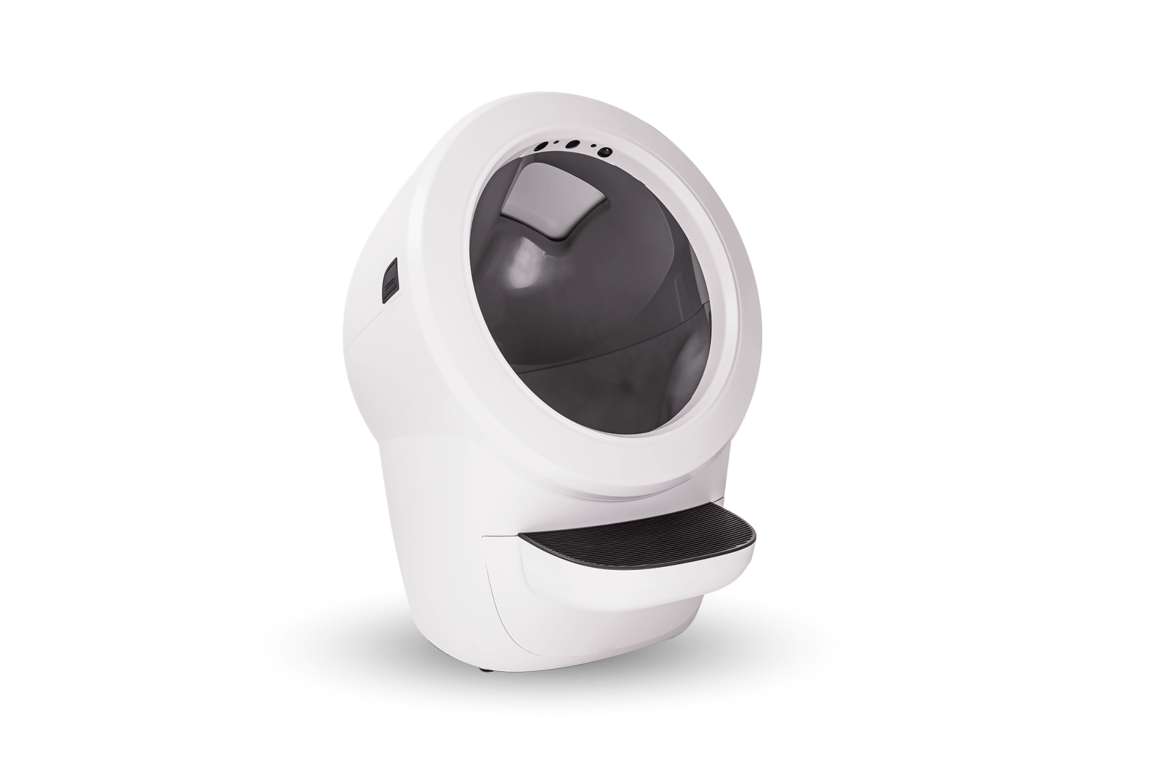 The $100-more answer
Litter-Robot 4
Four-cat rating, 25 lb ceiling, laser entry sensor, continuous drawer tracking, and years of firmware maturity. Still the default pick for most homes; also on Amazon.
Save $50 at Whisker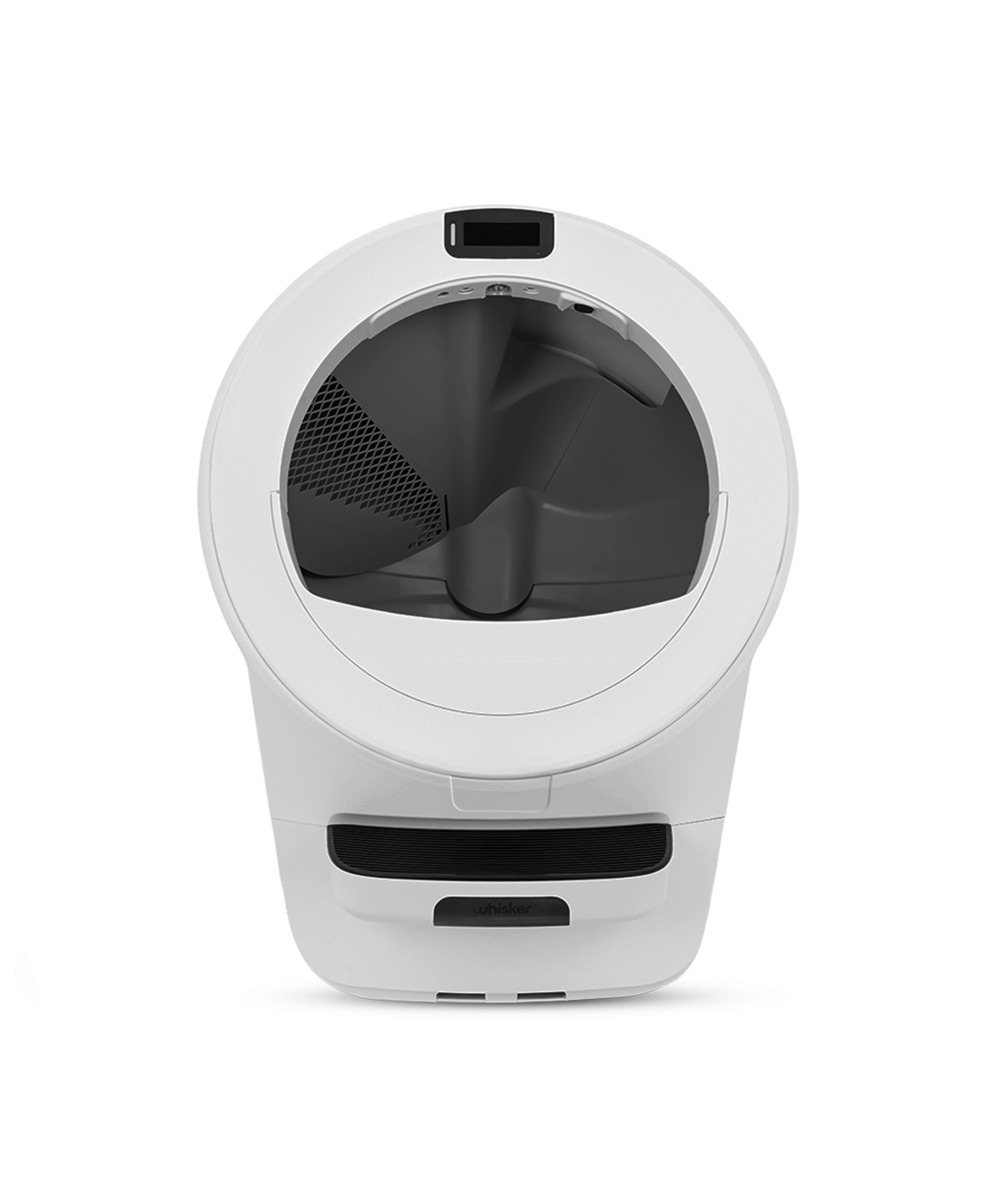 For big cats & health data
Litter-Robot 5
WasteID, a built-in 3–30 lb scale, and the biggest drawer in the lineup at $799. The pick when the cat is huge or the health tracking is the point.
Save $50 at WhiskerLitter-Robot EVO: FAQ
Is the Litter-Robot EVO worth it compared to the Litter-Robot 4?
For a one- or two-cat home with average-sized cats and a tight spot for the machine, yes — the EVO does the same core job for $100 less in a meaningfully smaller box. The LR4 earns its extra $100 when any of its advantages actually apply to you: more than two cats, a cat over ~15–19 pounds, the laser entry sensor, or the bigger, continuously-tracked drawer. If none of those describe your household, the EVO is the rational pick.
Is the EVO safe for kittens?
Not for kittens under 3 pounds. The EVO detects cats by weight alone — there’s no laser entry sensor — and a kitten under the 3-pound floor is effectively invisible to it. Until your kitten is confidently over 3 pounds, keep the EVO unplugged or in semi-automatic mode and run a normal open box alongside it.
Will the EVO fit a large cat?
It’s rated for cats of 3–19 pounds, with a 14.85-inch opening and 14.5 inches of interior headroom — the smallest globe in the lineup. An average cat fits fine; a Maine Coon or any cat pushing 18–19 pounds will be cramped, and the machine’s weight-based detection assumes the rating is respected. Big-cat households should look at the Litter-Robot 4 (to 25 lb) or 5 (to 30 lb).
What litter does the Litter-Robot EVO use?
Clumping clay litter — the sifting design depends on it, same as every Litter-Robot. Skip tofu, pellet, and crystal litters. We’ve run Dr. Elsey’s Ultra in our own Litter-Robot for years and it’s the texture this design wants; our full compatibility guide is on the automatic-litter-box litter page.
How often do you empty the EVO’s waste drawer?
Whisker rates it at up to 7 days for one cat; plan on every 3–4 days with two. The drawer is sealed and carbon-filtered, and note the EVO only alerts you when the drawer is full — unlike the LR4 and LR5, it doesn’t report the fill level along the way.
I own a Litter-Robot 3 — is the EVO the upgrade?
The EVO is the LR3’s replacement in the lineup (the 3 and 3 Connect are discontinued), but if your 3 still runs, run it — ours has cycled for five years and counting. When it does age out, the EVO is the like-for-like successor in size and price, with a quieter cycle and a current app; step up to the LR4 instead if your household has grown past two cats or one of them has grown past 19 pounds.
Does the $50 discount work on the EVO?
Yes — the partner-link discount applies to any order containing a Litter-Robot unit or bundle, the EVO included, which brings it to $549. It applies automatically at checkout through our links; there’s no public type-in code. Details on how the discount works are in our Litter-Robot promo code explainer.
How much work is the Litter-Robot EVO to maintain?
The least of any Litter-Robot, by Whisker's own schedule: empty the drawer about every 8 days with one cat (every 4 with two), zero the scale with a short press of Cancel whenever you empty it, add litter, clean, or move the machine, spot clean roughly monthly, and deep clean every 3 months (2–3 with two cats) — globe in the tub with soap and water, base wiped but never wetted, no bleach or ammonia. Use white 8–13-gallon bags in the drawer: the EVO only warns you when the drawer is full, and dark or wrinkled bags can make it misread.
Keep reading
- Litter-Robot 3, five years in — the refurbished predecessor that earned this site’s trust in the platform
- Litter-Robot 4: worth $700? — the $100-more alternative, fully argued
- Litter-Robot 5: worth $799? — the flagship, and who actually needs it
- Best budget automatic litter boxes — the tier below the EVO, ranked honestly
- Are automatic litter boxes worth it at all? — run your own payback math with the cost calculator