Litter-Robot 5: Is the $799 Upgrade Actually Worth It?
Whisker’s new flagship adds WasteID, a built-in scale rated to 30 pounds, a bigger drawer, and a carpet-ready base. We haven’t run one — but five years on a Litter-Robot 3 taught us exactly what to look for. Here’s the research verdict.

Some links below are affiliate links. If you buy through them, MeowTested may earn a small commission at no extra cost to you, including as an Amazon Associate, where we earn from qualifying purchases, and as a partner of Whisker, the maker of Litter-Robot. We only recommend products that pass our Fit Analysis — and we publish the ones that don't.
Up front, the honest framing: we haven’t run a Litter-Robot 5. Our first-hand experience is five years on a Litter-Robot 3, so this verdict is built from spec sheets, early hands-on reviews, and owner reports — read it that way.
The research verdict: the Litter-Robot 5 is the right buy for specific homes, not a default upgrade. If you have a big cat over 25 pounds, three or more cats, a carpeted spot for it, or you want per-cat weight tracking built in, the 5 is now the machine to get — nothing else in Whisker’s lineup covers those cases. If you already own a happy Litter-Robot 4, the early reviews are consistent: wait. The 5’s launch-window firmware has reported sensor and connectivity quirks, and the 4 remains excellent.
As Whisker partners, our link takes $50 off any Litter-Robot unit or bundle at checkout, and Whisker advertises a 90-day in-home trial on direct orders — which, after watching one of our two cats veto our LR3 for five straight years, we consider the most important line on the whole spec sheet.
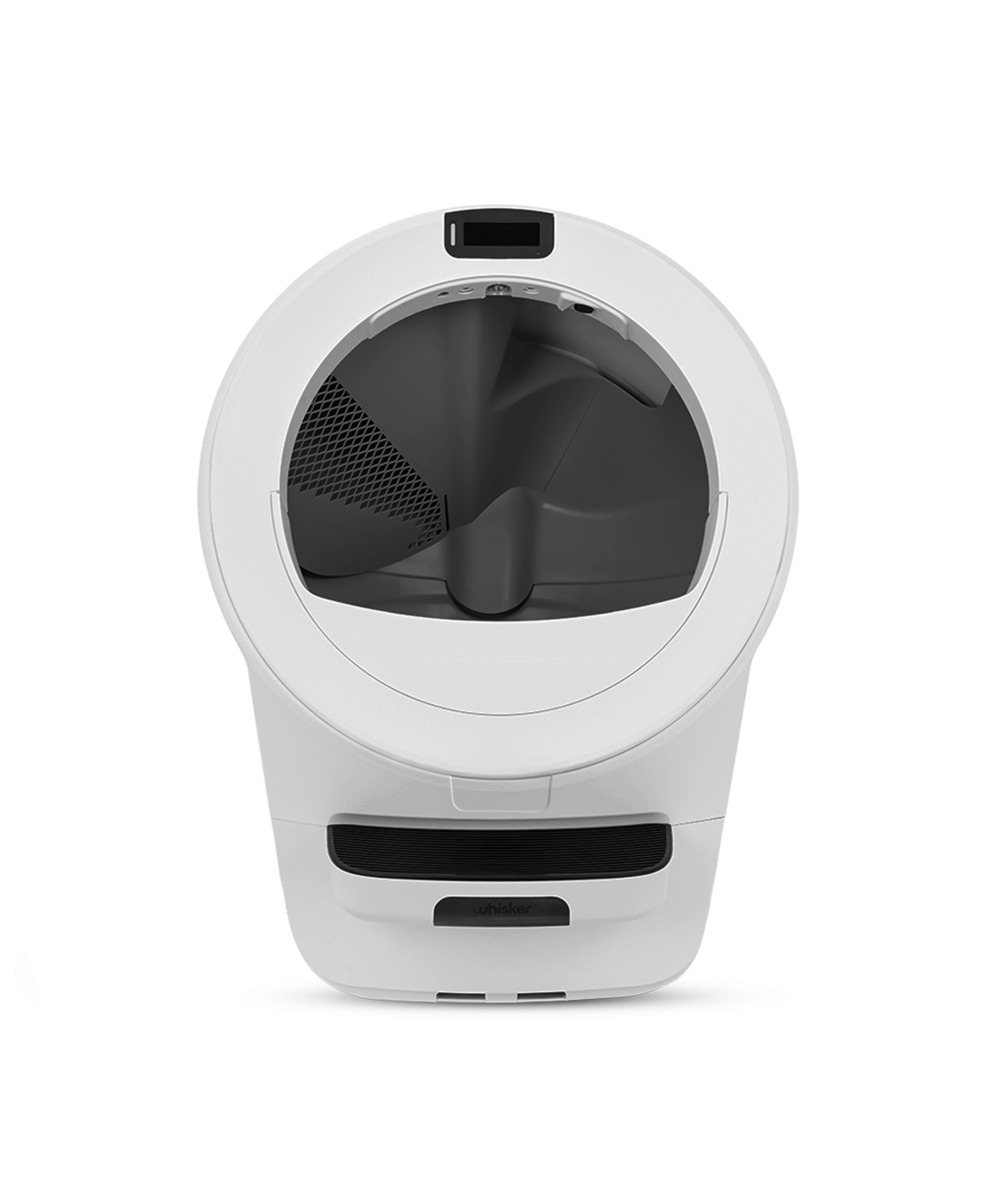
What $799 actually buys over the Litter-Robot 4
The 5 is a genuine platform revision, not a facelift — the changes cluster around sensing and fit:
- WasteID. The 5 distinguishes urine from feces per visit — an industry first. Paired with per-cat weight recognition, that turns the litter box into an early-warning system: a cat that suddenly urinates more often is a classic early kidney/diabetes flag, and this machine can now surface it per cat.
- A built-in SmartScale rated 3–30 lb. The LR4 tops out at 25 pounds; the 5 raises the ceiling to 30 and weighs every visit. For owners of genuinely big cats — Maine Coon owners, this is your aisle — the 5 is the only rotating unit rated for them.
- A full-color LCD screen replaces the LR4’s indicator-light bar, showing status, weight, and visit info on the unit itself.
- A redesigned base that works on carpet. The LR4 needs a separate carpet tray to run correctly on carpet; the 5’s base handles hard floors and carpet as shipped.
- A bigger waste drawer. Whisker rates it at roughly 10 days between empties for one cat, versus about 8 on the LR4.
- Fewer interior crevices and a sturdier build, per early teardowns — less gunk-collecting geometry when you do the monthly deep clean.
- A LitterHopper-ready bonnet, so automatic litter refills can bolt on later.
Footprint is essentially unchanged: 22" wide, 27" deep, and 29.9" tall against the LR4’s 29.5" — if a 4 fits your space, a 5 fits. Capacity rating goes from 4 cats to 5.
Litter-Robot 4 vs 5 vs 5 Pro, on paper
| Litter-Robot 4 | Litter-Robot 5 | Litter-Robot 5 Pro | |
|---|---|---|---|
| List price | $699 | $799 | $899 |
| Rated cats | Up to 4 | Up to 5 | Up to 5 |
| Cat weight range | 3–25 lb | 3–30 lb | 3–30 lb |
| Waste drawer (1 cat) | ~8 days | ~10 days | ~10 days |
| WasteID (urine vs feces) | No | Yes | Yes |
| Built-in SmartScale | No | Yes | Yes |
| Display | Indicator lights | Color LCD | Color LCD |
| Cameras | None | None | Dual built-in |
| Carpet-ready base | Needs add-on tray | Built in | Built in |
| Footprint | 22" × 27" × 29.5" | 22" × 27" × 29.9" | 22" × 27" × 29.9" |
| Step height | 6.9" | 7" | 7" |
| Trial / warranty | 90-day trial, 1 yr | 90-day trial, 1 yr | 90-day trial, 1 yr |
The early-adopter tax is real
Every hands-on review of the launch-window units tells the same story: great hardware, immature firmware. Specifics that early reviewers and owners have reported:
- Inconsistent waste measurements and occasional cat-detection sensor errors
- Waste-drawer level warnings firing early or late
- Wi-Fi and Bluetooth connectivity drops during setup and daily use
- Some settings adjustable only in the app, not on that new LCD panel
- A few advertised features not yet live at launch (LitterHopper compatibility among them)
Cats.com scored the 5 a 4.6/5 but explicitly advised LR4 owners to wait for firmware fixes before upgrading, and BGR’s review of the 5 Pro was blunter still — fancy features, too many bugs. None of this is unusual for a v1 firmware on new hardware, and Whisker’s track record on updates is decent (our LR3 was still getting supported parts five years in). But it’s a real cost of buying in the first year, and it’s the main reason our verdict separates “buying today” from “upgrading from a working 4.”
One more compatibility note that gets buried: the 5 is designed for clumping clay litter. Owners report alternative litters (tofu pellets in particular) confuse the sensors — if you’re committed to a non-clay litter, this is not your machine.
The maintenance reality: the drawer, the sensors, and the deep clean
The 5’s pitch is that it watches your cats’ health for you — but every sensor it adds is one more thing you now maintain. We walked through the general self-cleaning-box maintenance contract on the Litter-Robot 4 page; here is what Whisker’s own use-and-care guidance says is different about living with a 5.
The drawer schedule is the longest in the lineup — with a catch. Whisker’s official cadence for the 5: empty every 10 days for one cat, roughly every 5 days for two, twice a week for three, every other day at four or five cats. That beats the LR4’s intervals at every household size, and the machine tells you anyway — drawer status lives on the LCD and in the app. The catch is the liner. The 5 ships with five fitted liners, and after those Whisker’s guidance says any 10–13-gallon white trash bag works — but on this machine the bag spec is not a nicety. The drawer level is read optically, and Whisker warns that dark bags and stretched, wrinkled, or puffy ones throw the waste-level reading — so at least some of the early-or-late drawer warnings in the launch reviews above are, per Whisker’s own note, a bag problem you can fix with the right box of kitchen bags.
The sensors are now part of the cleaning routine. This is the genuinely new chore category on the 5. The SmartScale needs re-zeroing — a short press of Cancel — after you empty the drawer, add or remove litter, clean the unit, or move it; skip that and the per-cat weight data the machine is sold on quietly drifts. The curtain sensor lens takes a soft dry microfiber cloth only, and the WasteID area gets a dry cloth — never a vacuum, forced air, or anything damp near either. None of it is hard or slow. But a machine that sells health tracking asks you to keep its eyes clean and its scale zeroed, and nothing on an LR3 or LR4 ever asked that.
The deep clean scales with your cat count. Whisker’s schedule: at least every 3 months for one cat, every 2–3 months for two, every 2 months for three, monthly at four or five. The teardown itself is simple — bonnet rotates to about 45° and lifts away, the globe lifts straight off the base by its handle and takes mild soap and water (it can be soaked or hosed when heavily soiled), and the drawer and step mat wash the same way. The hard rules carry over and tighten: never submerge, spray, or soak the base or control panel — vacuum stray litter out, then wipe with a damp non-bleach disinfectant cloth — no bleach or ammonia-based cleaners anywhere on the machine, keep the seal strips dry (replace them when they flatten or peel), and let every part dry completely before reassembly, because damp litter clumps and can jam the sift.
Consumables: the drawer is nearly free; the odor extras are a choice, not a stack. Lining the drawer can cost whatever white kitchen bags already cost you. For odor, the 5 gives you a carbon-filter pocket *or* an OdorTrap holder (it takes up to three packs) — Whisker is explicit that the two cannot be used together on this machine, so pick one or skip both; neither is required for operation. Figure roughly monthly on the filter (around $30 for a six-pack) or every 2–4 weeks on OdorTrap packs (around $15 per two-pack). Litter is the consumable you can’t skip: clumping clay only — Whisker’s own GreatLitter (around $30 for a 20 lb bag one-time, less on autoship) is the bag the machine is designed around — at about 20 lb per cat per month, the same as a regular box. Our litter-for-automatic-boxes guide ranks it against the hard-clumping clay formulas that survive the sift intact.
Add it up for a one-cat home and the 5’s contract is: a drawer bag every week and a half, a dry-cloth sensor wipe, a two-second scale zero whenever you touch the machine, and a quarterly teardown with the globe in the tub. That’s slightly *less* frequent than the LR4’s drawer-and-deep-clean rhythm, with slightly more to keep clean — which doesn’t flip the verdict, it sharpens it: you’re paying $799 for sensors, and the sensors only stay worth it if you do the two-second parts of the job.
If $799 in one hit is the sticking point, Whisker’s checkout offers Affirm financing with terms from 3 to 18 months. Qualified buyers get 0% APR on eligible models (rates run 0–36% after a soft credit check that won’t affect your score), and Whisker advertises that the 90-day in-home trial applies however you pay.
What five years on a Litter-Robot 3 taught us about buying a 5
Our own unit is a refurbished Litter-Robot 3 that has run for about five years — the full long-term review is here. Two lessons from that machine bear directly on whether you should spend $799 on this one.
The platform is durable. Our 3 was secondhand when we got it and still cycles daily. That's the strongest argument for paying Whisker prices at all: the cost spreads over a service life measured in years, and the parts ecosystem (motors, sensors, boards) keeps old units alive. There is no five-year data on the 5 — there can't be — but the company’s durability record is the best reason to believe the premium amortizes.
Acceptance is per-cat and binary. The same machine in the same house got a permanent yes from one of our cats and a permanent no from the other — five years of no. No spec on the 5 changes that math: a wider opening and a quieter cycle improve the odds, but some cats will simply refuse a moving litter box, and no firmware update fixes a veto. That’s why the 90-day in-home trial on direct orders matters more than any feature on the comparison table, and why you should keep a regular box running through the transition no matter which model you buy.
Who should buy the 5 — and who shouldn’t
Buy the Litter-Robot 5 if:
- Your cat is over 25 pounds — the 5 and 5 Pro are the only rotating units rated to 30 lb, full stop
- You’re running 3+ cats and want the bigger drawer and 5-cat rating
- The machine is going on carpet and you’d rather not fuss with the LR4’s add-on tray
- You want per-cat weight and elimination tracking as a health signal without buying anything extra
Buy the Litter-Robot 4 instead if: you want the proven version. It’s $100 less, its firmware has had years of fixes, it has the largest parts and repair ecosystem in the category, and for a one- or two-cat home on hard floors it gives up almost nothing that matters day to day. Our full LR4 verdict is here.
Skip the 5 Pro for now unless the dual cameras are the point for you. It’s $899, the cameras and AI features are the newest and buggiest part of the whole lineup per early reviews, and every non-camera feature is identical on the standard 5.
Wait entirely if: you own a working LR4 (upgrade when the firmware settles and your 4 actually ages out), or your budget says no — a PETKIT PuraMax 2 covers the core always-clean-box job for roughly a third of the price, minus the health tracking and the parts ecosystem.
The lineup, priced
Whisker links below take $50 off any order with a Litter-Robot unit or bundle at checkout; Whisker also advertises a 90-day in-home trial on direct orders. Prices change — check current pricing.
The one being judgedLitter-Robot 5
WasteID, built-in 3–30 lb scale, color LCD, carpet-ready base, ~10-day drawer. Lists at $799. The pick for big cats, 3+ cat homes, and carpet installs.
Save $50 at Whisker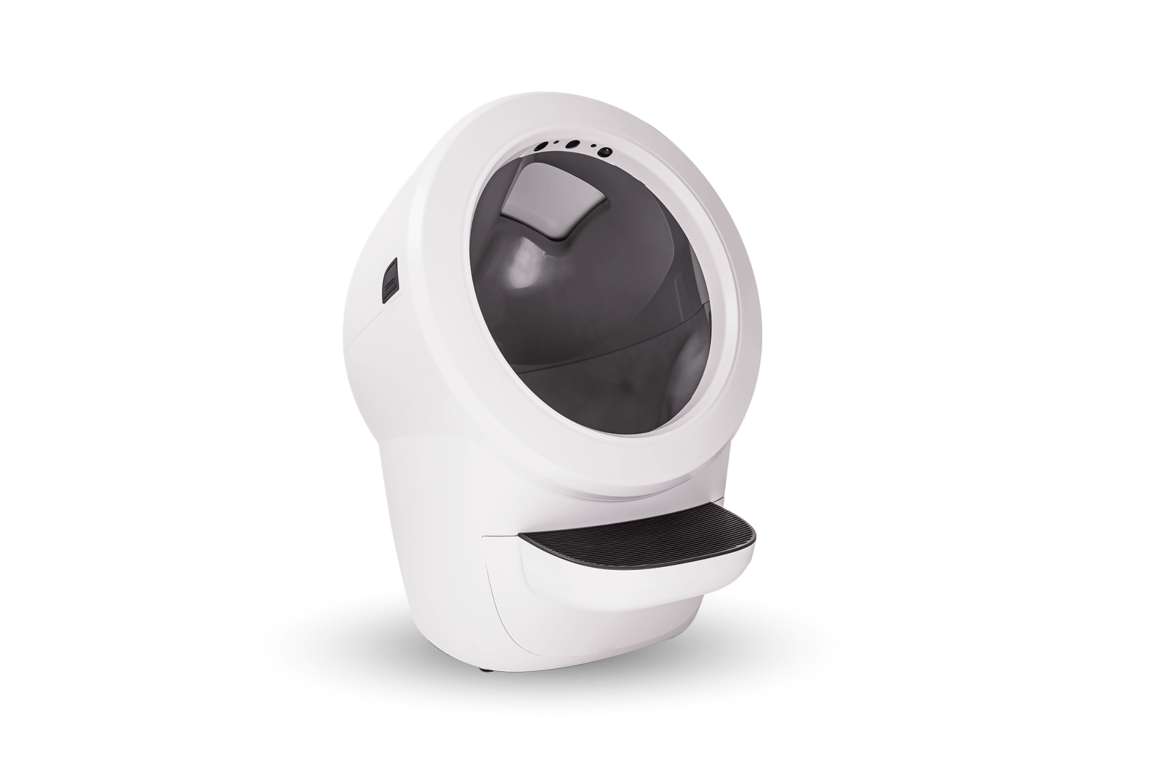 The proven alternative
Litter-Robot 4
$100 less with years of firmware maturity and the category’s biggest parts ecosystem. Still the default answer for most one- and two-cat homes; also on Amazon.
Save $50 at WhiskerLitter-Robot 5 Pro
The same machine plus dual built-in cameras and AI monitoring at $899. Early reviews flag it as the buggiest of the lineup — wait unless the camera is the point.
Save $50 at WhiskerLitter-Robot 5: FAQ
Is the Litter-Robot 5 worth upgrading to from a Litter-Robot 4?
For most LR4 owners, not yet. The meaningful gains — WasteID, the 30 lb weight ceiling, the built-in scale, the carpet-ready base — matter most to homes the LR4 fits poorly anyway. Early reviews consistently report launch-window firmware bugs, so a working LR4 is worth keeping until the 5’s software settles. Buying fresh today is a different question: then the 5 is a serious contender.
What size cat can use the Litter-Robot 5?
Whisker rates the 5 for cats from 3 to 30 pounds — the widest range in the lineup, up from 3–25 on the LR4. The globe opening is 15.75" with 17.5" of interior height. One caveat from early hands-on reviews: the litter bed itself can feel snug for genuinely huge cats, so the 90-day trial is your friend if you’re at the top of that range.
Does the Litter-Robot 5 work on carpet?
Yes — the redesigned base runs correctly on carpet or hard floors as shipped. That’s a real difference from the Litter-Robot 4, which needs a separate carpet tray accessory to operate reliably on carpeted floors.
What litter does the Litter-Robot 5 use?
Clumping clay litter. Owners report that alternative litters — tofu pellets especially — can confuse the sensors, and Whisker designs and tests around clay. If your household is committed to a non-clay litter, a sifting-rake machine or a plain box is a better fit.
How often do you empty the Litter-Robot 5’s waste drawer?
Whisker rates it at roughly 10 days for one cat, against about 8 days on the LR4 and 7 on the EVO. Scale that down with each additional cat — a three-cat home should expect to empty it about every three days.
How does the $50 discount and 90-day trial work?
Our partner links apply a $50 coupon automatically at Whisker’s checkout on any order containing a Litter-Robot unit or bundle. Whisker also advertises a 90-day in-home trial on direct orders — we haven’t tested the return process ourselves, but given that cat acceptance is the single biggest failure mode for these machines, buying somewhere with a real return window is advice we’d give at any price.
How do you deep clean a Litter-Robot 5, and how often?
At least every three months for one cat, scaling to monthly for a four- or five-cat home, per Whisker’s own schedule. The bonnet rotates to about 45° and lifts away, the globe lifts straight off the base by its handle and takes mild soap and water (soaked or hosed if heavily soiled), and the drawer and step mat wash the same way. Never submerge, spray, or soak the base or control panel, skip bleach and ammonia-based cleaners entirely, and let every part dry completely before reassembly — damp litter clumps and can jam the sift. Re-zero the scale with a short press of Cancel when you’re done.
Related reading
- Litter-Robot 3, five years in: a long-term owner review — the first-hand experience behind this site’s take on the category
- Litter-Robot 4: is it actually worth $700? — the proven alternative, judged on the same terms
- Litter-Robot 4 vs PETKIT PuraMax 2 — if the budget question comes first
- Are automatic litter boxes worth it at all? — with a cost calculator to run your own numbers
- The best automatic litter boxes — the full category roundup