Best Litter for Automatic Litter Boxes (2026)
Automatic boxes are fussy about litter — the wrong bag jams the mechanism, crumbles in the sift, or blinds the sensors. Here's what works in rotating, raking and sifting boxes, what the makers themselves rule out, and the litters that run cleanly in almost any of them.
Some links below are affiliate links. If you buy through them, MeowTested may earn a small commission at no extra cost to you, including as an Amazon Associate, where we earn from qualifying purchases, and as a partner of Whisker, the maker of Litter-Robot. We only recommend products that pass our Fit Analysis — and we publish the ones that don't.
For any rotating or sifting automatic box, the safe answer is a hard-clumping, low-dust clay litter. Dr. Elsey’s Ultra is the one owner threads keep converging on, Arm & Hammer Clump & Seal Platinum is the pick if odor in the waste drawer is your real problem, and Purina now sells a Tidy Cats formula co-designed with Whisker for the Litter-Robot if you want the machine-matched bag.
What to avoid is more specific than the bags admit. Whisker rules out non-clumping litter, pellets (pine, paper, pea husk) and — for the Litter-Robot 4, 5 and EVO — crystal litter, because the translucent granules interfere with the box's sensors. Raking boxes are the mirror image: a PetSafe ScoopFree takes only its own crystal trays and nothing else.
Your machine decides as much as your litter. If you're still choosing one, start with our best automatic litter boxes roundup.

Best litters for automatic boxes, compared
| Litter | Type | Best for | Scent | Where it runs |
|---|---|---|---|---|
| Dr. Elsey’s Ultra | Hard-clumping clay | Hardest clumps, lowest dust | Unscented | Drums, sifters, non-crystal rakers |
| Arm & Hammer Clump & Seal Platinum | Clay + baking soda | Odor in a sealed waste drawer | Light | Drums, sifters, non-crystal rakers |
| Tidy Cats for Litter-Robot | Clay, co-designed with Whisker | Litter-Robot owners who want the maker-matched bag | Scented, with a motion-triggered boost | Litter-Robot, current and previous generations |
| World’s Best Multiple Cat | Corn (natural) | The natural option, where the box allows it | Light | Case by case — check your maker’s list first |
Why automatic boxes are fussy about litter
A manual box forgives almost any litter — you're the one doing the sorting. An automatic box has to sort waste mechanically, and that only works if the litter cooperates.
Most self-cleaning boxes work one of three ways: a rotating drum sifts clumps out as it turns (Litter-Robot, PETKIT PuraMax, Leo's Loo Too), a rake combs solid waste into a covered trap (PetSafe ScoopFree), or a sifting grate separates it. Every one of those depends on clumps that hold together. A clump that crumbles gets pushed back into the clean litter, and now the box is spreading waste instead of removing it.
There is a second, quieter requirement: these boxes are computers sitting in a pan of dust. Weight sensors, infrared beams and a motor all have to work inside an enclosure full of fine clay powder and ammonia. A dusty litter leaves a film on the sensor window, and a sensor that can't see straight is the most common reason a box starts mis-cycling for no obvious reason. That is why every maker's recommendation reads the same two words: hard-clumping, low-dust.
Litter types in automatic boxes
| Litter type | Rotating drum | Raking box | The watch-out |
|---|---|---|---|
| Hard-clumping clay | Best choice | Good (non-crystal rakers) | Heavier to lift; that is the only real cost |
| Lightweight clay | Risky | Risky | Finer dust and softer clumps can drift and mis-sift |
| Silica crystal | No (ScoopFree trays only) | ScoopFree trays only | Whisker rules crystal out of the LR4/5/EVO — the translucent grains confuse the sensors |
| Natural (corn, wheat, tofu) | Case by case | Case by case | Softer clumps often break in a drum; check the maker’s list |
| Pellets (pine, paper, pea husk) | No | No | Named on Whisker’s do-not-use list — pellets don’t clump, so nothing gets sifted out |
| Non-clumping | No | No | Nothing for the mechanism to remove — defeats the box |
The litter that runs in almost any box
If you don't want to think about compatibility, buy a hard-clumping clay litter and move on.
Dr. Elsey’s Ultra is the default we'd hand someone with a drum-style box. It is unscented, it clumps hard enough to survive a full rotation intact, and the brand's dust-free claim matters more here than in an open pan — dust is what fogs the sensor window. It is also one of the cheapest per pound of the mainstream hard clays, which counts when a machine wants a deeper bed than a manual box.
Arm & Hammer Clump & Seal Platinum is the swap if odor is your actual complaint. An automatic box concentrates waste in a sealed drawer, and a baking-soda formula does more work in that drawer than a fragrance does. It is the same pick that leads our odor-control litter roundup, for the same reason.
The hard-clump trait is what these two share, and it is the one that decides whether a machine runs clean. Everything else on the bag is secondary.
Match the litter to your machine
Litter-Robot (3, 4, 5, EVO). Whisker's own guidance is unambiguous: a standard-weight, clay-based clumping litter. It names its house brand GreatLitter and the co-branded Tidy Cats Designed for Litter-Robot as its two first-party picks, and lists Dr. Elsey's, Fresh Step and Scoop Away as compatible alternatives. It explicitly rules out non-clumping litter, pine and paper pellets, and — on the LR4, LR5 and EVO — crystal or translucent litter, which interferes with sensor accuracy. GreatLitter is worth knowing about but is mostly sold direct on subscription rather than in stores, so the Tidy Cats bag is the easier machine-matched buy.
Other rotating drums (PETKIT PuraMax, Leo's Loo Too). Same rules, different badge. These take most clumping litters, including the tofu and bentonite blends sold alongside them, and they do not take crystal — the drum has nothing to sift if the litter never clumps.
Raking boxes (PetSafe ScoopFree). The crystal-tray models take only their own trays. That's the design, not a limitation you can engineer around, and the tray refills are the recurring cost that quietly un-budgets a cheap box. Non-crystal rakers can run hard-clumping clay.
Whatever you run: fill to the maker's line and no higher, and give any new litter a week mixed with the old one so your cat doesn't reject the switch.
Neakasa M1 / M1 Plus Lite. Any hard-clumping litter runs in the open-top drum, so the litters above all apply. Neakasa also sells its own mineral litter, and the M1 comes bundled with a 17.6 lb bag of it — a sensible way to start if you're buying the box new, though we have no first-hand read on how the mineral litter compares to Dr. Elsey's over months of cycles.
What actually jams an automatic box
When one of these boxes starts throwing errors, the litter is usually involved, and it is usually one of three things.
- Too much litter. Overfilling past the fill line is the single most-cited cause of jams. Extra depth doesn't buy you extra cleanliness — it loads the mechanism, and on a rake-style box it physically blocks the rake's travel.
- Dust on the sensors. A fine, dusty litter leaves a film on the infrared window and the box starts misreading whether a cat is inside or whether the drawer is full. Wiping the sensor window is the first troubleshooting step on nearly every maker's list, and a low-dust litter is how you stop needing it.
- Clumps that crumble. Soft clumps break during the cycle, fall back through the sift as loose grit, and get re-soiled. The box looks like it's working and the litter gets dirtier every day.
None of those are fixed by a different machine. They're fixed by the bag.
The litters to run in an automatic box
Hard clumps first — that is what keeps the mechanism clean. Amazon links; prices change, so check current pricing at each link.
Best all-roundDr. Elsey’s Ultra (Unscented)
Rock-hard clumps, very low dust, no added fragrance. The safest default for any rotating or sifting box.
Check price on Amazon Best for odor
Arm & Hammer Clump & Seal Platinum
Hard clumps plus baking soda, which is what a sealed waste drawer needs more than a fragrance.
Check price on Amazon Machine-matched
Tidy Cats for Litter-Robot
Purina and Whisker co-designed this one around the Litter-Robot cycle. Buy it if you want the maker-endorsed bag without the subscription.
Check price on Amazon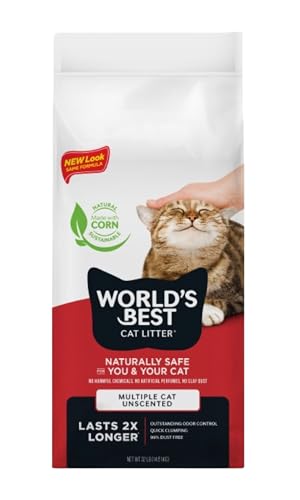 Natural option
World’s Best (Multiple Cat)
The corn-based pick if you want natural. It clumps harder than most plant litters, but check your box maker’s compatibility list first.
Check price on AmazonStill choosing the box?
The box decides as much as the litter. See which self-cleaning boxes actually earn their price.
Read the roundupLitter for automatic boxes: FAQ
What kind of litter works best in an automatic litter box?
A hard-clumping clay litter. The mechanism removes waste by lifting clumps whole, so clump strength matters more than anything printed on the bag. Low dust is the close second, because dust films the sensors these boxes rely on.
Can you use crystal litter in a Litter-Robot 4?
No. Whisker rules crystal and other translucent litters out of the Litter-Robot 4, 5 and EVO specifically because they interfere with sensor accuracy. Crystal litter belongs in a box built for it, like the PetSafe ScoopFree and its own trays.
Is the Tidy Cats litter designed for Litter-Robot worth it?
It's a reasonable buy if you want the maker-matched option and don't mind a scented litter — Purina and Whisker built it around the Litter-Robot's cycle, and it's easier to get than Whisker's own GreatLitter, which is mostly sold direct on subscription. A good hard-clumping clay you already like will also run fine; this is a convenience pick, not a requirement.
How deep should the litter be in an automatic box?
To the fill line the maker marks, and no deeper. Overfilling is the most common cause of jams — it loads a rotating drum and physically blocks a rake. More litter does not mean a cleaner box.
Can you use natural or lightweight litter in a Litter-Robot?
Sometimes, but carefully. Many natural and lightweight litters form softer clumps that break apart in a rotating drum and get re-mixed into the clean litter. Pine, paper and pea-husk pellets are ruled out entirely. Hard-clumping clay is the reliable choice; if you want natural, check the manufacturer's compatibility list first.
Do automatic litter boxes use more litter?
Usually yes — rotating drums need a deeper, consistent bed to sift properly, so you top up more than a shallow manual box. Hard-clumping litter offsets this by letting the box remove only the waste, not scoop clean litter along with it.
My automatic box keeps jamming. Is it the litter?
Often. Check three things before you blame the machine: whether you filled past the fill line, whether the sensor window has a dusty film on it, and whether your clumps are still intact when you empty the drawer. Crumbling clumps mean the litter is wrong for the box.
Related reading
Still picking the machine? Our best automatic litter boxes roundup covers who each one is for, and the Litter-Robot 4 deep-dive answers the $700 question. Weighing whether to buy at all? See are automatic litter boxes worth it. For the litter half of odor control in any box, read best cat litter for odor control, and to stop tracked litter, the best litter mats.