Are Automatic Litter Boxes Worth It? The Honest Cost Math (2026)
Self-cleaning boxes cost $150 to $700 up front, plus litter, trays, and filters after that. Here's the real total cost, the time it actually saves, and the households it's genuinely worth it for.
Some links below are affiliate links. If you buy through them, MeowTested may earn a small commission at no extra cost to you, including as an Amazon Associate, where we earn from qualifying purchases, and as a partner of Whisker, the maker of Litter-Robot. We only recommend products that pass our Fit Analysis — and we publish the ones that don't.
An automatic litter box is worth it if you have multiple cats, an odor-sensitive space, or a schedule that makes daily scooping unreliable — the always-clean box is the single best defense against out-of-box accidents, and it buys back roughly 30 hours a year of scooping. It's hard to justify for one easygoing cat with an owner who scoops daily, where a $30 box does most of the same job.
Budget the ongoing costs, not just the sticker: litter, waste bags, filters, and (on crystal-tray boxes) the trays. If you decide it's a yes, our best automatic litter boxes roundup covers which one to buy.
The sticker price is only half the cost
Automatic boxes run from about $150 to $700 to buy. That number gets all the attention — but the ongoing costs are what decide whether one actually pays off:
- Litter — rotating drums need a deeper bed, so you use somewhat more than a shallow manual box
- Waste bags and liners — many boxes want proprietary or specific bags
- Carbon filters — a recurring few dollars a month on most models
- Crystal trays — on rake-style boxes like the PetSafe ScoopFree, the trays are the real cost, and they are not optional
A cheap box with expensive consumables can cost more over three years than a pricier box that runs on any clumping litter. That is the trap the sticker price hides.
Run the cost math with your own numbers
Your litter spend, your scooping time, three real price tiers. It shows what an automatic box costs over a few years, how much time it gives back, and when (or whether) it pays for itself.
In cash alone, every automatic box costs more than scooping: $404 to $904 extra over 3 years. It gives you back about 22 hours a year. Counting your time at $10/hour, the $200 tier pays for itself in 16 months; the $700 box takes 4.7 years.
- Time back per year
- 22 hrs
- Scooping now costs
- $180/yr
- An automatic box runs
- $248/yr
| Option | Pays back in | 3-year total | Extra vs scooping | Per hour saved |
|---|---|---|---|---|
| Keep scoopingthe box you have | — | $540 | — | — |
| Budget open-top PetPivot AS11 · $200 | 16 months (1.3 yrs) | $944 | $404 | $6/hr |
| Mid-range drum PETKIT PuraMax 2 · $300 | 24 months (2.0 yrs) | $1,044 | $504 | $8/hr |
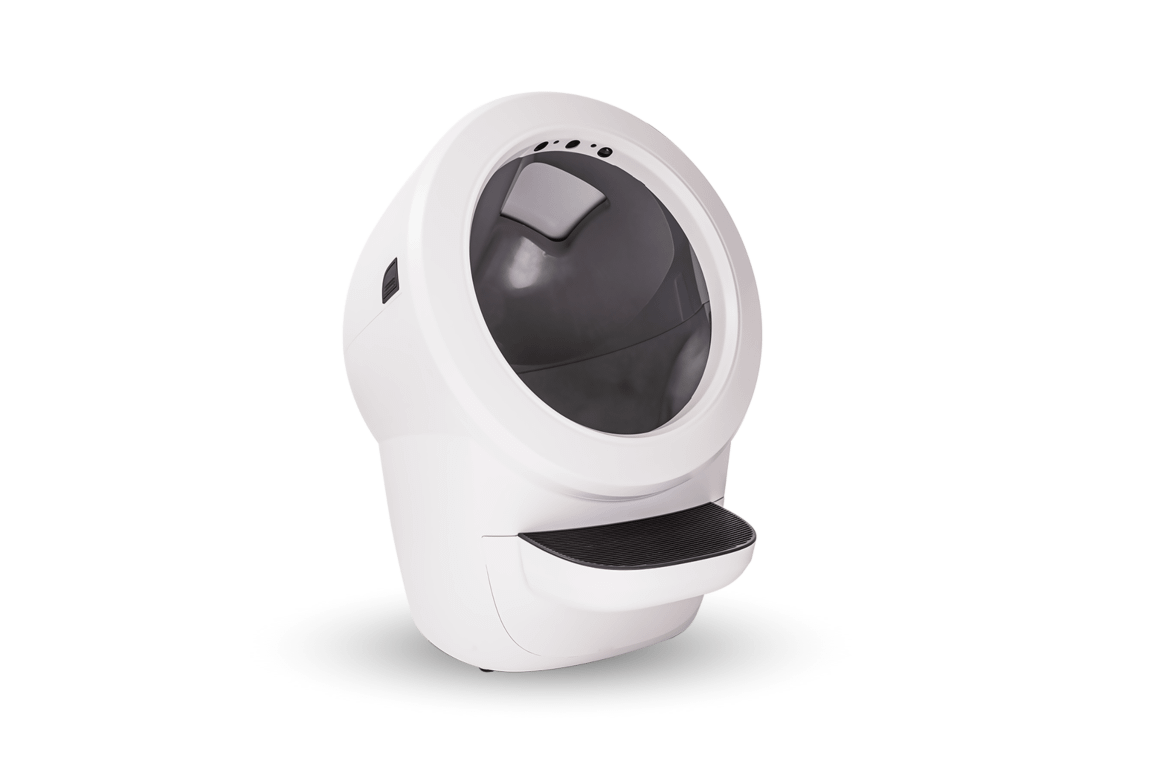
| Premium drum Litter-Robot 4 · $700 | 4.7 years (past your 3-year window) | $1,444 | $904 | $14/hr |

Open-top drum on any hard-clumping litter.
Budget automatic boxes compared →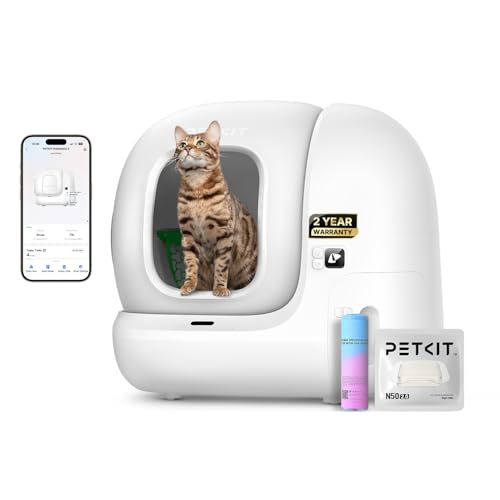
Enclosed rotating drum that seals waste in a lined bin.
Is the PuraMax 2 worth it? → The category benchmark for sensors, interior room and parts. Our Whisker link takes $50 off at checkout — set the price to 650 to model it.
Is the Litter-Robot 4 worth $700? →Keep a regular box in the plan. We've run a refurbished Litter-Robot 3 for about five years. One of our two cats uses it happily; the other refuses it, so a regular box stays in our house too. The calculator assumes every cat switches. Ours didn't.
What the math can't price: fewer accidents from a box that's never dirty (the strongest case in multi-cat homes), and odor sealed away minutes after each visit. It also assumes a box that runs on ordinary clumping litter. Crystal-tray boxes like the PetSafe ScoopFree swap the litter line for proprietary trays, so price a year of trays first. Kittens and cats under about 5 lb shouldn't use any automatic box unsupervised.
Tier prices are the listed Amazon prices for the named boxes when we checked in September 2026, rounded, and they move. Type in today's price to update the math. Default litter spend is $15 per cat per month; defaults change with the cat count until you edit them.
At the calculator’s starting numbers (one cat, $15 a month in litter), the premium box costs roughly $300 a year more than scooping over three years. It buys back about 30 hours of scooping a year, or roughly 22 once you count the drawer-emptying and cleaning it still needs, plus the accidents a perpetually clean box prevents. Whether that trade is worth it is really a question about your cats and your schedule, not the machine.
When it's genuinely worth it
The case is strongest — often decisive — for:
Multi-cat homes. More cats means a box that gets dirty faster, and a dirty box is the #1 trigger for cats going outside it. An always-clean box quietly prevents the single most expensive litter problem there is.
Odor-sensitive spaces. Studios, open-plan apartments, a box near the bedroom — sealing waste within minutes of deposit does more for smell than any litter alone. Pair it with an odor-control litter and you have solved most of it.
Unreliable scooping schedules. Travel, long shifts, mobility limits, or just being human — if the honest weak link in your setup is scooping consistency, automation fixes exactly that.
When it isn't
Skip it, or at least don't rush, if:
You have one easygoing cat and you scoop daily. A $30 box scooped every day gets you most of the cat-welfare benefit for a fraction of the cost. The automatic box is a convenience upgrade for you, not a necessity for the cat.
Your cat is anxious or noise-sensitive. A minority of cats reject the motor and movement outright, and an anxious cat may protest by going next to the box. Introduce it slowly and buy from a retailer with a real return window.
You have a kitten or a cat under ~5 lbs. Safety sensors are calibrated for adult weight — no unsupervised access until they're bigger. That is a firm welfare line, not a preference.
The value play, if you're buying
If the answer is yes, the counterintuitive move is often to spend more, once. The cheapest boxes tend to carry the highest ongoing costs — proprietary trays, weaker mechanisms, shorter lifespans — while the premium rotating boxes run on any clumping litter and last for years, which is why they can end up cheaper per year despite the sticker.
We break down who each model is for in the best automatic litter boxes roundup, and whether the category leader earns its price in Litter-Robot 4: is it worth $700?. The right litter keeps whichever one you choose running cleanly.
And a real number to feed the calculator above: as Whisker partners, our link takes $50 off any Litter-Robot at checkout — set the premium tier's price to ~$650 and watch the payback line move.
If you've decided it's worth it
Where to start, by situation. Amazon links; prices change, check current pricing at each link.
Lowest cost per yearLitter-Robot 4
Priciest up front, but runs on any clumping litter and lasts for years — the cheapest premium box over its lifespan. $50 comes off automatically through our Whisker link at checkout.
Save $50 at WhiskerBest valuePETKIT PuraMax 2
Most of the core rotating-drum function at roughly a third of the flagship price.
Check price on Amazon The litter to run in it
Arm & Hammer Clump & Seal Platinum
Hard clumps that survive drum rotation — what every rotating box needs to run cleanly.
Check price on AmazonNot sure which box yet?
Who each self-cleaning box is for, who should skip it, and the honest trade-offs.
See the full roundupAre automatic litter boxes worth it: FAQ
Are automatic litter boxes worth the money?
For multi-cat homes, odor-sensitive spaces, and anyone whose scooping is inconsistent, usually yes — the always-clean box prevents out-of-box accidents and buys back real time. For a single cat with a daily scooper, it is a convenience, not a necessity.
How much does an automatic litter box cost to run?
Beyond the $150 to $700 purchase, budget for litter (a bit more than a manual box), waste bags, and carbon filters — commonly a few dollars a month. Crystal-tray boxes add the ongoing tray cost, which is the biggest hidden expense in the category.
Do automatic litter boxes actually save time?
Yes — they remove daily scooping, which is roughly 30 hours a year. They do not remove ownership: you still empty the waste drawer every few days and do a full clean monthly.
Are automatic litter boxes safe?
The established designs with weight sensors and pinch protection have strong safety records for adult cats. The firm limit is kittens and cats under ~5 lbs, which sensors may not detect — no unsupervised access until they are bigger.
Related reading
Ready to choose? Start with best automatic litter boxes and the Litter-Robot 4 deep-dive. Whatever box you land on, the right litter keeps the mechanism clean, and an odor-control litter handles the smell. For the two boxes most people end up choosing between, the head-to-head is Litter-Robot 4 vs PETKIT PuraMax 2.