Best Automatic Litter Boxes (2026): Which Are Actually Worth It?
Self-cleaning litter boxes run from $150 to $700, and the price says less than you'd think. Who each one is for, who shouldn't buy any of them, and the honest cost math.

Some links below are affiliate links. If you buy through them, MeowTested may earn a small commission at no extra cost to you, including as an Amazon Associate, where we earn from qualifying purchases, and as a partner of Whisker, the maker of Litter-Robot. We only recommend products that pass our Fit Analysis — and we publish the ones that don't.
The Litter-Robot 4 is the category king — the most proven rotating design, the best safety sensors, and the price to match (~$700). The PETKIT PuraMax 2 is the value pick: most of the core functionality at a fraction of the cost (full verdict in our PuraMax 2 breakdown, and the direct matchup in Litter-Robot 4 vs PuraMax 2). The PetSafe ScoopFree is the budget compromise — a raking tray design that trades capability for price.
Buying note: our Whisker partner link applies $50 off any Litter-Robot unit or bundle at checkout — a discount the Amazon listing doesn't carry.
Who should not buy one: households with kittens or cats under ~5 lbs (safety sensors are calibrated for adult weight), cats already anxious about the litter box, and anyone unwilling to still do monthly maintenance — 'automatic' means automatic scooping, not automatic ownership.
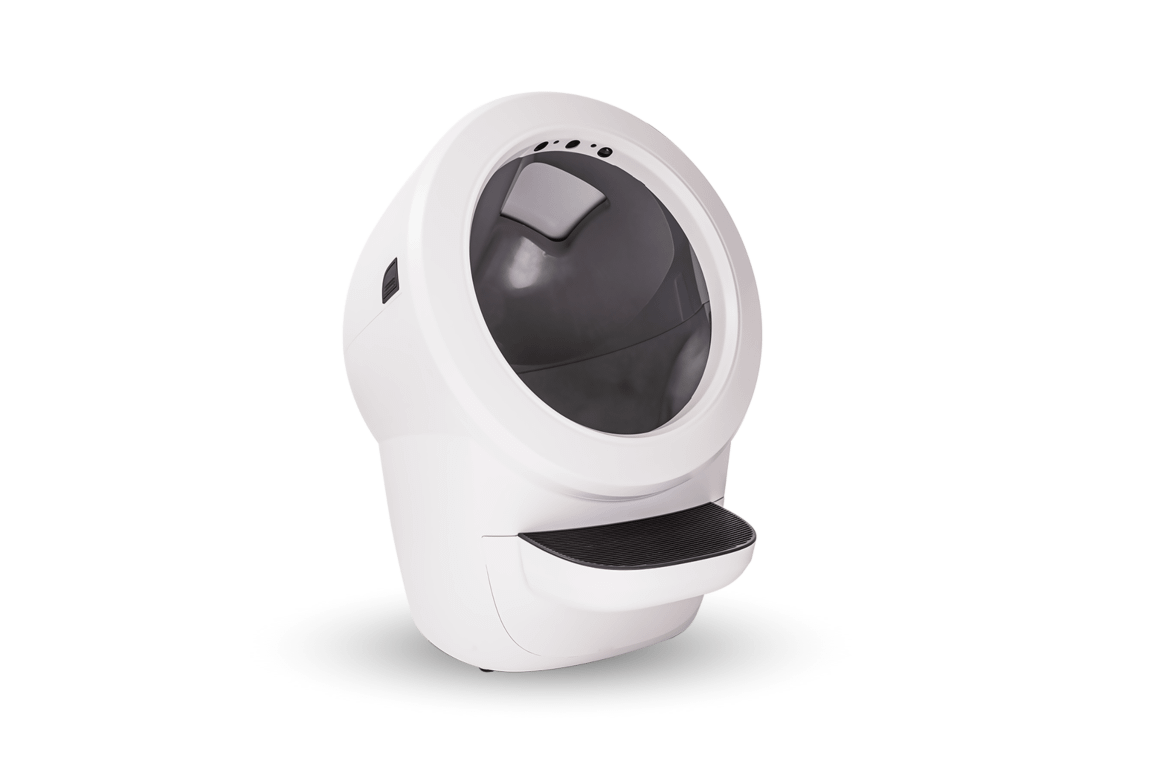
Automatic litter boxes compared side by side
| Model | Price band | Mechanism | Litter | Listed size & weight | Multi-cat | The catch |
|---|---|---|---|---|---|---|
| Litter-Robot 4 | $$$ (~$700) | Rotating drum, sifts after each visit | Any clumping | 29.5" H × 24.25" W × 27" D · 24 lb | Excellent — app tracks each cat by weight | The price. That's the whole catch. |
| PETKIT PuraMax 2 | $$ (~$250) | Rotating drum, auto-seals waste | Most clumping | 24.2" × 22" × 22" · 22 lb | Good | Smaller interior than it looks; big cats should size-check |
| PetSafe ScoopFree | $ (~$150–200) | Rake sweeps into covered trap | Proprietary crystal trays only | 27.6" × 19.1" × 16" · 18 lb | Weak — trays fill fast | Ongoing tray costs add up; crystal litter isn't for every cat |
Our picks, by budget
Retailer links (Whisker and Amazon) — prices change, check current pricing at each link. (Program note: we're evaluating direct partnerships in this category; links may update.)
Category kingLitter-Robot 4
The proven rotating design with the benchmark safety sensors and per-cat weight tracking. Expensive once; excellent for years. Full verdict in our is it worth $700 deep-dive. $50 comes off automatically through our Whisker link; also on Amazon.
Save $50 at Whisker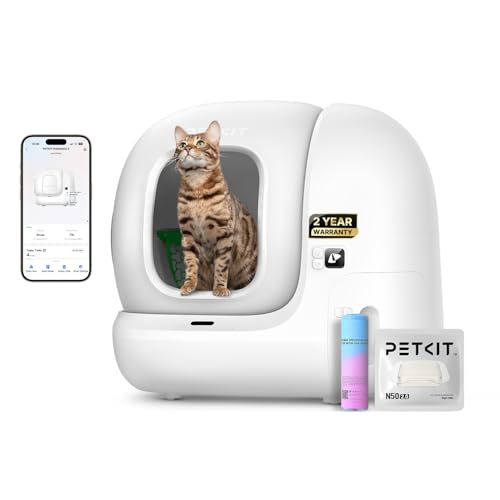 Value pick
PETKIT PuraMax 2
Core rotating-drum functionality with auto-sealed waste at a third of the flagship price. Size-check for very large cats. Full verdict in our PuraMax 2 breakdown.
Check price on Amazon The litter to run in it
Arm & Hammer Clump & Seal Platinum
Hard clumps that survive drum rotation — exactly what rotating boxes need to work cleanly.
Check price on Amazon Under any box
Gorilla Grip Litter Mat
Automatic boxes don't stop tracking. A good mat catches the scatter zone either way.
Check price on AmazonWhat about the new Litter-Robot 5?
Whisker now sells the Litter-Robot 5 alongside the 4. We're running our Fit Analysis on it and will update this roundup once the owner-report base is deep enough to judge it the way we judge everything else — early-adopter reviews are too thin and too happy to count as evidence yet. If you want the newest hardware anyway, the LR5 at Whisker qualifies for the same $50 partner discount. The LR4 stays our pick for now: it's the model with the years-long track record, and the one whose failure modes are fully mapped.
Shopping the budget end? Start with the dedicated guide
The comparison above tops out at ~$700, and a lot of shoppers are really asking a different question: what's the least I can spend and still stop scooping every day? The short answer is that roughly $150–300 buys a genuine automatic box — with real trade-offs in capacity, litter flexibility, and ongoing consumable costs. The ScoopFree's proprietary trays are the classic example of a budget price that quietly un-budgets itself over a year.
We keep a separate guide to exactly that tier: the best budget automatic litter boxes covers what under $300 actually buys, which budget boxes are worth it anyway, and when the honest answer is a $50 box you roll by hand. If that's your price range, start there — this page's job is the head-to-head above.
The honest cost math
Scooping costs you roughly 5 minutes a day — call it 30 hours a year, plus the smell spikes between scoops and the guilt-scoop before guests arrive. An automatic box converts that into a waste-drawer empty every few days and a deeper clean monthly.
Against that: a $700 Litter-Robot amortizes to about $1.90/day over a year, and well under $1/day over its realistic lifespan — these units routinely run for years and have strong parts availability. The PuraMax gets the daily-scooping problem solved for a third of that.
The case is strongest for multi-cat homes (the box is always clean, which is also the #1 defense against out-of-box accidents), odor-sensitive spaces (waste is sealed within minutes of deposit), and anyone whose scooping consistency is — honestly — the weak link in their litter setup. Our litter odor guide covers the litter half of that equation.
One more current input: as Whisker partners, our link takes $50 off the Litter-Robot at checkout, which moves its per-day math a notch further in its favor.
Safety first — the welfare screen
Any rotating or raking machine a cat climbs inside gets our strictest screening. What earns a pass:
Weight sensors that halt everything. The Litter-Robot 4's sensor suite (weight + laser curtain) is the category benchmark — the drum stops the instant a cat is detected. The PuraMax 2 pairs an infrared sensor with anti-pinch detection.
The kitten rule is absolute: sensors are calibrated for adult cats. Under ~5 lbs, a kitten may not trigger them. No kitten should have unsupervised access to any automatic box, full stop — makers say the same in the manual most people don't read.
Cycle delay matters too. A box that cycles minutes after the cat exits (rather than instantly) avoids startling cats that linger nearby — a common reason cats reject automatic boxes.
The honest downsides
Some cats refuse them. The motor noise, the enclosed shape, the movement — a minority of cats simply say no, and an anxious cat may say it by going next to the box instead of in it. That's why the transition protocol below matters.
You still own a litter box. Waste drawers need emptying every 2–4 days (per cat), bags and filters are a recurring cost, and the drum or rake needs a real clean monthly. Automatic ≠ maintenance-free.
Litter restrictions are real. Rotating drums need hard-clumping litter (see the best litter for automatic boxes — our odor-control picks all qualify); the ScoopFree locks you into proprietary crystal trays, which is where its budget price quietly un-budgets itself.
Power and app dependence. These are appliances. Outages, firmware quirks, and app hiccups are part of the deal — rare on the established brands, but not zero.
Getting your cat to actually use it
Run both boxes side by side — the new machine next to the old box, powered off for the first days so it's just a weird new box that smells increasingly familiar.
Move some used litter into it. Scent transfer is the fastest 'this is mine' signal a cat understands.
Power it on only after the cat is using it, and let early cycles happen while the cat is out of the room. Never force, never place the cat inside — being trapped in a machine that then moves is exactly the memory you're trying not to create.
Retire the old box only after the new one has a week of consistent use. Rushing this step is the #1 cause of 'my cat hates it' returns.
Automatic litter boxes: FAQ
Are automatic litter boxes worth it?
For multi-cat homes, odor-sensitive spaces, and inconsistent scoopers — usually yes, decisively. For a single easygoing cat with a diligent owner, they're a luxury: the always-clean box is nicer for the cat, but a $30 box scooped daily achieves most of the same outcome.
Are automatic litter boxes safe for cats?
The established designs with weight sensors and pinch protection have strong safety records for adult cats. The hard line is kittens and cats under roughly 5 lbs: sensors may not detect them, so no unsupervised access, period.
Will my cat actually use one?
Most cats transition within a week or two with a gradual side-by-side introduction. A minority — usually anxious or noise-sensitive cats — refuse. Buy from a retailer with a solid return window and don't retire the old box early.
How often do you empty an automatic litter box?
Waste drawer every 2–4 days for one cat (faster with more cats), litter top-ups weekly, and a full empty-and-wipe-down monthly. It removes the daily chore, not the ownership.
How big are automatic litter boxes — will one fit my space?
Bigger than most people expect. Per the manufacturer listings: the Litter-Robot 4 is 29.5" tall × 24.25" wide × 27" deep (24 lb, model LR4), the PETKIT PuraMax 2 is roughly 24.2" × 22" × 22" (22 lb, model P9902), and the PetSafe ScoopFree front-entry is 27.6" × 19.1" × 16" (18 lb). Measure the spot first — especially height under shelves and closet rods — and leave clearance for the waste drawer to slide out.
Should I buy the Litter-Robot 4 or the new Litter-Robot 5?
The Litter-Robot 5 is out now, and our honest answer is that we haven't finished analyzing it: its owner-report base is months old, not years. The 4 is the machine with the proven safety record and mapped failure modes, which is what our Fit Analysis rewards. Both qualify for the $50 partner discount through our Whisker links.
Related reading
The litter itself does half the odor work — see best cat litter for odor control. For the full-room system, read how to eliminate litter box smell, and apartment dwellers get their own playbook in litter box smell in a small apartment.
Still weighing the purchase? Are automatic litter boxes worth it walks the honest cost math. And once you have a box, the right litter is what keeps the mechanism running cleanly.