Litter-Robot 3, Five Years In: A Long-Term Owner Review
We’ve run a refurbished Litter-Robot 3 since 2021. One of our cats uses it every day; the other has never once set foot in it. Here’s what five years actually teaches you — and what it means if you’re shopping today.
Some links below are affiliate links. If you buy through them, MeowTested may earn a small commission at no extra cost to you, including as an Amazon Associate, where we earn from qualifying purchases, and as a partner of Whisker, the maker of Litter-Robot. We only recommend products that pass our Fit Analysis — and we publish the ones that don't.
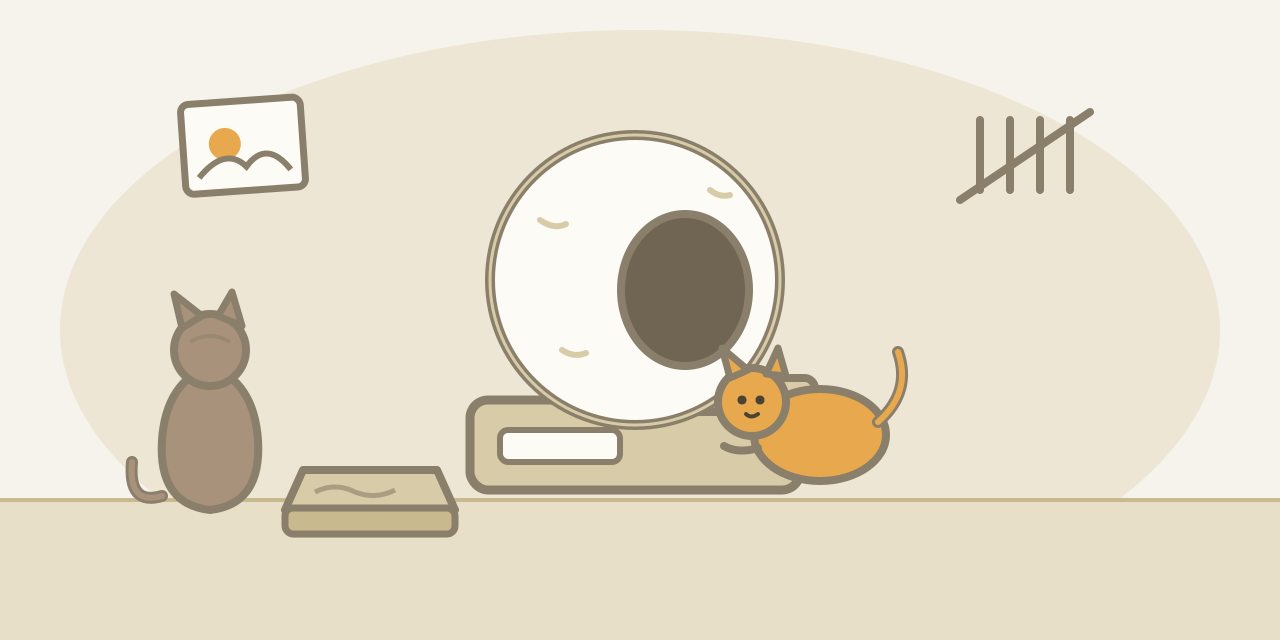
Unlike most of what we publish, this one is genuinely first-hand: a refurbished Litter-Robot 3 has been running in our house for about five years, sharing that house with two cats. The five-year verdict: the machine held up — a secondhand unit bought around 2021 is still cycling today — and the always-clean box is real. The honest asterisk: acceptance is per-cat and binary. Harmony took to it and has used it daily for five years; Tipper has refused it from day one and never changed her mind. If you buy one, keep a regular box as the fallback and count it as part of the plan, not a failure.
You can’t buy an LR3 new anymore — Whisker discontinued it, and today’s lineup is the Litter-Robot 4 and Litter-Robot 5. We own neither (our assessment of the 4 is research-based, written up here), but five years on the 3 is exactly why we take the category seriously. As Whisker partners, our link takes $50 off any Litter-Robot unit or bundle at checkout, and Whisker advertises a 90-day in-home trial on direct orders — which matters more than usual for a machine some cats simply veto.
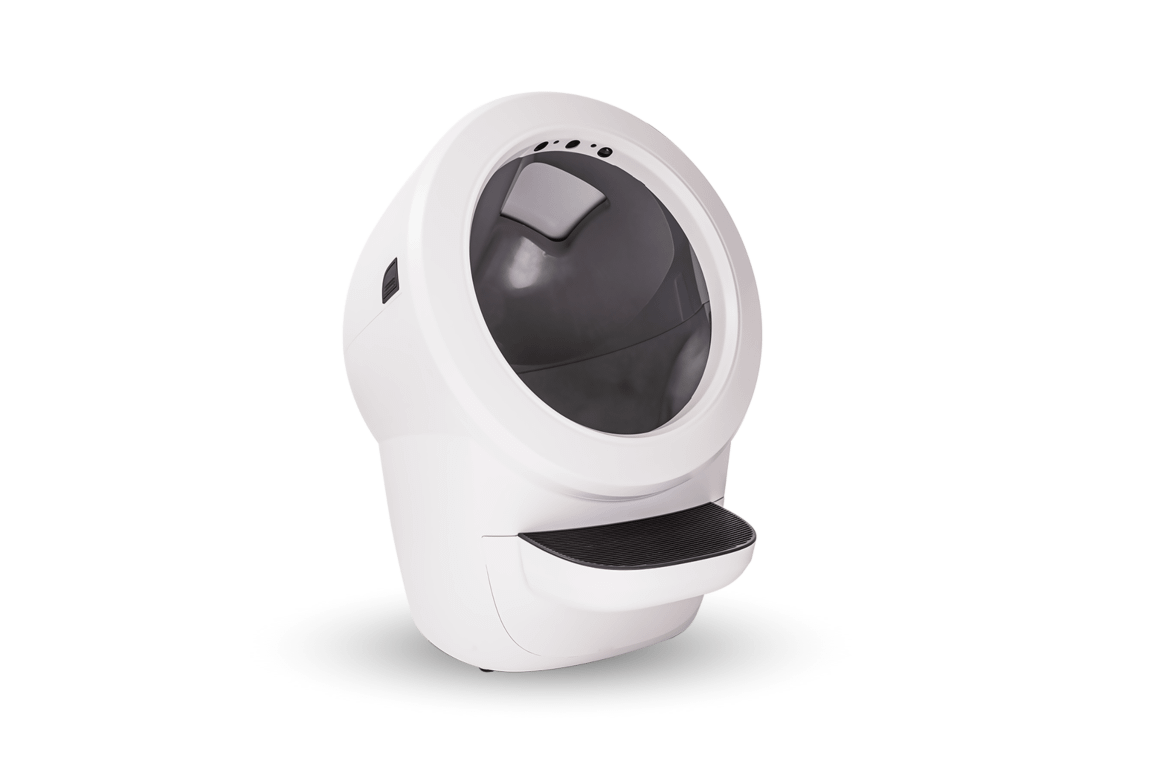
Five years on a refurbished unit
We didn’t buy ours new. Around 2021 we bought a refurbished Litter-Robot 3, which at the time felt like the sensible hedge on a several-hundred-dollar litter box: if the concept flopped in our house, at least we hadn’t paid full sticker to find out.
Five years later, the hedge turned out to be the whole story. The unit has run through roughly five years of daily cycles — thousands of rotations — and it is still the litter box in service today. That’s a durability data point you can’t get from a two-week review unit, and it came from a machine that had already lived one life before ours.
It also reframes the price debate. The usual objection to Litter-Robots is the up-front cost; our experience is that the cost spreads across a service life measured in years, not warranty periods. A refurb that runs for five years is one of the cheapest cost-per-month litter setups we’ve had — and owner reports of 5+ year lifespans, which we treated as marketing-adjacent optimism when we bought, match what actually happened on our floor.
One cat uses it. One cat never will.
Here’s the part most reviews soften, and the single most useful thing five years taught us: the same machine, in the same house, got a permanent yes from one cat and a permanent no from the other.
Harmony adapted quickly and has used the Litter-Robot happily for five years. For her, it does exactly what the pitch promises — she always steps into a clean box, and we never scoop it.
Tipper has never used it. Not during the transition period, not after months, not after years. This isn’t a shy cat warming up slowly; it’s a settled decision, and no amount of patience changed it. She’s the more anxious of our two, and the moving-machine-that-hums was evidently a hard no.
Two practical conclusions from living with that split:
- Keep a regular litter box running. Ours never left. If your cat refuses the machine, a backup box is the difference between “fine, she has her own box” and a ruined rug. Plan for it from day one rather than treating it as defeat.
- Buy from somewhere with a real return window. We got lucky that one cat accepted it. If neither had, resale would have been the exit. Whisker’s advertised 90-day in-home trial on direct orders exists precisely because refusal is a known outcome — a minority one, but real, and no spec sheet predicts which cat it’ll be.
What actually fixed our litter problems (it wasn’t the machine)
Tipper also came with a history of litter box trouble — including peeing outside the box. If any cat was going to be “fixed” by a fancy automatic box, surely the anxious one with accidents, right?
No. The Litter-Robot did nothing for her, because her problem was never the box’s cleanliness. What actually resolved it, over the same years:
- Switching litters to Dr. Elsey’s Ultra — a plain, unscented, hard-clumping clay she took to immediately.
- Providing enough litter boxes — the boring one-per-cat-plus-one rule, actually followed.
- Removing plug-in scent diffusers from the house. This was the sleeper. The plug-ins we’d been running to keep the house smelling nice had evidently been stressing her, and taking them out was part of what ended the accidents. If you’re fighting mystery out-of-box behavior, audit your air fresheners before your litter boxes — and see our guide to keeping a cat house smelling good for scent choices that don’t stress the residents.
The honest summary: an automatic litter box automates scooping; it doesn’t treat litter box aversion. If your cat has a behavioral issue, a $700 machine is the most expensive way to not fix it.
The five-year ledger
| What held up | What to go in knowing |
|---|---|
| Bought refurbished, still running five years later | Discontinued — no new units; today it’s the used market or the LR4/LR5 |
| Always-clean box for the cat who uses it — zero daily scooping | Acceptance is per-cat and binary: one of ours refuses it to this day |
| Cost-per-year ended up low despite the sticker price | The waste drawer still needs emptying every few days — it’s less work, not no work |
| Runs happily on ordinary hard-clumping litter | Older sensor tech than the LR4’s dual-sensor setup — the main thing the newer models fixed |
| A regular backup box costs almost nothing to keep | It’s a machine that moves and hums — anxious cats may veto it permanently |
The litter we run in it
Five years of the same machine also means five years of litter experiments settling on a winner: Dr. Elsey’s Ultra is the litter in our Litter-Robot, and our blunt assessment is that it’s perfect for the LR3 — hard clumps that survive the drum’s sifting rotation without crumbling into the waste drawer, no scent to offend anyone, cheap enough to be boring.
That’s not a niche finding: rotating boxes are mechanically picky about litter, because soft clumps shear apart during the sift and fall through as waste. Any quality hard-clumping clay works; scented, non-clumping, and lightweight litters are where owners get into trouble. The full compatibility rundown is in best litter for automatic litter boxes.
Should you buy a Litter-Robot 3 in 2026?
Probably not — and this is us saying it about a machine we like. Whisker discontinued the Litter-Robot 3; the current lineup is the 4, the 5, and the EVO, so an LR3 today means the secondhand market.
The case for a used one is narrow but real: Whisker still sells replacement parts for the LR3 — motors, boards, sensors — so a cheap used unit is genuinely repairable, and our own refurb proves the platform’s longevity. If you’re handy, tolerant of older sensor tech, and a used one crosses your path at an honest price, it’s a defensible tinkerer’s buy.
For everyone else, a used LR3 saves a couple hundred dollars and gives up the things the newer models exist to fix — the LR4’s dual-sensor safety hardware and quieter cycle chief among them — with no warranty and no trial window. The used-market discount isn’t large enough for what you give up.
The upgrade math, from inside an LR3 household
The question we can answer that most comparison pages can’t: what would actually move a five-year LR3 household to upgrade? Three things, in order:
A quieter cycle. Reviewers consistently measure the Litter-Robot 4 around 10 decibels quieter than the 3. A machine that hums less is also, plausibly, a machine fewer cats veto — though no one can promise you Tipper changes her vote.
Better sensors. The LR4’s laser-curtain-plus-weight-sensor setup replaces the LR3-era sensing that owners most often reported quirks with. On a machine your cat climbs inside, sensor redundancy is the upgrade that matters, not the app.
Per-cat data. The LR4’s scale tells you which cat visited and how often — an early illness signal vets actually ask about. In a two-cat house where only one uses the machine, we’d mostly be tracking Harmony, but for multi-cat households where everyone participates, it’s genuinely useful.
As of September 2026, the LR4 lists at $699 and the newer Litter-Robot 5 at $799; our partner link takes $50 off either at checkout. We haven’t owned the 4 or 5, so our full Litter-Robot 4 verdict is research-based and says so plainly — but “the previous model survived five years of daily use in our house” is, for us, the strongest argument on the LR4’s spec sheet. Our own plan: run the 3 until it dies, then buy the current model without much agonizing.
The current lineup, and what we’d run in it
Retailer links (Whisker and Amazon) — prices change, check current pricing. The $50 discount applies through our Whisker partner links at checkout.
The current successorLitter-Robot 4
The modern version of our five-year survivor: dual-sensor safety, quieter cycle, wider entry, per-cat tracking. Research pick — we own the 3, not this one. Also on Amazon.
Save $50 at Whisker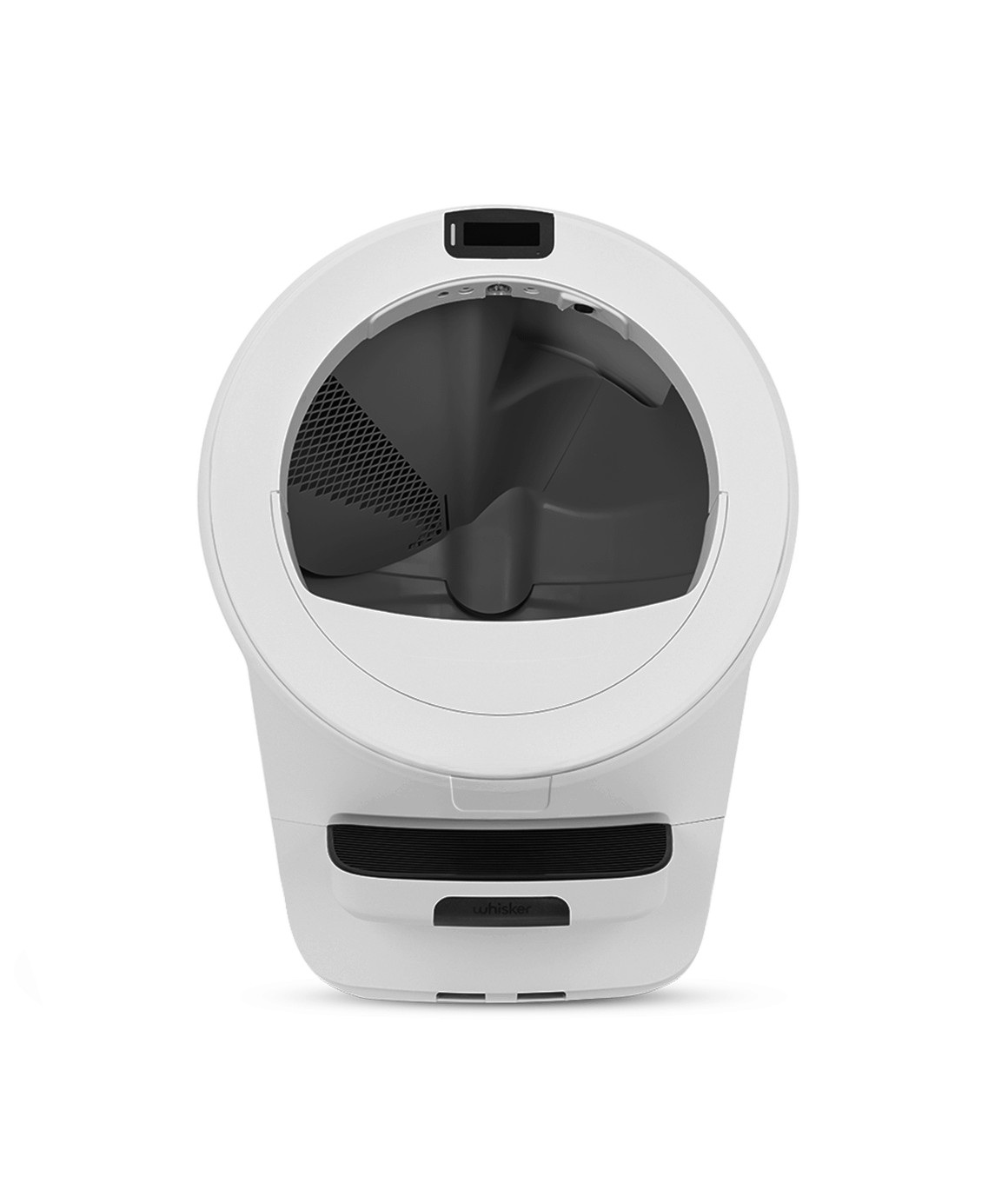 The new flagship
Litter-Robot 5
Whisker’s 2026 flagship at $799 list — the pick if you want the newest platform with the longest support runway ahead of it, for a $100 premium over the 4.
Save $50 at Whisker The litter in our machine
Dr. Elsey’s Ultra (Unscented)
Five years in our Litter-Robot and counting: hard clumps that survive the sift, no perfume, no drama. The litter we actually buy.
Check price on Amazon Under it
Gorilla Grip Litter Mat
Five years also confirms: the machine doesn’t stop paws from tracking litter. The mat handles the scatter zone.
Check price on AmazonLitter-Robot 3, five years in: FAQ
How long does a Litter-Robot 3 last?
Ours has run for about five years of daily use — and it was refurbished when we bought it, so it had already lived one service life. Owner reports of 5+ years are common, and Whisker still sells replacement parts (motors, boards, sensors), which is what separates a repairable machine from future e-waste.
Is the Litter-Robot 3 discontinued?
Yes. Whisker discontinued the LR3 in favor of the Litter-Robot 4, 5, and EVO. Replacement parts and support are still available, but new units are gone — buying an LR3 today means the used market, with no warranty or trial window.
Will my cat actually use a Litter-Robot?
Our honest answer from a two-cat household: maybe. One of our cats adapted quickly and has used it daily for five years; the other has refused it completely from day one and never changed. Most cats do adapt, but refusal is a real minority outcome — keep a regular box as backup and buy somewhere with a return or trial window.
What litter works best in a Litter-Robot 3?
A hard-clumping unscented clay. We’ve run Dr. Elsey’s Ultra in ours for years and consider it perfect for the machine — clumps survive the sifting rotation intact. Avoid soft-clumping, non-clumping, and lightweight litters, which shear apart in the drum.
Should I buy a used Litter-Robot 3 or a new Litter-Robot 4?
For most people, the LR4: better safety sensors, a quieter cycle, a warranty, and — through partner links — $50 off plus Whisker’s advertised 90-day trial, which matters if your cat vetoes it. A used LR3 only makes sense if you’re handy and the price is genuinely low, since parts remain available.
Related reading
Our research-based verdict on the current model is in Litter-Robot 4: is it worth $700, and how it compares to everything else in best automatic litter boxes. Still deciding whether to automate at all? Are automatic litter boxes worth it walks the cost math with a calculator. The litter side lives in best litter for automatic litter boxes, and the scent-stress lesson from Tipper’s story is expanded in how to make your house smell good with cats.