Litter-Robot 4 vs 5: Which One Should You Buy?
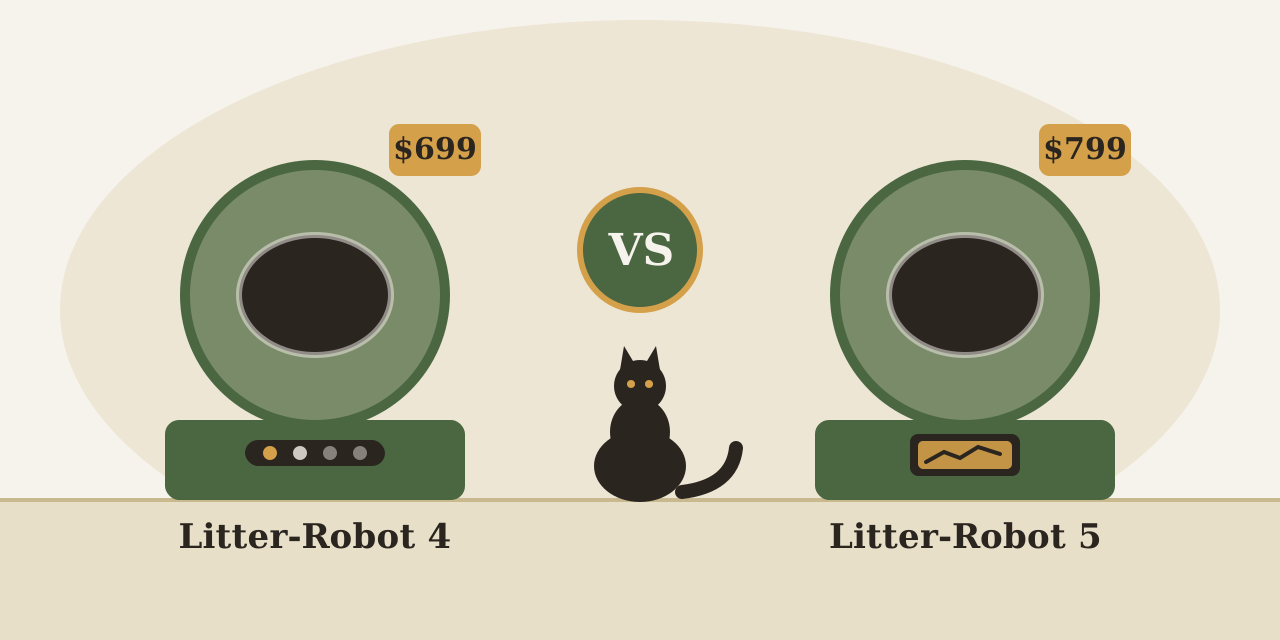
Whisker now sells both flagships side by side, $100 apart. We haven’t run either — our first-hand time is five years on a Litter-Robot 3 — so this is a research verdict: every real difference, who each machine is for, and the honest answer on upgrading.
Some links below are affiliate links. If you buy through them, MeowTested may earn a small commission at no extra cost to you, including as an Amazon Associate, where we earn from qualifying purchases, and as a partner of Whisker, the maker of Litter-Robot. We only recommend products that pass our Fit Analysis — and we publish the ones that don't.
The honest framing first: we haven’t run a Litter-Robot 4 or a 5. Our first-hand experience is five years on a Litter-Robot 3, so this comparison is built from spec sheets, early hands-on reviews, and owner reports — read it that way.
The research verdict: buy the Litter-Robot 4 unless one of four specifics applies to your home. It’s $100 less, its firmware has had years of fixes, it has the biggest parts and repair ecosystem in the category, and it does the core job — a box that’s clean every single visit — identically. Buy the Litter-Robot 5 instead if your cat is over 25 pounds, you run three or more cats, the machine is going on carpet, or you want per-cat weight and elimination tracking (WasteID) as a health signal. Those are the cases where the 5 is the only machine in the lineup that fits, and the extra $100 is cheap for them.
And if you already own a working 4: keep it. Early reviews of the 5 consistently report launch-window firmware bugs, and nothing on its spec sheet retires a healthy LR4.
As Whisker partners, our links take $50 off any order containing a Litter-Robot unit or bundle at checkout, and Whisker advertises a 90-day in-home trial on direct orders — which, after one of our two cats vetoed our LR3 for five straight years, we consider the most important line in this whole comparison.
What actually changed — and what didn’t
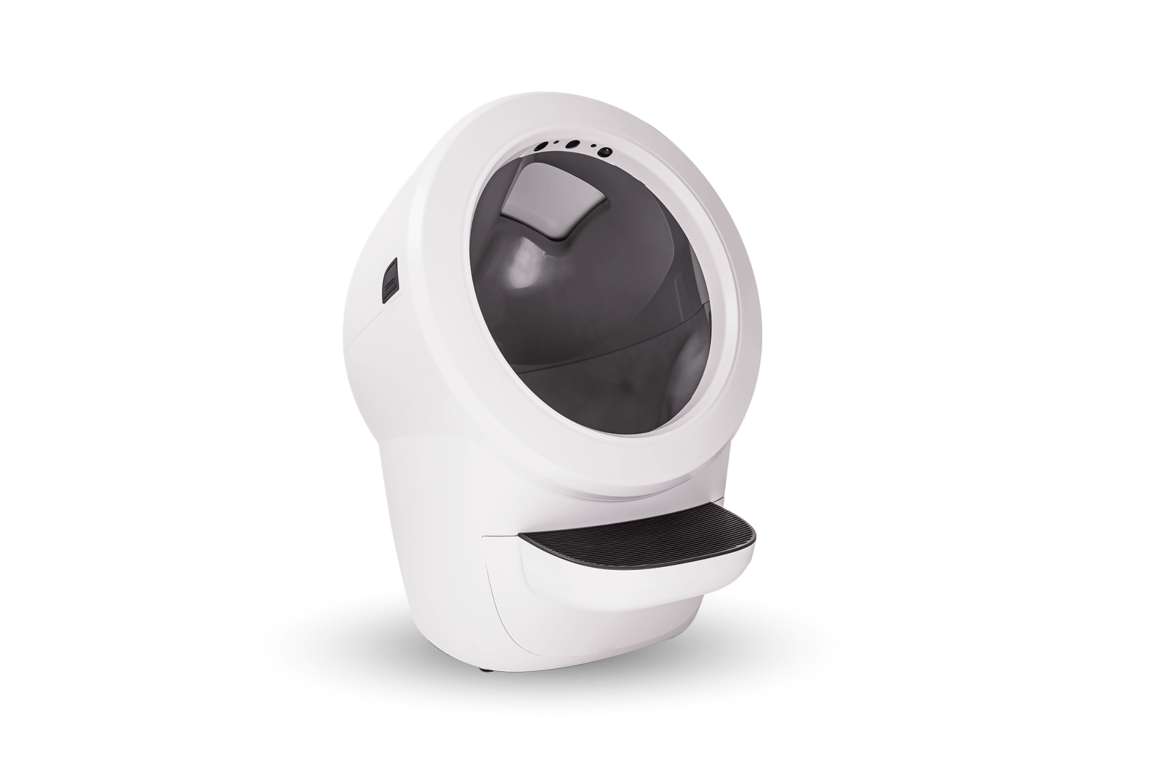
Strip away the launch copy and the 5 differs from the 4 in two clusters: sensing and fit.
On sensing, the 5 adds WasteID — it distinguishes urine from feces per visit, an industry first. Whisker says the machine uses it to time its cycles: it waits longer after urine so clumps can form, and cycles quickly after solid waste to contain odor. Paired with the built-in SmartScale (every visit is weighed, per cat), the litter box becomes an early-warning system — a cat that suddenly urinates more often is a classic early kidney and diabetes flag, and the 5 can surface that per cat without any extra hardware. The 4 tracks visits and weights through its app too, but with no urine/feces distinction and a scale that tops out at 25 pounds.
On fit, the 5 raises the rated cat weight from 3–25 lb to 3–30 lb, the capacity rating from 4 cats to 5, stretches the waste drawer from roughly 8 days to 10 between empties for one cat, adds about an inch of interior headroom, and ships with a base that runs correctly on carpet — the 4 needs a separate carpet-tray accessory for that. There’s also a full-color LCD on the base (the 4 has an indicator-light bar), an appliance-grade ABS finish, easier access to the curtain-sensor lens for cleaning, and a bonnet that’s ready for Whisker’s LitterHopper automatic litter refill.
What didn’t change matters just as much. The footprint is essentially identical — 22" wide, 27" deep, 29.9" tall against the 4’s 29.5" — so neither machine squeezes into a spot the other can’t. The step height is within a tenth of an inch. Both carry the same 90-day trial and 1-year warranty on direct orders. And the core mechanism — a rotating globe that sifts clumps into a sealed drawer a few minutes after every visit — is the same idea, executed well, on both.
Only the differences
| Litter-Robot 4 | Litter-Robot 5 | |
|---|---|---|
| List price | $699 | $799 |
| Rated cats | Up to 4 | Up to 5 |
| Cat weight range | 3–25 lb | 3–30 lb |
| Waste drawer (1 cat) | ~8 days | ~10 days |
| WasteID (urine vs feces) | No | Yes |
| Built-in SmartScale | No (25 lb sensor limit) | Yes, 3–30 lb |
| Display | Indicator lights | Full-color LCD |
| Carpet | Needs add-on tray | Works as shipped |
| Firmware maturity | Years of fixes | Launch-window bugs reported |
| LitterHopper-ready | No | Yes |
| Typical discounts | Regular bundle deals | None yet |
The case for the Litter-Robot 4: proven, cheaper, fixable
The 4 has been Whisker’s volume seller since 2022, and that maturity is worth real money in this category:
- The firmware is settled. Years of updates have worked through the sensor quirks that every new robot litter box launches with — exactly the phase the 5 is in right now.
- The parts and repair ecosystem is the biggest in the category. Motors, sensors, boards, globes — all available, with years of community repair knowledge behind them. Our own Litter-Robot 3 was still getting supported parts five years in, and the 4’s ecosystem is larger still. A machine you’ll own for five-plus years should be judged on how fixable it is in year four.
- It actually goes on sale. The 5 is too new to discount; the 4 shows up on deal trackers regularly — bundles have been listed in the $560–650 range in recent months, and Whisker sells reconditioned units for less again. Prices move, so treat those as patterns rather than promises, but the practical gap between a discounted 4 and a full-price 5 is often a lot more than $100.
- For a one- or two-cat home on hard floors, it gives up nothing that matters day to day. The always-clean core job is identical. Our full LR4 verdict is here.
The case for the Litter-Robot 5: four homes where it wins outright
The 5’s upgrades aren’t spread evenly across all buyers — they concentrate on four specific profiles, and if you’re in one of them the comparison stops being close:
- Your cat is over 25 pounds. The 5 (and 5 Pro) are the only rotating units rated to 30 lb. For Maine Coon owners this is the whole decision — the 4 is simply not rated for your cat.
- You run three or more cats. The 5-cat rating, the ~10-day drawer, and per-cat WasteID tracking all compound in a multi-cat home. Scaled down, a three-cat home empties the 5’s drawer roughly every three days — with the 4 you’re closer to every two.
- The machine is going on carpet. The 5 handles it as shipped; the 4 wants its add-on tray to run reliably. One less accessory, one less failure mode.
- You want health telemetry without extra hardware. WasteID plus the 30 lb SmartScale is genuinely new — no other machine tells you *which* cat urinated and how often. If you’ve ever had a cat with kidney disease or diabetes, you know why catching that trend a month early matters.
One compatibility note that applies to both machines but bites harder on the sensor-rich 5: these are designed for clumping clay litter. Owner reports are consistent that alternatives — tofu pellets especially — confuse the sensors. A household committed to non-clay litter should be looking at a different category entirely.
Already own a 4? The upgrade math says wait
This is the question most people searching "Litter-Robot 4 vs 5" are actually asking, so here it is plainly: a working Litter-Robot 4 is not $799 worse than a Litter-Robot 5.
Early hands-on reviews of the 5 tell a consistent story — strong hardware, immature software. Reported issues include inconsistent waste measurements, cat-detection sensor errors, drawer-level warnings firing early or late, Wi-Fi and Bluetooth drops, and some settings living only in the app rather than on that new LCD. Cats.com scored the 5 a 4.6/5 and still explicitly advised LR4 owners to wait for firmware fixes; BGR’s verdict on the 5 Pro was blunter — fancy features, too many bugs. None of this is unusual for first-year firmware on new hardware, and Whisker’s update track record is decent. But paying $799 to beta-test replaces a machine that already works.
The sensible upgrade triggers are the same four profiles above — your household changed (a new cat, a move to carpet, a cat outgrowing the 4’s ratings), or your 4 is aging out of its service life anyway. Absent one of those, the move that actually improves your setup this year costs $0: keep the 4, let the 5’s firmware mature, and revisit when your 4 needs replacing — by which point the 5 will be cheaper, patched, and possibly superseded.
One thing the upgrade math doesn’t capture: Whisker offers Affirm financing at checkout, with 0% APR for qualified buyers on eligible models over 3 to 18 months. It doesn’t change what the upgrade costs, only when you pay for it.
Living with them: the maintenance contract, compared
Neither machine ends litter box ownership — it changes who does the scooping. We’ve walked the full maintenance contract for each on the Litter-Robot 4 page and the Litter-Robot 5 page; what matters for this comparison is where the two contracts actually differ, and it’s less than the spec sheets imply.
The drawer gap is real but small. Whisker rates the 5’s drawer about two days longer between empties for one cat (~10 vs ~8), with the gap narrowing as cats are added — by three or four cats both machines are on a twice-a-week-to-every-other-day rhythm. And both tell you anyway: the 4’s light bar flashes blue when the drawer is full, the 5 puts drawer status on its LCD and in the app. The honest rule for a sealed waste drawer is the same on either machine — empty it when it says so, not when the rated maximum says you could. Stretched schedules are how the flies-and-cemented-litter stories in owner threads happen, and no model number fixes that.
The bag rule matters more on the 5. Both run on ordinary kitchen bags — Whisker’s own guidance is any 8–13-gallon bag on the 4 and 10–13 gallons on the 5, white preferred on both, because dark bags can throw the waste-level reading. On the 5 the stakes are higher: the drawer level is read optically, and Whisker warns that dark, stretched, wrinkled, or puffy bags cause exactly the early-or-late drawer warnings the launch reviews complained about. A box of plain white bags is cheap firmware-bug insurance.
The deep clean is a tie. Whisker’s schedule is the same for both: at least every three months with one cat, tightening to monthly at four cats (or five, on the 5). The teardown is the same job — bonnet off, globe lifts away for soap and water — and the one hard rule is shared: never spray, soak, or submerge the base or control panel, no bleach or ammonia-based cleaners anywhere on the machine, and every part bone-dry before reassembly.
The 5 adds a chore category the 4 doesn’t have. Its health sensors need upkeep: the SmartScale wants re-zeroing — a short press of Cancel — after you empty the drawer, add litter, clean the unit, or move it, and the curtain-sensor lens and WasteID area take a soft dry cloth only. Each is a two-second job, but skip them and the per-cat health data you paid the extra $100 for quietly drifts. Nothing on the 4 asks for any of this.
Odor extras: the 4 stacks, the 5 chooses. The 4 can run a carbon filter (around $30 for a six-pack, changed roughly monthly) and OdorTrap packs (around $15 per two-pack, every two to four weeks) at the same time; on the 5 it’s one or the other — the OdorTrap holder and the filter pocket can’t be used together. Either way they’re optional: an on-schedule drawer does most of the odor work on both. And litter is the consumable neither machine changes — figure about 20 lb of clumping clay per cat per month, the same as a regular box.
Add it up and maintenance doesn’t decide this comparison. The 5 saves a few drawer trips in a one- or two-cat home and asks for sensor care in exchange; the 4 asks nothing new and empties a little more often. If either contract sounds like a dealbreaker, it’s the category you’re objecting to, not the model — the worth-it question with a cost calculator is the page to argue with.
What five years on a Litter-Robot 3 taught us about this choice
Our own unit is a refurbished Litter-Robot 3 that has cycled daily for about five years — the full long-term review is here. Two lessons transfer directly.
The platform outlives the spec sheet. Our 3 was secondhand when we got it and still runs. Whatever you pay up front spreads across a service life measured in years, which is why we weight firmware maturity and parts availability so heavily in this comparison — they’re what year four looks like.
Acceptance is per-cat and binary. The same machine in the same house got a permanent yes from one of our cats and a permanent no from the other. No feature on either spec sheet changes that: some cats will not use a moving litter box, full stop. That’s why the 90-day in-home trial Whisker advertises on direct orders matters more than any row in our table, and why you should keep a regular box running through the transition — whichever machine you pick.
The two machines, priced
Whisker links below take $50 off any order with a Litter-Robot unit or bundle at checkout; Whisker also advertises a 90-day in-home trial on direct orders. Prices change — check current pricing.
The default pickLitter-Robot 4
Proven firmware, the category’s biggest parts ecosystem, and the same always-clean core job for $100 less. Lists at $699 and regularly turns up in discounted bundles; also on Amazon.
Save $50 at Whisker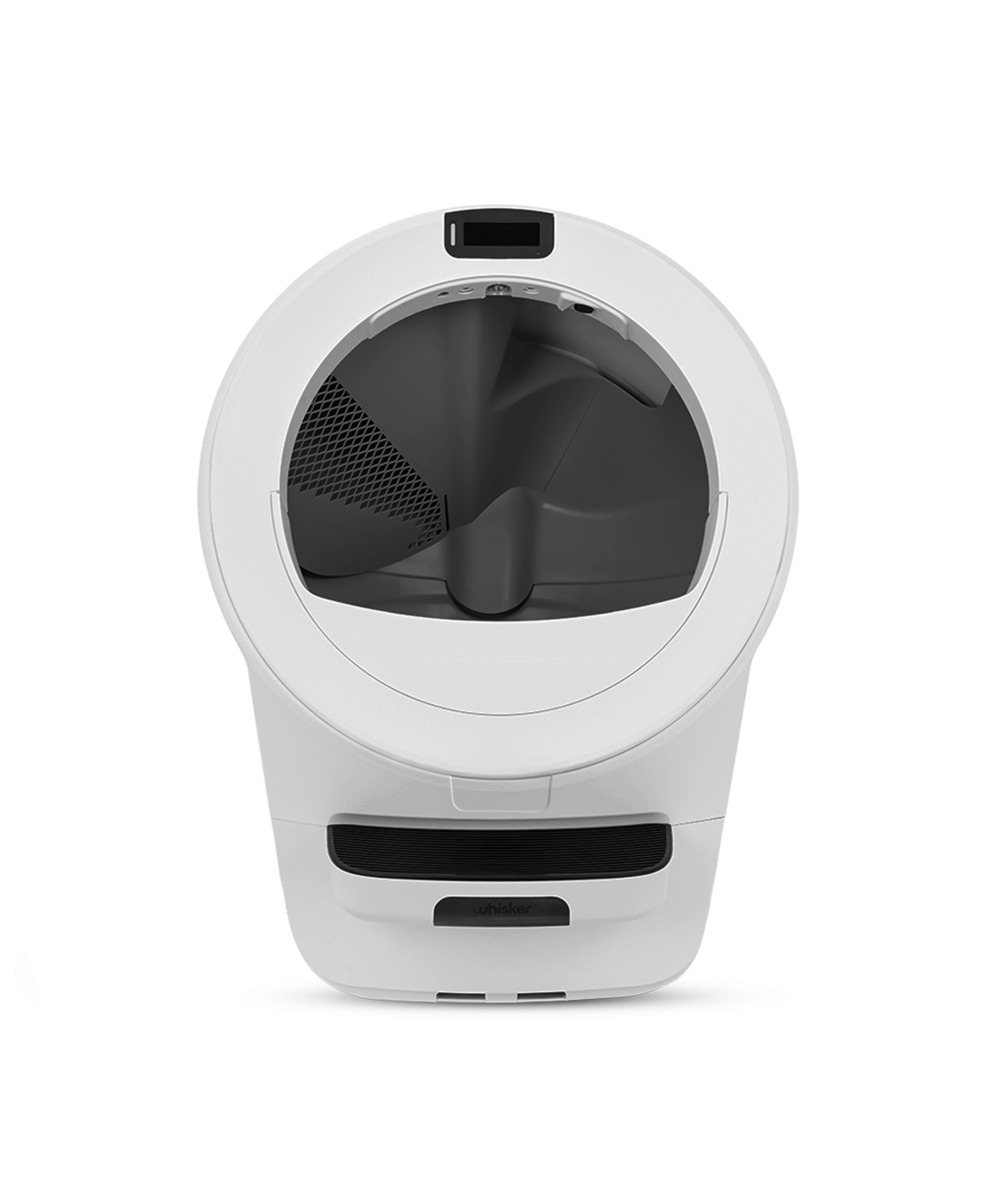 For the four profiles
Litter-Robot 5
The only unit rated for 30 lb cats and 5-cat homes, with WasteID health tracking, a built-in scale, and a carpet-ready base. Lists at $799 — worth it when one of those specifics is yours.
Save $50 at WhiskerLitter-Robot 5 Pro
The same 5 plus dual built-in cameras and AI monitoring at $899. Early reviews flag it as the buggiest of the lineup — wait unless the camera is the point.
Save $50 at WhiskerLitter-Robot 4 vs 5: FAQ
Is the Litter-Robot 5 worth $100 more than the Litter-Robot 4?
For four kinds of homes, yes: cats over 25 pounds, three-plus-cat households, carpet installs, and anyone who wants per-cat urine/feces tracking as a health signal. For everyone else the 4 does the identical core job with years more firmware maturity, a bigger parts ecosystem, and real-world discounts the 5 doesn’t get yet — so the practical gap is usually more than $100 in the 4’s favor.
Should I upgrade from a Litter-Robot 4 to a 5?
Not while your 4 works, in our research verdict. Early reviews consistently report launch-window firmware bugs on the 5 — sensor errors, connectivity drops, mistimed drawer warnings — and even reviewers who scored it well advised LR4 owners to wait. Upgrade when a specific limit binds (a new cat, carpet, a 25-pound-plus cat) or when your 4 ages out, not because the model number went up.
Is the Litter-Robot 4 being discontinued?
Whisker hasn’t announced anything like that — as of late September 2026 it sells the 4 alongside the 5 at full first-party support. Worth knowing: when Whisker did retire the Litter-Robot 3, parts and support continued for years afterward — our own LR3 was still getting supported parts five years in. Buying a 4 today is not buying an orphan.
Which is quieter, the Litter-Robot 4 or 5?
Whisker doesn’t publish decibel figures for either, and the early reviews we’ve read don’t measure it. Some early impressions describe the 5’s cycle as a touch quieter, but we treat that as unconfirmed. Owner reports put both in the same class: audible when cycling, easy to schedule around with sleep or quiet hours in the app.
Is the Litter-Robot 5 more work to maintain than the 4?
Differently, not more. The 5 saves drawer trips in a one- or two-cat home (roughly 10 days vs 8 between empties for one cat) and shares the 4’s deep-clean schedule, but it adds sensor upkeep the 4 never asks for: re-zeroing the scale after you empty, refill, clean, or move the machine, and keeping the curtain-sensor lens and WasteID area wiped with a dry cloth. The 4’s routine is simpler — nothing to re-zero — with slightly more frequent drawer changes. Neither contract should decide the purchase.
Do both models work with the $50 discount and 90-day trial?
Yes. Our partner links apply a $50 coupon automatically at Whisker’s checkout on any order containing a Litter-Robot unit or bundle — 4, 5, or 5 Pro. Whisker also advertises a 90-day in-home trial on direct orders for both. We haven’t tested the return process ourselves, but since cat acceptance is the single biggest failure mode for these machines, a real return window is worth more than any spec.
What about the Litter-Robot EVO?
The EVO is Whisker’s $599 entry point — below the 4 on price, with a smaller feature set and a drawer rated around 7 days for one cat. It exists for budgets where the 4 doesn’t fit; between the 4 and the 5 it isn’t the answer to this comparison. We’ll cover it separately.
Related reading
- Litter-Robot 3, five years in: a long-term owner review — the first-hand experience behind this site’s take on the category
- Litter-Robot 4: is it actually worth $700? — the default pick, judged on its own
- Litter-Robot 5: is the $799 upgrade actually worth it? — the deeper dive on the new flagship, including the 5 Pro
- Litter-Robot 4 vs PETKIT PuraMax 2 — if the budget question comes first
- Are automatic litter boxes worth it at all? — with a cost calculator to run your own numbers