Outdoor Cat Shelters: Ready Before the First Frost
Whether it’s a feral colony, the neighborhood regular, or your own indoor/outdoor cat, the shelter has to be out and familiar before the cold arrives — not after. What actually keeps a cat warm, the heated-or-not decision, and the $30 build that rescues swear by.
Some links below are affiliate links. If you buy through them, MeowTested may earn a small commission at no extra cost to you, including as an Amazon Associate, where we earn from qualifying purchases, and as a partner of Whisker, the maker of Litter-Robot. We only recommend products that pass our Fit Analysis — and we publish the ones that don't.
The single most important thing about an outdoor cat shelter is when it goes out, not which one you buy. Cats scout their winter refuges while the weather is still tolerable; a shelter that appears in January is furniture, one that’s been sitting there since early October is home. With first frosts weeks away across most of the country (and National Feral Cat Day on October 16), this is the week to set it up.
The research verdict on what to put out: for one or two cats near an outdoor outlet, the K&H Outdoor Heated Kitty House is the default — insulated walls, a safety-listed 20-watt heated floor, and two flap doors so nobody can get cornered inside. No outlet, or a whole colony to cover? The same house unheated stuffed with straw, or the rescue-standard DIY two-tote build at roughly $30 a shelter, both work — a small, insulated, straw-bedded box holds a cat’s own body heat remarkably well.
Two rules apply to every option: straw, never blankets or hay (fabric absorbs moisture and freezes; straw sheds it), and food stays outside the shelter at a separate feeding station, so the sleeping spot never smells interesting to raccoons.

Why now: the shelter has to be there before the cold is
This one comes straight from watching people succeed and fail at it in real time. In one recent thread, a Redditor bought a cat house for the neighborhood cat, set it out, and reported she “immediately went inside” — the happy version. The unhappy version fills the rest of the fall threads: indoor/outdoor cats vanishing for days at a stretch, strays showing up at doors as nights get colder, and people improvising too late with cardboard and towels — which absorb water, freeze, and make a shelter *colder* than no bedding at all.
Cats settle their winter arrangements early. An outdoor cat’s territory includes two or three known warm spots, and those get chosen while the cat can still afford to be picky. Put the shelter out in early October and it has weeks to stop being suspicious and start being *hers*. Put it out during the first cold snap and you’re asking a stressed animal to trust a brand-new object on the worst night of the year.
One more timing note: shelters and heated gear sell out regionally right as the first hard freeze hits, every year. Buying in late September is not just better for the cat — it’s when everything is actually in stock.
What actually keeps a cat warm (it’s not what you’d guess)
A shelter succeeds or fails on physics, and the physics favor *small*:
- Small interior, big warmth. A cat heats a shelter with her own body. A cozy box a cat can barely stand up in warms up fast and stays warm; a roomy doghouse never does. For a colony, several small shelters beat one big one.
- Insulation on all six sides. Walls and roof, but also the floor — the frozen ground steals heat faster than the air does. Anything sitting directly on dirt or concrete should be raised a few inches on a pallet, bricks, or foam board.
- Straw, never hay, never blankets. This is the one everyone gets wrong. Straw is hollow-stemmed bedding that sheds moisture and insulates even when a wet cat burrows into it. Hay is animal feed — it absorbs moisture, molds, and can trigger allergies. Blankets and towels soak up water and freeze stiff. If you remember one line from this page: loose wheat straw in, blankets out. (Amazon sells it in shelter-sized bags; a farm or feed store sells a whole bale for less if you have several shelters to stuff.)
- A small doorway, ideally two. A cat-sized opening (roughly 6 inches) keeps wind, dogs, and raccoons out. A second exit means no cat can be cornered inside by a predator — it’s why the K&H houses ship with two flap doors.
- Placement does half the work. Entrance facing a wall or away from prevailing wind, in a quiet spot with some cover, not on the route the neighborhood dogs patrol. Under a deck, against a garage wall, inside an open shed — all better than the middle of a yard.
The realistic options, compared
| Best for | Power needed | Rough price | |
|---|---|---|---|
| K&H Heated Kitty House | 1–2 regulars, outlet within reach | Yes — 20W | around $90 |
| K&H Outdoor Kitty House (unheated) | Milder winters, no outlet | No | around $65 |
| K&H Extra-Wide Heated House | Two cats who actually share | Yes — 20W | around $85 |
| The Kitty Tube (Gen 4) | One premium, permanent, no-power spot | No | around $195 |
| DIY two-tote build | Colonies — several shelters cheap | No | about $30 each |
| Heated pad added inside | Upgrading any unheated shelter | Yes — 40W | see heated-beds guide |
Heated or unheated? The honest decision tree
The heated versions are not automatically better — they’re better *when the conditions call for them*.
Go heated when you have a reliable outdoor outlet within cord reach, sustained freezing nights (not just the occasional dip), and one or two known cats using the spot. The K&H heated floor is a 20-watt pad — about a third of an old lightbulb — that warms to the cat’s body temperature when she’s lying on it. It’s MET safety listed for outdoor use with a steel-wrapped cord, which is the certification line we’d treat as non-negotiable for anything electric left running unattended outside. Plug it into a GFCI outdoor outlet, check the cord seasonally, done.
Go unheated when there’s no outlet (extension cords across a yard under snow are how you fail an insurance claim), when the shelter serves a colony rather than a regular, or when your winters flirt with freezing rather than living there. A properly small, raised, straw-stuffed insulated shelter is genuinely warm from body heat alone — this is how feral colonies survive real winters everywhere, and it’s why rescues focus on shelter count rather than wattage.
The middle path: start unheated, and if you find a devoted resident by December, add an outdoor-rated heated pad inside it. Our heated cat bed guide covers the outdoor-rated pad option (20W, waterproof, steel-wrapped cord) and — just as important — why an *indoor* heated bed must never be the thing you put out here.
The $30 build rescues actually use
If you’re covering more than one cat, skip the premium shelters and build the community-cat standard, documented by Alley Cat Allies among others. The recipe:
- Two plastic storage totes, one a size smaller than the other (the classic is a 30-gallon outer, 20-gallon inner).
- Foam board insulation (one hardware-store sheet) cut to line the gap between them — floor, walls, and under the lid.
- A 6-inch doorway cut through both totes on one side, a few inches above the floor line so rain can’t run in and straw can’t spill out.
- Straw loosely filling the inner tote. Not folded — loose, so the cat can burrow.
That’s roughly $30 in parts and 45 minutes with a utility knife, it outperforms most bought shelters because the double wall traps an air gap, and it survives being rained on, sat on, and ignored for a season. Weigh the lid down with a brick, raise the whole thing on a pallet, and make three of them for what one premium shelter costs.
If you want the premium no-power option anyway — for a front porch where a tote offends the HOA — the Kitty Tube is the one to buy: fully insulated floor-to-roof, raised internal floor, made in the USA from recycled material, and the feral option ships with straw already in it. It’s around $195, which is real money, but it’s a decade-old design that rescues consistently rate as the best manufactured cold-weather shelter.
Food and water: the part that freezes first
The shelter is half the winter problem. The other half is that water freezes, and a cat eating dry food with no liquid water available is headed for trouble faster than a cold cat is.
Rules that keep a winter feeding station working:
- Never put food inside or next to the sleeping shelter. Food smell turns a safe den into a raccoon destination. Separate the feeding station by several yards.
- Give the station its own roof. Anything from a plank between cinder blocks to K&H’s purpose-built feeding shelters — the point is snow-free kibble and a dry cat while eating.
- Solve the frozen-water problem with power if you can. The K&H Thermo-Kitty Café is the neat single-unit answer: a safety-listed heated station with removable 12 oz and 24 oz bowls that keeps both water and wet food from freezing. Around $50.
- No power at the station? Use a deep, wide bowl (more thermal mass), dark-colored and placed in the sun, refill with warm — not hot — water on a morning routine, and accept you’re on twice-a-day duty once nights stay below freezing.
- Wet food in winter is worth the hassle where you can keep it thawed: it’s hydration and calories in one, and outdoor cats need roughly a third more calories in the cold.
The winter kit, priced
As an Amazon Associate, MeowTested earns from qualifying purchases. Prices move — treat these as bands and check current pricing.
The defaultK&H Outdoor Heated Kitty House
Insulated shell, 20W MET-listed heated floor, two flap-door exits, tool-free assembly. For the known regular with an outlet in reach. Around $90.
Check price on Amazon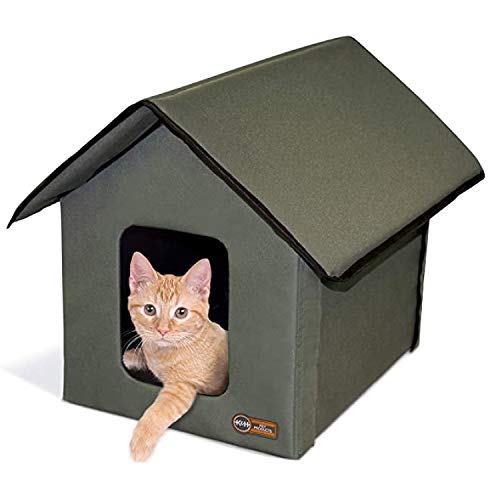 No outlet needed
K&H Outdoor Kitty House (unheated)
The same insulated two-door shell without the pad — stuff it with straw and let body heat do the work. Around $65.
Check price on Amazon Premium, no power
The Kitty Tube, feral option
Fully insulated Gen 4 design with a raised floor and straw included. The manufactured shelter rescues rate highest for real winters. Around $195.
Check price on Amazon For a bonded pair
K&H Extra-Wide Heated Kitty House
The wider version of the heated house, for two cats who genuinely share space. Around $85.
Check price on Amazon The feeding station
K&H Thermo-Kitty Café
Safety-listed heated shelter for food and water bowls — no more ice pucks where the water was. Keep it well away from the sleeping shelter. Around $50.
Check price on Amazon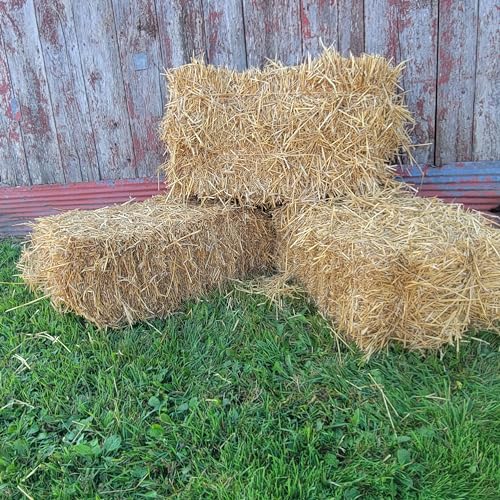 The bedding
Loose wheat straw, 5 lb
Clean loose straw sized for a shelter or two, delivered. Stuffing several? A feed-store bale is the cheaper move. Around $35.
Check price on AmazonOutdoor cat shelters: FAQ
Straw, hay, or blankets — what goes inside an outdoor cat shelter?
Straw, and only straw. It’s hollow-stemmed bedding that sheds moisture and keeps insulating when damp, and cats burrow into it. Hay is feed, not bedding — it absorbs moisture and molds. Blankets, towels, and folded fleece soak up water and freeze stiff, actively pulling heat out of a wet cat. If the shelter you bought came with a fabric pad, swap it for straw once the freezing nights start.
Do outdoor cat shelters need to be heated?
No — a small, insulated, raised shelter stuffed with straw stays warm from the cat’s own body heat, which is how feral colonies get through hard winters everywhere. Heat earns its keep when you have a reliable outdoor outlet, sustained sub-freezing nights, and a known regular: a 20W safety-listed heated floor takes the shelter from survivable to genuinely comfortable. Never run an indoor heated bed outdoors — they aren’t rated for moisture.
How do I get a cat to actually use the shelter?
Time and placement, mostly. Put it out weeks before the cold, somewhere quiet with the entrance facing a wall or away from wind, and let it stop being new. A handful of straw pulled half out of the doorway, a sprinkle of catnip or silvervine inside, and a few treats at the entrance all speed things up. Some cats move in the first night; some take a month of pretending it doesn’t exist first.
Is it safe to leave a heated cat house plugged in unattended?
The outdoor-rated units are built for exactly that: the K&H heated houses and pads are MET safety listed for outdoor use, run at 20–40 watts (a fraction of a light bulb), heat only toward body temperature under a lying cat, and wrap the vulnerable first stretch of cord in steel. Plug into a GFCI-protected outdoor outlet, keep connections off the ground, and inspect the cord at the start of each season. What’s not safe: indoor beds, space heaters, or heat lamps in any outdoor shelter.
Should I just bring the cat inside instead?
If it’s a friendly stray — often yes, and worth trying before winter rather than during it (scan for a chip and post found-cat notices first). A true feral usually can’t live indoors and will be miserable trying; for those cats, a good shelter, a feeding station, and TNR through a local rescue is the genuinely humane setup. And a well-sheltered yard cat this winter often becomes next spring’s porch cat.
When should the shelter go outside?
Now — or as soon as you’re reading this before the first frost. Cats choose their winter refuges while conditions are still mild, so a shelter that’s been in place for a few weeks gets adopted; one that appears mid-cold-snap gets investigated in spring. Early October is the sweet spot across most of the US, and it’s also before the annual sell-out of heated gear.
Related reading
- The best heated cat beds — including the outdoor-rated pad that upgrades any unheated shelter, and why indoor beds must stay indoors
- Hydration for cats who won’t drink — the indoor half of the winter-water problem
- The best automatic cat feeders — for keeping the indoor crew fed on schedule while you’re out managing the colony