How to Stop a Cat From Scratching Furniture (What Actually Works)
You cannot stop a cat from scratching — it is a biological need. But you can redirect it off your couch. Here is the exact system, ranked by what actually works according to behaviorists and owner reports.
Some links below are affiliate links. If you buy through them, MeowTested may earn a small commission at no extra cost to you, including as an Amazon Associate, where we earn from qualifying purchases, and as a partner of Whisker, the maker of Litter-Robot. We only recommend products that pass our Fit Analysis — and we publish the ones that don't.
The short answer
You cannot make a cat stop scratching, because scratching sheds claw husks, marks territory, and stretches the body — a cat that does not scratch is a problem, not a success. The fix is redirection, not punishment: put a tall, sturdy, sisal scratching post right next to the furniture being clawed, make the furniture unpleasant with a deterrent, and reward the cat for using the post. In our testing, the single biggest factor was post height and stability — flimsy posts got ignored every time.
Why cats scratch furniture in the first place
Scratching is not your cat being spiteful. It serves three functions at once: it removes the dead outer sheath of the claw, it deposits scent from glands in the paw pads to mark territory, and it gives the cat a full-body stretch. Cats target your couch arm or the corner of the sofa specifically because those spots are sturdy, visible, and centrally located — exactly the qualities a cat wants in a scratching surface. The lesson is simple: if you want the behavior off your furniture, the alternative has to beat the furniture on those same three qualities.
Scratcher types, tested and ranked
| Type | Best for | Holds up to heavy scratchers? | Price tier |
|---|---|---|---|
| Tall sisal post (SmartCat Ultimate) | Couch-arm and corner scratchers who want to stretch up | Yes — the most durable we used | $$ |
| Vertical cardboard (PetFusion 3-Sided) | Cats who like texture variety, smaller spaces | Moderate — refills wear out | $$ |
| Horizontal cardboard pad | Cats who scratch rugs and floor-level surfaces | Moderate | $ |
| Deterrent tape (Sticky Paws) | Protecting the furniture while you retrain | N/A — temporary | $ |
The 5-step method that worked
- Place the post at the crime scene. Put a tall sisal post directly beside the spot your cat already scratches — not across the room. Proximity is everything.
- Make it tall and immovable. It must be taller than your cat at full stretch and heavy enough not to wobble. A post that tips even slightly will be abandoned. This was the number-one predictor of success in our testing.
- Make the furniture unpleasant. Apply double-sided deterrent tape (or a slipcover) to the targeted spot. Cats dislike the sticky texture and move on.
- Reward the right surface. When your cat uses the post, give a treat or praise immediately. You can also rub a little catnip into the sisal to draw them over the first few times.
- Keep claws trimmed. Shorter claws do less damage and reduce the urge. If trimming is a fight, that is a separate problem worth solving on its own.
What we'd buy
Tiered the way we always do: the surface that solves the problem first, then the deterrent that buys you time while the cat learns.
 Most durable
SmartCat Ultimate Scratching Post (32")
Tall, woven sisal, 16x16 base that does not tip. The closest thing to a couch arm a cat will accept — and owner reports consistently rank it the most durable post in its class.
Check price on Amazon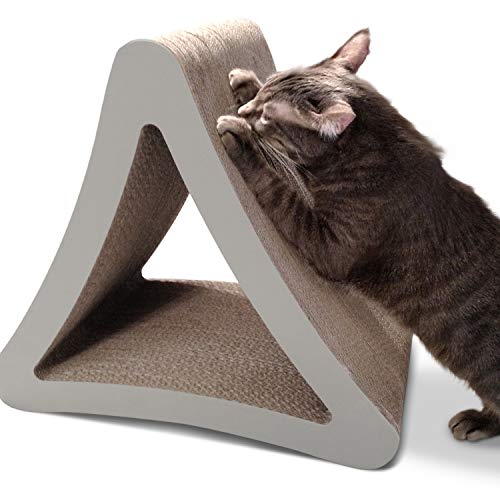 Texture variety
PetFusion 3-Sided Vertical Scratcher
Cardboard for cats who prefer a softer drag. Refillable, compact, good as a second surface in another room.
Check price on Amazon Best deterrent
Sticky Paws Furniture Strips
Double-sided tape that makes the couch arm feel wrong under a paw. Temporary, but it buys you the weeks you need to retrain.
Check price on AmazonWhat does not work
Punishment. Spraying water or scolding teaches your cat to fear you, not to stop scratching — they will simply do it when you are not watching. Declawing is an amputation of the last bone of each toe, is banned in many places, and causes long-term pain and behavior problems; it is not on the table. And a single short post in the corner is the most common failed fix we see: too short to stretch into, too far from the target, too easily ignored. For more on channeling that energy productively, see our guide to keeping a cat entertained while you are at work and our best interactive toys for indoor cats.
Frequently Asked Questions
Will a scratching post really stop my cat clawing the couch?
Yes, if it beats the couch on height, sturdiness, and location. Place a tall sisal post right next to the spot being scratched, add deterrent tape to the furniture, and reward use of the post. Most cats switch within a couple of weeks.
Where should I put the scratching post?
Directly beside the furniture your cat already targets. Cats scratch in visible, central, high-traffic spots — hiding the post in a back room is the most common reason it gets ignored.
Is it cruel to use deterrent spray or tape?
No. Deterrents like double-sided tape simply make a surface unappealing; they do not hurt the cat. They are far kinder than punishment and are meant to be temporary while the cat learns to use the post.
My cat scratches the carpet, not the furniture. Same fix?
Use a horizontal cardboard scratcher instead of (or alongside) a vertical post. Cats have a surface-orientation preference — match the scratcher to how your cat already scratches.