How to Entertain a Cat While You're at Work (9 Tested Ideas)
A bored indoor cat is a destructive cat. Here are the nine things that actually keep cats busy through an 8-hour workday — ranked by how long they hold attention.
Some links below are affiliate links. If you buy through them, MeowTested may earn a small commission at no extra cost to you, including as an Amazon Associate, where we earn from qualifying purchases, and as a partner of Whisker, the maker of Litter-Robot. We only recommend products that pass our Fit Analysis — and we publish the ones that don't.
The short answer
To keep a cat entertained while you are out, you need to engage its prey drive on autopilot: a rotating set of independent-play toys, a window perch with something to watch, food puzzles that make the cat work for meals, and a tired cat to begin with — a hard play session before you leave does more than any single gadget. The mistake is leaving the same toys out every day; novelty is what holds a cat's attention, so rotation beats quantity.
Why a bored cat becomes a problem cat
Indoor cats are predators with nothing to hunt. When that drive has no outlet, it comes out as overgrooming, scratching furniture, knocking things off counters, or waking you at 4am. Enrichment is not a luxury — it is how you prevent the destructive behaviors that get blamed on the cat. The goal for a workday is simple: give the prey sequence (stalk, pounce, catch, rest) somewhere to go without you in the room.
What holds attention longest
| Idea | Hands-off? | Typical attention span | Cost |
|---|---|---|---|
| Motion/touch-activated toy (Flapping Squirrel) | Yes | Highest — repeat sessions through the day | $ |
| Window perch + bird feeder outside | Yes | High — passive but all-day | $$ |
| Food puzzle / treat ball | Yes | Medium-high, meal-dependent | $ |
| Toy rotation (3 sets, swapped daily) | Yes | Medium — novelty resets it | $ |
| Hard play session before you leave | No (5 min) | Knock-on: sleeps for hours | Free |
The 9 ideas, ranked
- Tire them out first. Five to ten minutes of intense wand play before you leave triggers the full hunt cycle and a long post-hunt nap. The cheapest, most effective item on this list.
- A self-triggering prey toy. Touch- or motion-activated toys restart the chase without you. Toys like the Flapping Squirrel hold repeat interest because they react to the cat rather than running on a fixed timer.
- A window perch. A view of birds, squirrels, or street activity is feline television. Pair it with a feeder outside the window for an all-day channel.
- Food puzzles. Make the cat work for breakfast. Puzzle feeders and treat balls turn eating into a 20-minute hunt.
- Rotate toys. Keep three small sets and swap one in each morning. The same toy is invisible by day three; a rotated toy is brand new.
- A cardboard box or paper bag. Free, and genuinely engaging — boxes satisfy the urge to hide and ambush.
- Catnip or silvervine. A pinch on a toy or mat resets interest for cats that respond (about two-thirds do).
- A second cat — if it fits your home. For social cats, a compatible companion is the best enrichment there is. Not a decision to rush; see the introductions carefully.
- Cat TV. Looping bird-and-squirrel videos work for some cats as a backup, especially near a perch.
Toys that survive the novelty window
One question comes up constantly from owners of young, home-alone cats: which toys still get played with two weeks in? As one r/CatAdvice owner of a three-month-old kitten who is alone part of the day put it: “I want to avoid buying things that end up abandoned after two days.” Ranked by durability of interest rather than first-day excitement, the pattern in owner reports looks like this:
- The free tier outlasts almost everything. A crumpled piece of paper, a cardboard box, a stuffed animal to wrestle. One new owner working through the kitten blues found the kitten's go-to toy for a week was crumpled paper and a stuffed animal — “NOT ALL THE FANCY TOYS I BOUGHT FOR HIM.” The lesson is not that bought toys are useless; it is that cheap, replaceable objects stay novel because you throw them out and crumple a fresh one. Keep the free tier in the rotation permanently.
- A wand on a schedule, not on demand. A classic wand like Da Bird (around $20) never goes stale, because the interesting part is you — which also means it is a session, not a workday solution. It has limits even when you are home: one owner of an 18-month-old reported “Even after 2-3 hours of wand toys she still wants more.” Use it as the pre-work hunt from idea #1 and a short evening session, and do not expect a toy purchase to switch off a cat that mostly wants more of you.
- Kickers, track-and-ball toys, and scratcher-loungers. The self-serve middle tier: sturdy enough to survive months and engaging with nobody in the room. We rank specific ones in the interactive toys roundup rather than re-listing them here.
- Food puzzles are the durability champion. Novelty wears off; food motivation does not. A treat ball like the SlimCat in the kit below is the one category that answers both the kitten alone during the day and the adolescent still asking for play after a long session.
Two honest caveats. The classic regret purchase is the expensive toy bought on first-day excitement — if you are unsure, start with the free tier and one mid-tier toy, and let the cat vote. And if your cat already gets hours of interactive play and still demands more, that may simply be personality — build a predictable routine around it rather than buying your way out. A sudden change in play-demand or vocalising, especially in an older cat, is a vet conversation, not a shopping one.
What we'd set up
Lead with our top Fit-Analysis pick, then the low-cost add-ons that extend the day.
 MeowTested Pick
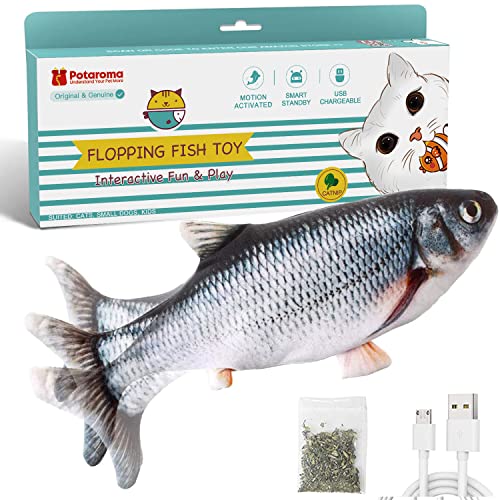
Potaroma Flopping Fish
Motion-activated solo play — flops like a landed fish when tapped, so the chase restarts on the cat's terms. Built-in catnip, USB-rechargeable.
Check price on Amazon Hands-free play
Potaroma 3-in-1 Automatic Toy
Fluttering butterfly, ambush feather, and rolling track balls on a timer — self-starting play that runs while you are out, then rests. USB-powered, so no battery graveyard.
Check price on Amazon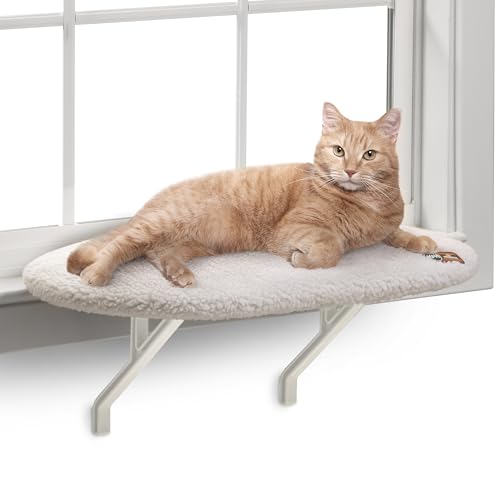 All-day view
K&H Kitty Sill window perch (24 x 14in)
Sill-mounted fleece perch that turns any window into feline TV — screws into the sill rather than relying on suction cups. Pair with a feeder outside the window for an all-day channel.
Check price on Amazon Makes them work
Food puzzle / treat ball
Slows fast eaters and stretches a meal into a 20-minute hunt. The easiest enrichment win for a workday.
Check price on AmazonBuild a workday routine
Stack them: a hard play session before you leave, a self-triggering toy and a food puzzle out for the day, a window perch for passive watching, and a fresh toy rotated in each morning. That combination is what keeps cats occupied and, more importantly, calm by evening. If the scratching or 4am yowling is your real issue, the root cause is usually unspent energy — the same fix applies. See our best interactive toys for indoor cats, why we chose the Flapping Squirrel, and how to stop a cat scratching the furniture.
Frequently Asked Questions
How long can a cat be left alone during the day?
A healthy adult cat is fine alone for a standard 8-10 hour workday with food, fresh water, a clean litter box, and enrichment. Kittens, seniors, or cats with medical needs need more frequent check-ins.
Do automatic toys actually keep cats entertained?
The best ones do, because they react to the cat instead of running on a fixed timer that cats quickly learn to ignore. Touch- and motion-activated toys hold attention far longer than timed ones in owner reports.
Will a second cat fix boredom?
For social cats, a compatible companion is excellent enrichment. But it is a big, permanent decision and a rushed or mismatched introduction can create more stress than it solves. Introduce slowly and only if your home and budget fit it.
Is leaving the TV on good for cats?
It can help some cats, especially looping bird or squirrel videos near a window perch, but it is a backup rather than a primary fix. Active and food-based enrichment hold attention more reliably.
Why does my cat abandon new toys after a couple of days?
That is novelty habituation, and it is normal — a static toy stops registering as prey once it is familiar. Rotation (three small sets, one swapped in each morning), a pinch of catnip or silvervine to scent-reset an older toy, and free disposables like paper balls and boxes keep the cycle going without new purchases.