Broths, Toppers, and Lickable Purées: Hydrating the Cat Who Won't Drink From a Bowl (2026)
Three r/CatAdvice threads in one week asked versions of the same question: one owner squeezing Churu tubes on purpose, one asking whether anyone sells just the juice from wet food, one told to take the water bowl up overnight. What the hydration-by-food aisle actually contains, how much of the job each product can honestly do, and where the vet line sits.

Some links below are affiliate links. If you buy through them, MeowTested may earn a small commission at no extra cost to you, including as an Amazon Associate, where we earn from qualifying purchases, and as a partner of Whisker, the maker of Litter-Robot. We only recommend products that pass our Fit Analysis — and we publish the ones that don't.
Cats are bad at drinking water on purpose — they descend from desert hunters built to get moisture from prey — and a cat who ignores the bowl is normal, not broken. The fix that works with that instinct instead of against it is putting the water inside something the cat already wants to eat.
The gateway product is the one cat owners keep discovering on their own: Inaba Churu lickable purée tubes. Inaba lists them at roughly 91% moisture, most cats treat them like a delicacy, and squeezing one out slowly is the single easiest way to get half an ounce of water into a cat who has not visited the bowl all day. They are treats, though — the standard vet guidance is that treats stay under about 10% of daily calories, so Churu is a hydration assist, not a hydration plan.
For the daily, meal-sized version of the same idea, pour a cat-specific bone broth like Solid Gold's broth topper pouches over food — wet or dry. And the thing one Reddit poster asked for by description, wet-food juice without the meat, is close to real: Weruva's Pantry Pours bisque is a thin, lickable soup on a bone-broth base. If your vet wants more than that, Purina makes a hydration supplement for exactly this job (Hydra Care, covered below).
None of this replaces available water. Keep the bowl — or better, a fountain; we cover that half of the problem in our running-water guide — and use the food half to close the gap.

The bowl-refuser is following ancient instructions
Domestic cats descend from desert-dwelling ancestors who got most of their water from the bodies of their prey — a mouse is roughly 70% water — and modern cats inherited both the low thirst drive and the weak instinct to compensate by drinking. A cat on an all-dry diet, which runs around 10% moisture, is being asked to make up an enormous gap at the bowl using an instinct evolution barely gave her.
Which is why the same scene repeats in every cat forum. In one recent r/CatAdvice thread, an owner describes a cat begging for wet food "only to lap up all the juices and leave the meat aside" — and asks whether anyone sells just the juice. In another, an owner explains they use Churu tubes deliberately as a water-delivery system. A third was told by an exterminator to take the water bowl up overnight and is asking, reasonably: how else am I supposed to keep her hydrated?
All three are circling the same answer without a map. Hydration-by-food is a real product category with three distinct tiers, and the differences between them — treat versus meal topper versus veterinary supplement — decide how much of the job each one can honestly do. We already cover the other half of this problem, getting the water itself to be more appealing, in our fountain guide and why cats prefer running water. This page is the food half.
The three tiers: treat, topper, supplement
Tier 1 — lickable purée treats (Churu and its imitators). Squeezable tubes of puréed meat and water, fed by hand or over food. Inaba lists Churu at roughly 91% moisture, and each 0.5 oz tube is small — around 6 kcal, per Inaba's listings. That combination is the whole appeal: high water, low calorie cost, and near-universal feline enthusiasm. The catch is the treat ceiling. The standard veterinary rule of thumb keeps treats under about 10% of a cat's daily calories, and while Churu's calorie count leaves room for a few tubes a day, a cat cannot lick her way to full hydration through treats alone. Use them as the reliable daily deposit, and as the trojan horse on days the bowl goes untouched.
Tier 2 — broths and food toppers. Pouches of cat-formulated bone broth or thin gravy, poured over a meal. Solid Gold's broth toppers are the established Amazon option — limited-ingredient broth with protein shreds, meant to go over wet or dry food. Weruva's Pantry Pours bisques work the same job from the soup direction: a thin, lickable bisque built on bone broth, and — matching our Reddit poster's request almost exactly — closer to "the juice without much meat" than anything else in the aisle. Toppers escape the treat ceiling because they ride on meals: a broth pour with every dinner is a routine, not an indulgence.
Tier 3 — hydration supplements. Purina Pro Plan Veterinary Supplements Hydra Care is the category's one mainstream product: a nutrient-enriched liquid that is mostly water with osmolytes, served on its own or poured over dry food, with the serving scaled to body weight on Purina's label. We haven't linked it because every pack size was out of stock on Amazon when we checked in September 2026; vet clinics and pet-specialty retailers carry it. It exists for exactly the situations in these threads — low drinkers, urinary-issue-prone cats, cats on dry diets. It also carries "Veterinary Supplements" on the label, and we mean it when we say to treat that as routing information: it is sold without a prescription, but if your cat's drinking has changed enough that you are shopping the veterinary aisle, that observation belongs in front of your vet, who may also want to rule out the medical causes of both under- and over-drinking.
The hydration-by-food aisle, side by side
| Product | Tier | Format | How it delivers water | Daily role | Watch out for |
|---|---|---|---|---|---|
| Inaba Churu variety pack | Treat | 0.5 oz squeeze tubes, 24-pack | ~91% moisture per Inaba's listing, fed by hand or over food | 1–3 tubes as treats; the never-refused option | Treat ceiling — keep treats under ~10% of daily calories |
| Inaba Churu tuna variety, 50 tubes | Treat | 0.5 oz tubes, 50-pack | Same tube, bulk box | The per-tube price break once the habit sticks | Single-protein heavy — confirm your cat likes tuna first |
| Solid Gold broth toppers | Topper | 3 fl oz broth pouches, 12-pack (chicken; tuna and salmon versions exist) | Pour-over broth with protein shreds and collagen | Over every dinner — rides on meals, no treat ceiling | Some cats lick the broth and abandon the newly soggy kibble |
| Weruva Pantry Pours bisque | Topper / soup | 1.4 oz bisque pouches, 12-pack | Thin lickable bisque on a bone-broth base | The "juice without the meat" — a soup course, not a meal | This variety is formulated for seniors; fine as a topper, but read the label |
| Purina Hydra Care (out of stock on Amazon as of Sept 2026) | Supplement | 3 oz liquid pouches | Nutrient-enriched water designed to increase liquid intake | Served per the label, which scales by body weight | Veterinary line — loop your vet in, and expect some cats to refuse it |
| Shallow, wide ceramic cat bowl | Hardware | Ceramic dish, about 5.5 in wide and 1.4 in deep (listed dimensions) | Removes the whisker-contact excuse for skipping the bowl | Serve the broths and purées in it; use one for water | A bowl fixes bowl-shape problems only — it adds no water by itself |
How much water a cat actually needs — and how much each product moves
The veterinary reference figure (it appears in the Merck Veterinary Manual) is roughly 44–66 ml of water per kilogram of body weight per day — for a typical 10 lb cat, in the neighborhood of 7–10 fluid ounces, from all sources combined. "All sources" is the operative phrase: a cat eating canned food, which runs about 65–80% moisture, takes most of her daily water at mealtime without a single trip to the bowl. The same cat on dry food gets almost none of it from the food, and cats reliably fail to fully close that gap by drinking.
Run the numbers on the products above and their honest sizes emerge. A Churu tube is half an ounce, most of it water — call it a meaningful deposit, three of which add maybe 1.5 oz. A Solid Gold broth pouch or a Hydra Care pouch each move roughly 3 oz. A full wet-food meal moves the most of all. Stack a wet or broth-topped dinner, a bisque or broth course, and a couple of Churu tubes, and a former bowl-refuser can be near her target before she drinks anything voluntarily — which is exactly how her desert ancestors did it.
Two honest caveats. First, these are label figures and reference ranges, not measurements we have taken; individual products vary, and your cat's needs shift with diet, weather, and health. Second, more is not automatically better — a cat who suddenly drinks far *more* than usual is showing one of the classic early signs of kidney disease, diabetes, or thyroid trouble, and that cat needs a vet, not a topper.
The safety lines, drawn plainly
Do not substitute human broth. This is the one genuinely dangerous shortcut in the category. Most human stock and bone broth is seasoned with onion and garlic — both are toxic to cats, in all forms, including powders — and the sodium levels are built for soup, not for a 10 lb animal. Cat-specific broths exist precisely because the human versions are unsafe. If you want to make your own, plain simmered chicken with nothing added is the only safe version, and a $2 pouch is easier.
Respect the treat ceiling. The ~10% of daily calories guideline for treats is standard veterinary advice, and it is the honest limit on the Churu strategy. A tube is small, so the practical cap for a typical cat is a few tubes a day — plenty for hydration-assist purposes, not enough to be the plan. The Reddit poster using Churu as a water-delivery system asked whether that is safe to rely on; the fair answer is that it is safe as a *supplement* to water and wet food, and the wrong tool as a *replacement* for them.
Route the veterinary products through a vet. Hydra Care is sold without a prescription, but it comes from Purina's veterinary-supplements line and much of its real-world use is in cats with urinary or kidney histories. We mention it here as "what exists in this category" — whether it belongs in *your* cat's routine, and whether reduced drinking is a symptom rather than a personality trait, are questions for a professional. A cat who stops eating or drinking for more than a day is an emergency, not a product decision; our won't-drink-water guide covers the warning signs in detail.
The hydration shortlist
Every pick below is research- and spec-driven — moisture figures and pack sizes are the makers' listed numbers, verified against the live Amazon listings for this guide, and the Churu recommendation started as a community find, not ours. We haven't run feeding trials; where we compare products, we're synthesizing labels, owner reports, and the veterinary reference ranges cited above.
The gateway productInaba Churu Lickable Purée, 6-Flavor 24-Tube Variety
The exact product cat owners on r/CatAdvice describe using as a deliberate water-delivery system. Inaba lists ~91% moisture, added vitamin E and green tea extract, no grains or preservatives, and six flavors — the variety matters, because flavor-refusal is the usual failure mode. Fed slowly by hand, one tube is the easiest half-ounce of water you will ever get into a difficult cat.
Check price on Amazon The bulk tier
Inaba Churu Tuna Variety, 50 Tubes
Same 0.5 oz tubes in a 50-count box for households where the daily-Churu habit has already stuck — the per-tube price drops meaningfully at this size. It leans tuna, so confirm your cat is a tuna cat with a small pack before committing to fifty tubes of it.
Check price on Amazon The daily topper
Solid Gold Bone Broth Cat Topper, Chicken, 12 Pouches
Cat-formulated bone broth in 3 fl oz pouches, with chicken shreds and collagen, made to pour over wet or dry food (tuna and salmon versions exist if chicken gets refused). This is the tier that escapes the treat ceiling: a broth pour with dinner is a routine that adds roughly three ounces of liquid to a meal, every meal, and it is the safe answer to the human-broth temptation.
Check price on Amazon The "juice without the meat"
Weruva Cats in the Kitchen Pantry Pours Bisque
A thin chicken-and-salmon bisque on a bone-broth base in 1.4 oz pouches — the closest real product to the wet-food-juice-without-the-food that bowl-refuser owners keep asking for. This variety carries senior-support supplementation, which is a bonus for older cats and worth a label read for younger ones.
Check price on Amazon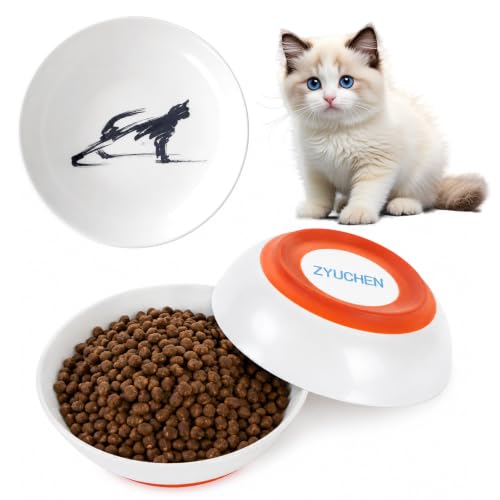 The bowl-shape fix
ZYUCHEN Shallow Ceramic Cat Bowl
A wide, shallow ceramic dish, about 5.5 inches across and 1.4 inches deep by its listed dimensions, that keeps whiskers clear of the rim. Whisker fatigue is genuinely debated among vets, but a wide shallow bowl is a cheap experiment that also happens to be the right serving dish for broths and bisques. Ceramic, unlike plastic, doesn't develop the scratches that harbor the biofilm slime we cover in our fountain-cleaning guide.
Check price on AmazonThe bowl itself, and the overnight problem
Two loose ends from the threads that started this page.
The bowl-shape question. Some cats skip the bowl partly because deep, narrow bowls press their whiskers against the sides. Whisker fatigue is a debated diagnosis — controlled evidence is thin — but the intervention costs a few dollars and fixes nothing else worse: a wide, shallow dish lets a cat drink and eat without rim contact. If your bowl-refuser drinks happily from glasses, puddles, and the faucet but not her bowl, shape is a suspect worth clearing before you assume the water itself is the problem. (If she demands the faucet specifically, that's a moving-water preference, and a fountain is the tool for it.)
The overnight removal problem. The owner told by an exterminator to take up the water overnight is in a genuinely awkward spot: water bowls do attract roaches, and cats do drink at night. If the bowl must go up, the food half of this page is most of the answer — shift more of the day's water into the evening meal with a wet dinner and a broth pour, and offer water first thing in the morning. A covered fountain also narrows the access that pests get compared to an open bowl, without cutting the cat off. What we'd avoid is bare overnight removal with an all-dry diet and no compensation; that combination concentrates exactly the risk this whole category exists to dilute.
The one-sentence version: keep water always available (a fountain if she likes moving water), move as much of her daily water as you can into food — wet meals, a broth topper or bisque at dinner, a hydration supplement only if your vet likes the idea — and use Churu tubes as the daily guaranteed deposit, not the whole plan.
Cat hydration by food: FAQ
Is it safe to rely on Churu to hydrate my cat?
As a supplement, yes — as the plan, no. Churu is a treat, and the standard veterinary guideline keeps treats under about 10% of daily calories, which caps a typical cat at a few tubes a day. That delivers a real but modest amount of water. The sustainable structure is wet or broth-topped meals doing the heavy lifting, water always available, and Churu as the daily bonus deposit — especially useful on days you notice the bowl untouched.
How much water does a cat need per day?
The common veterinary reference is roughly 44–66 ml per kilogram of body weight daily — around 7–10 fluid ounces for a 10 lb cat — counting all sources, food included. A cat on canned food (65–80% moisture) gets most of that at mealtime; a cat on dry food (around 10% moisture) has to make up the difference by drinking, which cats are famously bad at. That gap is the entire reason this product category exists.
Can I give my cat chicken broth from the grocery store?
No — this is the one hard line in the category. Human broths and stocks are routinely made with onion and garlic, both toxic to cats in all forms including powders, and carry sodium levels meant for human soup. Cat-specific broths are formulated without them. If you want homemade, plain simmered chicken in water with absolutely nothing added is the only safe version.
What is Hydra Care and does my cat need a prescription for it?
Hydra Care is a nutrient-enriched liquid from Purina's veterinary-supplements line — essentially engineered water with osmolytes that encourages cats to take in more liquid. No prescription is required, though it was out of stock on Amazon in every pack size when we checked in September 2026. Much of its real-world use is in cats with urinary or kidney histories, so treat the 'veterinary' on the label as a prompt: mention it to your vet, and if your cat's drinking habits have recently changed in either direction, get that checked rather than masked.
My cat suddenly drinks a lot more water than she used to. Is that good?
Treat it as a symptom until a vet says otherwise. Increased thirst is one of the classic early signs of chronic kidney disease, diabetes, and hyperthyroidism in cats — three conditions where early detection genuinely changes outcomes. The goal of everything on this page is adequate hydration, not maximum water consumption; a sudden unexplained increase in drinking is a vet visit, not a win.
Where this fits in the bigger hydration picture
This page is the food half of a two-front problem. The other half — making the water itself worth visiting — is where we have spent most of our hydration coverage: why cats prefer running water, what to check when a cat won't drink, the fountains that stay clean enough that cats keep using them, and how to clean one properly when it slimes anyway.
The two halves compound. A fountain raises baseline voluntary drinking; food-based water arrives regardless of the cat's mood at the bowl. For the bowl-refusers, the faucet-demanders, and the cat currently licking the juice off her dinner and walking away, run both — and let the wet food do the job her ancestors assigned to the mouse.