Best Easy-to-Clean Cat Water Fountains (2026)
A fountain that's a hassle to clean stops getting cleaned, and a slimy fountain gets unplugged. These are the 2026 designs that turn the weekly clean into a three-minute job, including the cordless-pump models that finally fixed the dirtiest part.
Some links below are affiliate links. If you buy through them, MeowTested may earn a small commission at no extra cost to you, including as an Amazon Associate, where we earn from qualifying purchases, and as a partner of Whisker, the maker of Litter-Robot. We only recommend products that pass our Fit Analysis — and we publish the ones that don't.
The easiest fountains to keep clean share two traits: a non-porous bowl (stainless steel or ceramic) and a pump that comes apart fully without tools. For most homes our Fit Analysis pick is the Veken Stainless Steel Fountain — a 2024 Pet Innovation Award winner whose stainless bowl shrugs off the biofilm plastic invites, with a dishwasher-safe bowl and a pump that rinses out in seconds.
The 2026 development worth knowing: cordless fountains like the PETLIBRO Dockstream move the pump off a cord, so it lifts straight out and the tray becomes one open surface to wipe — no cable threaded through the bowl to trap slime. If you want the fewest parts to wash, the two-piece Pioneer Pet Raindrop is the minimalist stainless option, and the PetSafe Drinkwell Pagoda is the dishwasher-safe ceramic pick.
Why 'easy to clean' is the metric that matters: a fountain that's a pain to clean stops getting cleaned, starts tasting off, and the cat quietly goes back to under-drinking. The best fountain is the one you'll actually maintain.

Why fountains get slimy — and why material decides everything
That slippery film in the bowl is biofilm — bacteria fed by cat saliva and standing water. Every fountain grows it. The material decides how fast, and how hard it is to remove.
Plastic scratches with normal cleaning, and every micro-scratch becomes a groove biofilm colonizes. That's why plastic fountains feel slimy again days after a scrub. Stainless steel and ceramic are non-porous: biofilm wipes off instead of digging in, and both survive the dishwasher's heat. There's a hygiene bonus too — scratched plastic bowls are commonly implicated in feline chin acne, which non-porous surfaces sidestep.
The second offender is the pump — a dark, warm cavity that most owners never open. A fountain whose pump snaps apart fully is a two-minute job; one that doesn't is a permanent slime reservoir. Our fountain cleaning guide covers the full routine, and the material head-to-head goes deeper on why plastic loses.
Put another way: a cat fountain that doesn't get slimy isn't a special product category. It's any fountain with a non-porous bowl and a pump you'll actually open. That's the whole shortlist test below.
The 2026 shift: the cord was the dirtiest part
For years the hardest thing to clean on a fountain wasn't the bowl — it was the pump and the cord threaded up through the middle of it. The cable pins the pump in place, forces water to route around it, and turns the base into a crevice your hand can't reach.
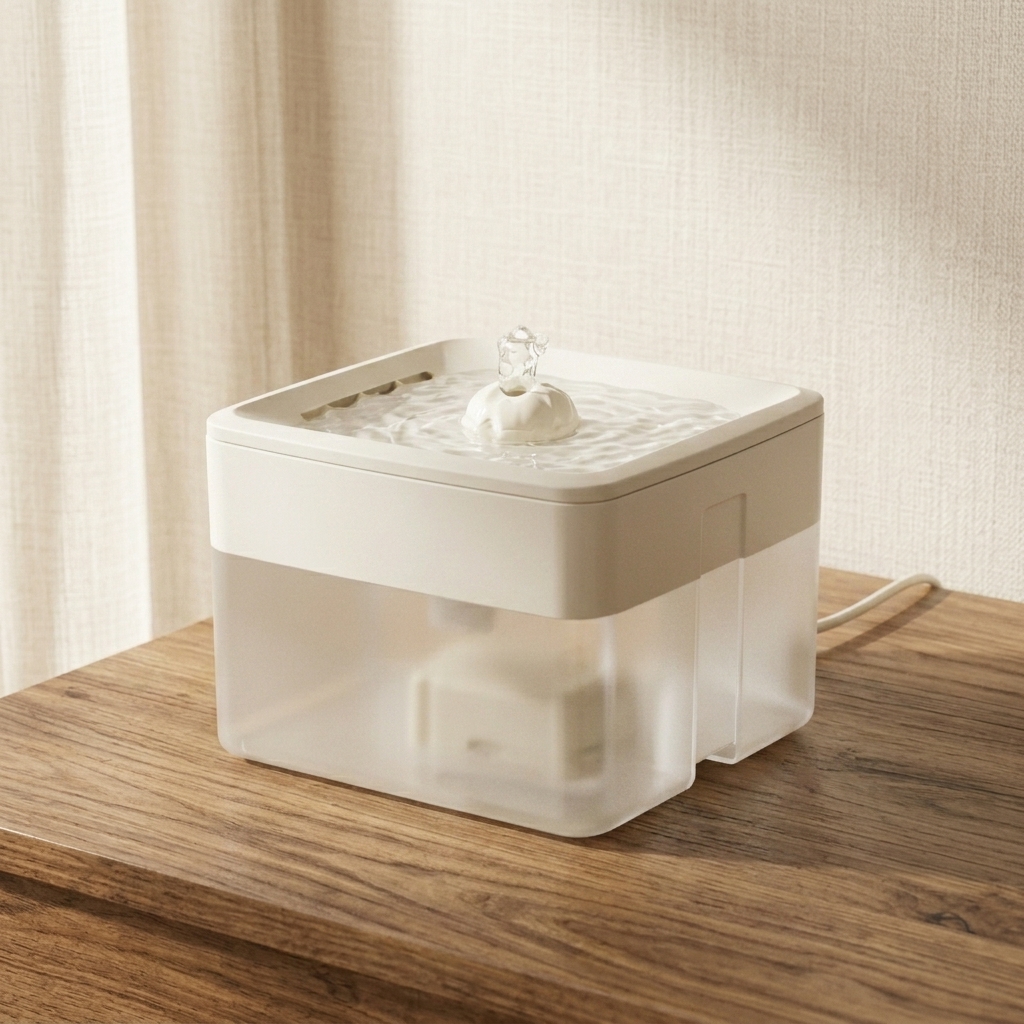
The fix that matured in 2026 is the cordless (wireless) pump. Models like the PETLIBRO Dockstream run the pump off a rechargeable battery on a separate charging base, so nothing electrical sits in the water. Two things follow for cleaning: the pump lifts straight out with no cable to unthread, and the tray becomes a single open bowl you can wipe or rinse end to end. Owners consistently call the detachable-tank-plus-wireless-pump combination the easiest part of the design to keep clean.
The trade-off is honest: you now have a battery to recharge every week or two, and cordless units cost more than a comparable corded stainless bowl. If you never minded the cord, a classic stainless fountain is still the cheaper easy-clean answer. If the cord and the unreachable base were the reasons your last fountain got neglected, the cordless design removes that excuse.
Easy-clean fountains compared (2026)
| Fountain | Material | Pump | Dishwasher | Cleaning effort | Best for |
|---|---|---|---|---|---|
| Veken Stainless Steel | Stainless steel | Corded, rinse-out | Bowl yes; pump hand-wash | Low | Most homes — the default |
| PETLIBRO Dockstream | Stainless + BPA-free | Cordless, lifts out | Tray detaches; hand-rinse pump | Lowest — no cord to work around | Anyone who hated the cord |
| Pioneer Pet Raindrop | Stainless steel (18/8) | Corded, few parts | Bowl yes; pump hand-wash | Low — only two main pieces | Minimalists; fewest parts to wash |
| PetSafe Drinkwell Pagoda | Ceramic | Corded | Ceramic parts yes; pump hand-wash | Low, but bulky in the sink | Style + durability; multi-pet homes |
| Typical plastic fountain | Plastic | Corded | Varies | High — weekly scrubbing, slime returns fast | Tight budgets only |
What to look for in an easy-to-clean fountain
Applying our Fit Analysis to this category, six things separate the easy-clean designs from the slime traps:
Non-porous material. Stainless or ceramic. This is the single biggest factor.
Few parts. Every extra tray, ramp, and 'flower' spout is another surface to scrub and another crevice to miss. The two-piece Pioneer Raindrop wins on this alone.
A pump that opens fully — or lifts out entirely. You should be able to pop the cover, pull the impeller, and rinse everything without tools. Cordless pumps go one better: nothing to unthread.
Wide, reachable openings. If your hand can't reach a surface, it isn't getting cleaned. This is where corded designs with a cable up the middle lose ground.
Cheap, available filters. Filters need changing every 2–4 weeks; obscure filter formats are how fountains end up running filterless. On the Pagoda especially, a neglected carbon filter eventually clogs the whole fountain.
A weight you'll actually lift. A gorgeous ceramic fountain that's too heavy to carry to the sink full gets cleaned less often than a light stainless bowl. Match the fountain to your actual routine.
The 3-minute weekly clean (works for any fountain)
This is the routine an easy-clean fountain makes almost effortless: 1. Unplug the fountain (or lift the cordless pump off its base) and pour out the old water 2. Load the bowl and any dishwasher-safe parts into the dishwasher, or wash them in hot soapy water 3. Pop the pump cover, pull the impeller, and rinse both under the tap (a thin brush helps if you see slime) 4. Reassemble, refill with fresh water, and change the filter if it's due (every 2–4 weeks)
Once a month, add a 1:1 white vinegar soak to dissolve mineral scale, then rinse thoroughly. The full step-by-step, including the deep clean, is in how to clean a cat water fountain.
How we chose these picks
This guide is our Fit Analysis shortlist for one job: staying clean with the least effort, so the fountain keeps running and the cat keeps drinking. It is structured research and spec comparison against real owner reports — not an in-home lab test.
Veken Stainless Steel — the default. A 2024 Pet Innovation Award winner, roughly 108oz in the current stainless version, with a dishwasher-safe stainless bowl and a pump that rinses clean quickly. It does the easy-clean fundamentals right at a mainstream price, which is why it's the pick for most homes.
PETLIBRO Dockstream — the cordless upgrade. The wireless pump and detachable tank make it the easiest to fully clean, because there's no cord routing through the bowl. You trade that for a battery to recharge and a higher price.
Pioneer Pet Raindrop — the minimalist. 18/8 stainless (the grade used in restaurant kitchens), a two-piece design that comes apart in seconds, and dishwasher-safe except the pump. Fewer parts means fewer places for slime to hide.
PetSafe Drinkwell Pagoda — the ceramic. Handsome, dishwasher-safe ceramic that resists odors, with the heft that also makes it tip-proof for multi-pet homes. Just budget for filter changes and know it's bulky in the sink.
Our easy-clean picks
Amazon links — prices change, check current pricing at each link.
Top pickVeken Stainless Steel Fountain
Award-winning stainless bowl that shrugs off biofilm, dishwasher-safe, quiet operation. The low-maintenance default for most homes.
Check price on Amazon Easiest to clean
PETLIBRO Dockstream (Cordless)
Wireless pump lifts straight out and the tank detaches, so there is no cord threaded through the bowl to trap slime. Recharge the pump every week or two.
Check price on Amazon Fewest parts
Pioneer Pet Raindrop (Stainless)
18/8 stainless in a two-piece design that comes apart in seconds. Dishwasher-safe except the pump — the minimalist easy-clean choice.
Check price on Amazon Ceramic pick
PetSafe Drinkwell Pagoda (Ceramic)
Dishwasher-safe ceramic that resists odors and slime. Heavier — which also means tip-proof. Keep the carbon filter fresh so it never clogs.
Check price on Amazon Keeps any fountain easy
Fountain Cleaning Brush Set
Long, thin brushes that reach inside the pump and tubing — the spots sponges never touch.
Check price on AmazonEasy-to-clean fountains: FAQ
What is the easiest cat water fountain to clean?
In our Fit Analysis, a stainless steel fountain with a tool-free pump: the Veken stainless steel fountain is our pick for most homes. The non-porous bowl wipes clean instead of holding biofilm, the pump rinses out without tools, and the bowl is dishwasher-safe. If you want the absolute least fuss, a cordless model like the PETLIBRO Dockstream is even easier because the pump lifts out with no cord to unthread.
Are cordless (wireless-pump) cat fountains easier to clean?
Yes, meaningfully. On a corded fountain the cable runs up through the bowl and pins the pump in place, creating a crevice you can't reach. A cordless pump — like the one on the PETLIBRO Dockstream — lifts straight out, and the tray becomes one open surface to wipe or rinse. The trade-off is a battery you recharge every week or two, and a higher price than a corded stainless bowl.
How often should I clean a cat water fountain?
Top up daily, wash the bowl and parts weekly, open and rinse the pump every 2–4 weeks, and change the filter on the schedule the maker recommends (usually 2–4 weeks). Stainless and ceramic make the weekly wash dramatically faster.
Can I clean a cat fountain with vinegar?
Yes — a 1:1 soak of white vinegar and water dissolves mineral scale and helps with biofilm. Rinse thoroughly afterward; cats are far more sensitive to residual smells than we are.
Why does my fountain get slimy so fast?
Biofilm — bacteria fed by saliva and standing water. It returns fastest on scratched plastic. If you're scrubbing slime weekly from a plastic fountain, switching to stainless or ceramic fixes more than any cleaning routine will.
Are stainless steel fountains really better than plastic?
For cleaning, yes, decisively: non-porous surfaces don’t harbor biofilm in scratches, and they tolerate the dishwasher. Plastic’s only advantage is price. There’s also a hygiene bonus — plastic scratches are implicated in feline chin acne.
Are self-cleaning cat fountains worth it?
“Self-cleaning” almost always means better filtration, not less washing. Every fountain still needs a weekly bowl wash and a pump rinse, because filters don’t remove biofilm. That money is better spent on a stainless or ceramic design — or a cordless pump — that turns the weekly wash into a three-minute job.
Related reading
Wondering why your cat ignores the water bowl entirely? Start with why won't my cat drink water. For the science on moving water, read why cats need running water. And once your fountain arrives, bookmark how to clean a cat water fountain — three minutes a week keeps it slime-free.