How to Clean a Cat Water Fountain (So It Doesn't Get Slimy)
That slippery film is biofilm, and it comes back fast if you skip the pump. How often to clean each part, the exact steps, and what a ceramic fountain takes in our home.
Some links below are affiliate links. If you buy through them, MeowTested may earn a small commission at no extra cost to you, including as an Amazon Associate, where we earn from qualifying purchases, and as a partner of Whisker, the maker of Litter-Robot. We only recommend products that pass our Fit Analysis — and we publish the ones that don't.
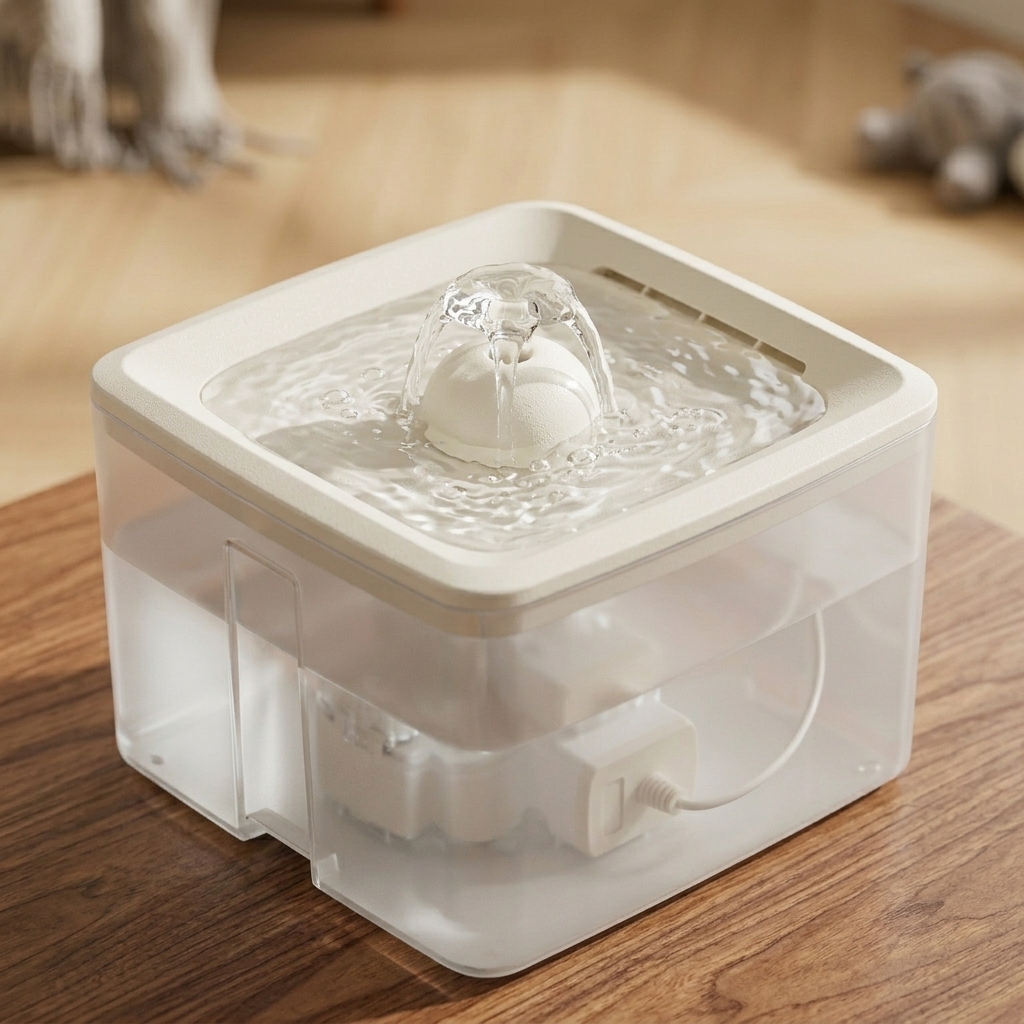
Rinse and refill the bowl every 1 to 2 days, do a full teardown clean about once a week, and take the pump apart every time you do. The slimy film is biofilm: a layer of bacteria that glues itself to wet surfaces and shrugs off a quick rinse. It comes back in days when the one part people skip, the pump and its impeller, still has a colony in it.
Our own ceramic fountain gets a full clean every one to two weeks and stays mostly slime-free in between, and its pump has never failed, which is more than we can say for other fountains we have owned. Material helps. It does not replace the pump teardown.
The one tool worth buying is a narrow pump brush. A sponge cannot reach inside the pump housing or the tubing, and that is where the slime lives.

How often to clean a cat water fountain
Every part runs on its own clock. Manufacturer guidance differs by model, so treat the schedule below as a sensible default and let your manual win where it disagrees.
The cleaning schedule, part by part
| Job | How often | Why |
|---|---|---|
| Rinse the bowl, refill with fresh water | Every 1 to 2 days | Dust, food bits and saliva collect even with a filter |
| Full teardown: bowl, reservoir, spout | About weekly (sooner with several cats) | Biofilm re-forms within days on any wet surface |
| Pump apart: faceplate off, impeller out | Every full clean | The impeller collects hair and slime, and is the usual cause of noise |
| Replace the carbon filter | Every 2 to 4 weeks, or per your model | A clogged filter slows flow and stops doing its job |
| Vinegar soak for mineral scale | Monthly in hard-water homes | White scale can jam the impeller |
Why your fountain gets slimy again so fast
The slime is biofilm, not dirt. Bacteria in the water attach to a surface, then build a sticky protective layer around themselves. Once that layer exists, a rinse slides over it and the colony stays put. That is why a fountain can feel clean after a wipe and slimy again three days later.
Three things bring it back fast:
- The pump was never opened. The bowl looks spotless, but the impeller chamber and tubing still hold a colony that reseeds the whole fountain as soon as water flows.
- Scratched plastic. Scrubbing plastic leaves fine grooves a sponge cannot reach, and biofilm settles into them.
- An old filter. A filter past its schedule slows flow and becomes one more wet surface for bacteria to grow on.
Material matters less than people hope. A small Hartpury University study of dog water bowls found the most bacteria in plastic and the least in stainless steel, but found some of the more harmful species most often in ceramic bowls. It looked at bowls, not fountains, so it is not a verdict on ceramic. What it does support is the unglamorous answer: the cleaning routine does more than the material.
Step-by-step weekly clean
- Unplug the pump and pour out the old water
- Take the fountain fully apart: bowl, reservoir, spout or top piece, filter, pump
- Open the pump. On most models the faceplate pulls off and the impeller (the small propeller inside) lifts out. It is held by a magnet, so expect a little resistance
- Wash the impeller and the pump chamber with warm water and mild dish soap, using a narrow brush inside the housing and any tubing
- Wash the bowl and other non-electrical parts. Many ceramic and stainless bowls are dishwasher-safe, but check your model, and never put the pump motor or cord in the dishwasher
- Rinse every part well, because cats refuse water that tastes of soap
- Rinse the filter with plain water only, or fit a new one if it is due, then reassemble and refill
Skip bleach and harsh cleaners. PetSafe's own pump cleaning instructions call for mild soap and warm water and warn against both.
What our ceramic fountain actually takes
We keep a ceramic fountain for our two cats, and this is the honest version of its upkeep rather than the manual's.
- We do a full clean every one to two weeks, not strictly weekly.
- Between cleanings it stays mostly slime-free. Mostly, not completely, which is why the full clean still happens.
- Its pump has never failed. Other fountains we have owned did have pump failures, so for us this has been the reliable one.
What that does and does not prove: it is one fountain in one home. It fits the general case for non-porous bowls, and it is why we are comfortable stretching the full clean a little. It does not mean ceramic removes the need to open the pump. If yours starts feeling slimy before your usual cleaning day, clean it then, whatever the calendar says.
Descaling hard-water buildup
If you have hard water, white mineral scale builds up over time. Once a month, soak the non-electrical parts and the impeller in a 1:1 white vinegar and water solution for at least 15 minutes, scrub, and rinse very well. Never submerge the pump motor beyond the manufacturer's line. Scale on the impeller is a common reason a pump gets loud or stops turning.
If the pump hums but water barely moves, pull the impeller before you buy a new pump. Hair wrapped around the shaft or a crust of scale is the usual cause, and a two-minute clean often fixes it.
A fountain that's easy to clean in the first place
Half of fountain maintenance is design. A stainless or ceramic bowl resists scratching better than plastic, and fewer parts means a faster teardown. The full comparison is in best easy-to-clean cat water fountains, and the material trade-offs are in stainless vs. ceramic vs. plastic. New to fountains? Start with why cats need running water.
Cleaning supplies and easier fountains
Amazon links. Prices change, so check current pricing at each link.
Reaches the pumpPetSafe Drinkwell Fountain Cleaning Kit
Three narrow brushes for the pump housing, tubing and spout: the places a sponge cannot get into.
Check price on Amazon Ceramic upgrade
PetSafe Drinkwell Pagoda (Ceramic)
A 70 oz ceramic fountain with a dishwasher-safe bowl, heavy enough that a cat cannot shove it around.
Check price on Amazon Stainless option
Veken Stainless Steel Fountain
A stainless bowl at close to a plastic-fountain price, if you are replacing a scratched plastic unit.
Check price on AmazonFAQ
How often should I change the water in a cat fountain?
Top up or fully refresh every 1 to 2 days. Even with filtration, water picks up dust, saliva, and food particles.
Why does my cat water fountain get slimy so fast?
That slime is biofilm, and it usually returns quickly because the pump was not opened. The impeller chamber and tubing keep a colony that reseeds the fountain. Take the pump apart at every full clean, replace the filter on schedule, and retire scratched plastic parts.
How often should I clean the fountain pump?
Every time you do a full clean. PetSafe's guidance is to take the pump apart whenever you disassemble the fountain, because the impeller is where hair and slime collect.
Can I use bleach to clean a cat fountain?
No. Use warm water and mild dish soap, plus a 1:1 white vinegar soak for mineral scale. Rinse everything thoroughly, because cats reject water that tastes of soap.
Can I put a cat fountain in the dishwasher?
Many ceramic and stainless bowls are dishwasher-safe, but the pump motor never is. Check your model and always hand-wash the electrical pump.
Should I wash the filter with soap?
No. Rinse a filter with plain water only. Soap soaks into the filter and cannot be rinsed back out.