Automatic Wet Food Feeders: What Actually Works (and for How Long)
Hopper feeders are dry-only by design, and wet food starts a clock the moment it leaves the can. What a sealed bowl, an ice-pack tray feeder and a microchip feeder each actually buy you — measured in hours, because that is the honest unit.
Some links below are affiliate links. If you buy through them, MeowTested may earn a small commission at no extra cost to you, including as an Amazon Associate, where we earn from qualifying purchases, and as a partner of Whisker, the maker of Litter-Robot. We only recommend products that pass our Fit Analysis — and we publish the ones that don't.
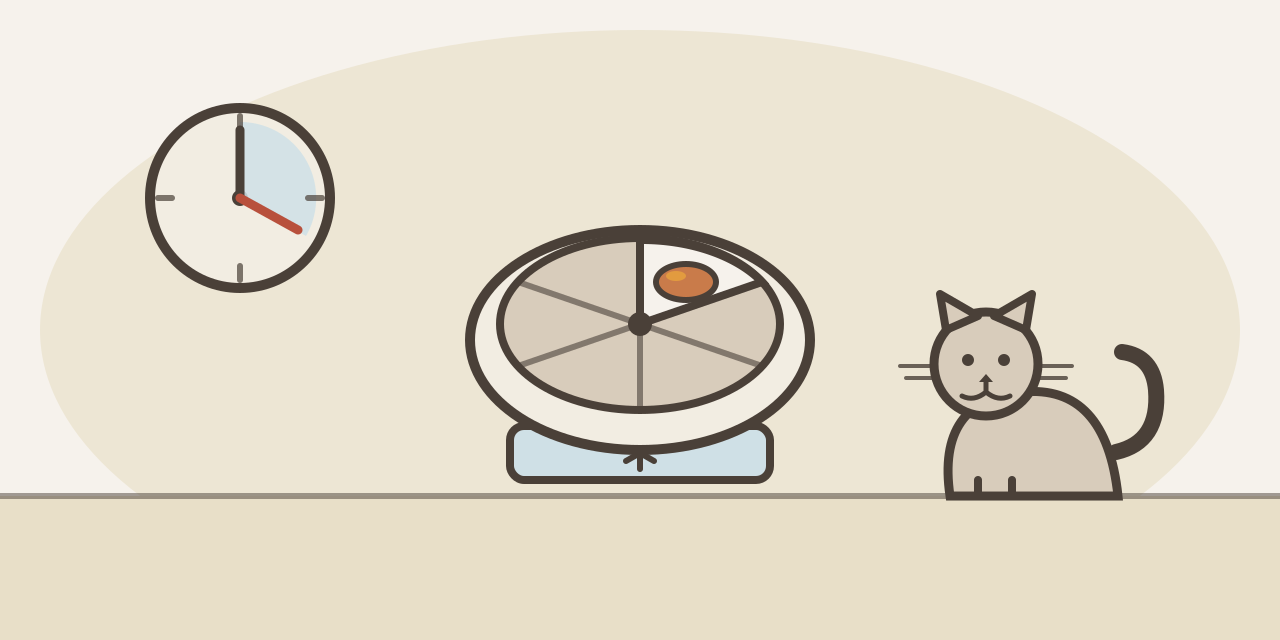
A wet-food feeder buys you hours, not days — and every honest buying decision in this category starts there.
Opened wet food is perishable. The general food-safety rule for perishables is about two hours at room temperature, and nothing in this category puts a refrigerator between the tray and your cat. What the machines actually sell is three different ways to stretch a serving: a lid that seals one bowl, ice packs that chill a tray from below for roughly a workday, and a microchip that controls *who* opens the seal.
That makes this a different purchase from a dry-food hopper. You are not buying a weekend of freedom; you are buying a workday of scheduled wet meals — which, for most wet-fed households, is exactly the gap that needed filling.
If you need days of coverage, the answer is a dry hopper plus a sitter, not a wet feeder running past its safe window.

Why wet food breaks the feeder playbook
Nearly every automatic feeder on the market is a hopper machine: a reservoir of kibble over an auger or rotor that dispenses on a schedule. We cover those — and which one to buy — in the main feeder roundup. But the design is dry-only, and that is not a labelling formality. Wet food jams a dispensing rotor, and whatever does not jam sits spoiling in a reservoir that was engineered to keep kibble dry, not pâté cold.
So the wet-food category is a different species of machine. Instead of a hopper, you get a serving that waits in the open — in a tray or a bowl — from the moment the lid lifts. The engineering problem is not dispensing. It is time and temperature.
"Automatic" can mean three different things here, and the products sort cleanly by which one they automate:
- Scheduled lids — a carousel of trays rotates on a timer, exposing one serving at a time. This is the only type that serves *multiple* wet meals unattended.
- Proximity lids — a sealed bowl opens when a cat approaches and closes when it leaves. One serving, kept fresher for longer.
- Identity lids — the same sealed bowl, but it opens only for a registered microchip. One serving, kept fresher, for one specific cat.
None of them refrigerates. Keep that sentence in mind through every product page you read.
The two-hour problem, and what an ice pack actually buys
The baseline every machine is fighting: food-safety guidance for perishables is roughly two hours at room temperature, and less in a warm room. In practice, an opened wet serving also dries, skins over and stops smelling like food well inside that window — cats usually refuse marginal food before it becomes dangerous, but the whole point of a feeder is that you are not there to referee.
Ice packs are the category’s one real tool against the clock, and it is worth being precise about what they do. In a tray feeder like the PIXI, two frozen packs sit *under* the feeding tray and chill it from below. Catit’s own claim is that this keeps food fresh for about six hours, depending on room temperature — a claim we would read as "a workday morning, honestly," not as a guarantee. Chilling slows the clock; it does not stop it. The practical routine is two sets of packs — one in the freezer, one in the machine — swapped when you reload, and spare packs are cheap when they are in stock.
The workday math, then: load chilled trays at 8 a.m. and a lunchtime serving is comfortably inside every number above. An evening serving from a morning load is at the outer edge of the maker’s own claim — in a cool house, defensible; in a warm apartment in August, no.
One absence worth explaining: the category’s old default, the Cat Mate C500 — five trays, twin ice packs, a dead-simple timer — is currently not sold on Amazon (it has become a direct-from-manufacturer and big-box purchase). It remains a fine machine, but we only link what you can actually buy where our links go, so it is a name here rather than a card below.
Wet food is a water strategy — which is why it shares a page with our fountains
A typical canned food is around 70–80% moisture; dry kibble is around 10%. That single fact is most of the reason vets bring up wet food at all: a wet-fed cat takes most of its daily water at the bowl, without ever being asked to drink.
Cats are famously poor voluntary drinkers, and the two tools that move the number — water *in* the food and water the cat actually drinks — attack it from opposite ends:
- Wet food on a reliable schedule delivers water whether or not the cat feels like drinking. That is what this page automates.
- A fountain makes the drinking a cat does do more frequent, because moving water gets investigated and dead water gets ignored. That is the side we cover in the fountain roundup — and the honest maintenance half of it in how to clean a cat water fountain.
If your cat is mostly dry-fed, the fountain is the higher-leverage purchase of the two. If you are moving toward wet food precisely for the water, the feeder on this page is what makes that schedule survive your work hours.
One placement note that costs nothing: keep the water station away from the wet-food station. Many cats drink more when water does not sit next to food, and a fountain parked beside a pâté tray collects what the tray sheds.
Every way to automate a wet meal, scored in hours
| Method | What it actually does | Safe window | Verdict |
|---|---|---|---|
| Leaving the bowl out | Nothing — the serving ages in the open | ~2 hours at room temperature, less in heat | The thing to replace |
| Sealed bowl, motion lid | A sealed lid opens on approach; slows drying, deters flies and casual theft | One meal, kept fresher for hours — not refrigerated | The grazer’s upgrade |
| Ice-pack tray feeder | Chills up to six servings from below and serves them on a schedule | ~6 hours by the makers’ own claims; warm rooms less | The workday tool |
| Microchip sealed bowl | The seal plus access control — opens only for the registered cat | Same hours as the sealed bowl, plus the who | Multi-cat homes |
| Dry hopper feeder | Auger-fed kibble on a schedule | Wet food: never — it jams the works and spoils in the reservoir | Wrong machine (great at its own job) |
| Fridge + a sitter | Actual refrigeration between meals | Days | The weekend answer |
What we’d actually buy
Scored with the MeowTested Fit Analysis — our research rubric across household layout, cat count and feeding pattern. These are spec comparisons and user-report synthesis, not bench tests. Prices move, so treat tiers as guidance rather than quotes; every link below was availability-checked the day this page went up.
The workday answerCatit PIXI Smart 6-Meal Feeder
Six removable trays (about 5.7 oz each) with two included ice packs underneath; meals are scheduled in the Catit app or on the panel, with a control lock and a tray that stops and backs off if it meets resistance. The tray lifts out and is dishwasher-safe — treat it like a dish, because it is one. Catit’s freshness claim is about six hours depending on the room; plan your schedule inside that.
Check price on Amazon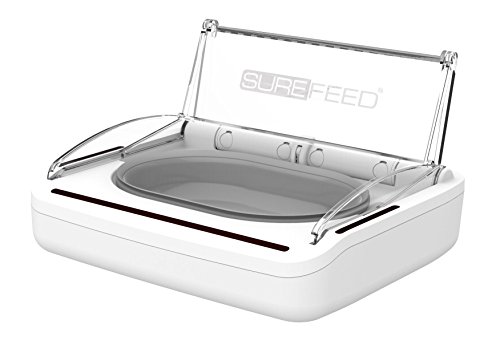 One meal, kept fresher
SureFeed Sealed Pet Bowl (motion-activated)
A motion-activated lid over a neoprene-lipped seal: it opens as the cat walks up and closes when it leaves, which slows drying and keeps flies off a 13.5 oz serving of wet or dry food. Runs around six months on four C batteries, with a staged training mode for timid cats. It schedules nothing — its whole job is making the meal you already put down survive the morning.
Check price on Amazon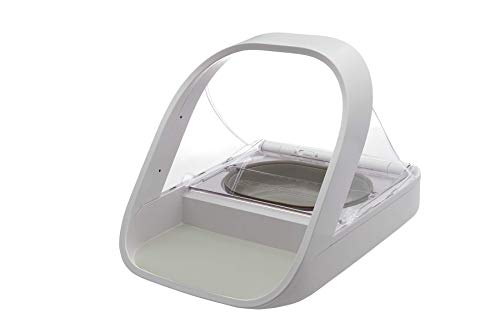 Wet food, multiple cats
SureFeed Microchip Pet Feeder
The same sealed-bowl idea, opened only by the registered cat’s microchip or collar tag. This is the answer when the wet-food problem is *who* eats it — the dieter, the gulper, the food thief, or the dog. It also holds down the multi-cat slot on our main feeder roundup; it earns its place twice.
Check price on Amazon The honest alternative
PETLIBRO Granary WiFi (5L)
Scheduled dry meals from a sealed hopper, with wet food served in person at the bookends of the day — the setup most wet-feeding households actually land on, and the one that keeps a positive food association attached to you. If you need a full workday or more of unattended coverage, this beats pushing wet food past its window.
Check price on AmazonThe weekend rule: no ice pack buys you a weekend. A wet-food feeder is a workday tool. If you will be gone overnight or longer, the kit is a dry hopper, a water fountain, and a human who checks in — a wet tray running past its window is not a backup plan, it is a vet bill with a timer on it.
Wet food and automatic feeders: FAQ
How long can wet food safely sit in an automatic feeder?
Start from the general perishable-food rule: about two hours in the open at room temperature, less in a warm room. An ice-pack tray feeder stretches that to roughly a workday morning by the makers’ own claims — Catit says about six hours, depending on room temperature. Treat those numbers as ceilings, not targets: portion so the cat finishes the serving, and discard what is left when you get home.
Do the ice packs actually work?
They chill the tray from below, which slows spoilage and drying — they do not refrigerate. Performance depends on room temperature, which the manufacturers say themselves. The workable routine is two sets: one frozen, one in the machine, swapped at every reload. In a hot room, shorten every window.
Can I put wet food in a hopper-style feeder?
No. Hopper feeders dispense through augers and rotors built for dry kibble; wet food jams the mechanism and spoils in the reservoir. When a listing says "dry food only," that line is load-bearing. The wet category is tray and sealed-bowl machines only.
What about raw food?
Stricter, not looser. Treat raw exactly like raw meat for humans: refrigeration between meals, short windows in the open. A chilled tray for a few morning hours is the outer limit, and most raw-feeding households should stay with fridge-plus-in-person serving. If raw is vet-prescribed, ask that vet where they draw the line.
Will a wet-food feeder cover a weekend away?
No — this category buys hours, not days, and no honest manufacturer claims otherwise. For a weekend, the kit is a dry hopper with a verified schedule, a large water source, and a person who visits. Wet meals resume when a human does.
Doesn’t wet food in a feeder get smelly?
The seal and the chill are most of the answer, but the real fix is washing. The trays and bowls on this page are removable and dishwasher-safe — run them like dishes after every cycle. A crusted tray, not the fresh serving, is almost always what you are smelling.
Related reading
- Best automatic cat feeders — the dry-side roundup: hoppers, schedules, and the 5 a.m. problem.
- Best easy-to-clean cat water fountains — the other half of the water strategy.
- How to clean a cat water fountain — the maintenance cadence that actually holds.
- Leaving a cat alone while traveling — the away-from-home kit, tiered by trip length.