Escape-Artist Cats: Finding Them, Containing Them, and Keeping Them In
Most escape content starts at the door. The threads this month started earlier: an owner who couldn’t find her cat during a fire alarm, a new cat missing inside an apartment for two days, and a 14-year-old who breaks window screens on principle. So this page runs in that order — find the cat, give it a den it will walk into, then harden the doors and windows.
Some links below are affiliate links. If you buy through them, MeowTested may earn a small commission at no extra cost to you, including as an Amazon Associate, where we earn from qualifying purchases, and as a partner of Whisker, the maker of Litter-Robot. We only recommend products that pass our Fit Analysis — and we publish the ones that don't.
During a middle-of-the-night fire alarm this month, one owner discovered the real gap in her escape plan: “I couldn’t even FIND my cat tonight.” She has arthritis and can’t get down to check under the beds — and her cat, like most cats under stress, went somewhere no person can reach.
So before the screen guards and the GPS debate, get the two cheap things right: know where your cat hides and how to prove it’s still in the house, and keep a carrier in the room with the door off, so that walking into it is something your cat already does on a normal Tuesday. Then work outward: a door-dash routine that costs nothing, a breakaway collar and ID for the day something fails, and pet-resistant screens on the windows that actually open.
None of this was tested by us — it’s assembled from what worked and failed for real owners this month, and the failures are quoted. The whole kit lands under $120 even with a screen re-mesh in it.
First, prove the cat is in the house
The household that lost a newly adopted calico inside their own apartment spent two days not knowing whether they had an escaped cat or a hiding one — in their words, it had “presumably been two days since the cat has eaten, pottied and been seen.” Those are two completely different emergencies, and telling them apart is step one.
Two tricks from that thread did the detective work better than any gadget:
- Flour across the doorways. A thin line of flour at each room’s threshold overnight tells you by morning which rooms the cat is moving through. Cheap, silent, and it works precisely because cats patrol at night when the house is still.
- The second box and food plate. Put a litter box and a plate of food in the room you suspect, separate from the main station. If the food goes down and the box gets used, the cat is in the house and coping — you can stop panicking and start waiting.
While you wait, know where to look. Stressed cats go *low and enclosed*, not far: inside box springs (check for torn fabric underneath), behind and inside couch frames, the backs of closets under hanging clothes, behind kitchen kickboards and appliances, and inside anything bag- or box-shaped. A hiding cat usually won’t respond to its name — silence is not absence.
If you’re away from home a lot during one of these episodes, a camera pointed at the food station answers the question remotely; we cover the Petcube Cam 360 on our introductions and leaving-your-cat pages, where it earns its keep for exactly this kind of surveillance.
And if you’re about to bring a new cat home: the whole find-the-cat problem is mostly preventable with a single closed room for the first days. That’s the sanctuary-room rule, and it leads our first-cat checklist.
The carrier that lives in the room with the door off
The fire-alarm thread is the case for this section. When the alarm went off, the owner needed her cat in a carrier *now* — and the carrier was presumably in a closet, the cat was under a bed, and she can’t easily get down to floor level because of arthritis. Every part of that failure is fixable in advance, none of it during.
The fix is boring: the carrier never gets put away. It sits in a corner the cat likes, door off or latched open, with a folded blanket inside. Treats get tossed in occasionally; some owners feed meals in it. Within weeks it stops being the thing that predicts the vet and becomes a den — this month’s proof is the owner who accidentally crate trained her kitten by doing nothing more than leaving the carrier out: the kitten chose it as a bed.
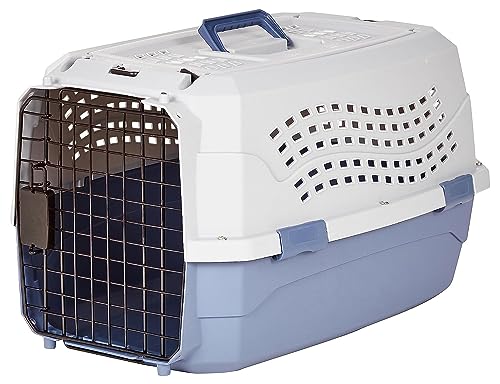
Top-load matters more than people think. A cat that has wedged itself somewhere awkward, or gone stiff with panic, cannot be threaded horizontally through a front door — but it can be picked up and *lowered* through a top hatch. That is also the difference between loading a cat from a standing position and loading one from your knees, which is the whole ballgame for the arthritis owner. The 23" Amazon Basics is the straightforward version: two doors, top hatch, around $50, 20 lb limit. The 19" version fits kittens and small cats but drifts in and out of stock.
In an actual evacuation, a pillowcase is the emergency fallback the fire-safety threads keep landing on — a cat in a pillowcase can breathe, can’t bolt, and can be carried one-handed. But that’s the last resort. The carrier-as-furniture habit is the plan.
The door-dash routine (and the holiday-guest problem)
Door dashing is a timing game the cat has been winning because it practices every single day and you don’t. The counter-moves are all free:
- Move the greeting ritual away from the door. If the cat gets attention, treats, or dinner at a spot ten feet from the entry — every time, on a cue — the door stops being where good things happen. A treat tossed *away* from the door as you enter or leave buys you the same five seconds.
- Make the entry boring. No feeding by the door, no toys stored there, nothing to stake out. Cats dash through doors that smell like opportunity.
- The two-stage habit. If your layout allows it — a mudroom, a hallway door, even a tall pet gate across an entry alcove — never have the inner and outer barrier open at the same time. People with chronic dashers describe this as the only thing that reliably works, because it removes the skill element entirely.
Then there’s the version of this problem that arrives six weeks from now. An owner asked in October what to do about an elderly cat and a holiday house full of guests — and the answer is the sanctuary room again: one closed room with box, water, food, and a bed, a sign on the door, for the hours the front door is swinging. Guests don’t have your door reflexes, and Thanksgiving is the single easiest day of the year for a cat to walk out unnoticed. Set the room up before the doorbell starts.
The cat that will always try
Honesty section. One of this month’s threads is a 14-year-old lifelong outdoor cat who moved herself into someone’s home, breaks window screens, rushes the door, and — in her person’s words — “will escape, as if she’s Houdini himself in cat form.” A leash was tried. It ended with “major anger issues to the leash, and I have the scars to prove it.”
A cat that spent fourteen years outdoors is not a conversion project, and this page won’t pretend gear solves her. Harness training works best on cats started young and food-motivated; retrofitting it onto a senior with opinions produces scars, not walks. What actually helps that household is managed outdoor access — supervised yard time on a schedule, or a catio if building one is on the table — plus the ID-and-tracking tier below, because a cat like this *will* get out again and the goal shifts from prevention to fast recovery.
For the rest of us, the same logic applies in milder form: an under-stimulated indoor cat tries doors more. The cheapest escape-proofing is a cat that’s tired and interested in its own house — that’s the interactive-toys page and the work-hours setup, and it’s why enrichment keeps showing up in escape threads as the fix nobody expected.
ID and tracking, by tier
| Tier | What it does | The honest note |
|---|---|---|
| Microchip + current registration — usually $25–60 at a vet or clinic, often free at adoption | The thing every shelter and vet scans first. A found cat with a chip registered to a current phone number goes home; one without doesn’t. | Not an Amazon purchase, and deliberately so. If you do nothing else on this page, confirm your chip registration is current — it’s a five-minute website visit. |
| Breakaway ID collar — GoTags engraved, around $10 | The visible layer: a neighbor who sees a collar assumes owned, not stray — and the engraved phone number skips the shelter trip entirely. | Breakaway is non-negotiable for cats; a collar that can’t snap free on a fence picket is a hazard, not protection. Engraving beats dangling tags, which fall off. |
| AirTag in a breakaway holder — collar with holder, around $10 plus the tag (~$25) | The garden-and-neighborhood tier: ping the tag from your phone, follow the signal. Works best in populated areas where passing iPhones relay its location. | An AirTag is proximity-finding, not live GPS — it reports where the tag was last seen by a passing Apple device, which can lag in quiet areas. For an indoor cat that slipped out, that’s usually enough. |
| GPS collar with live tracking — subscription-based | Real-time location anywhere with cell coverage, geofence alerts. | We’re not linking one. Most are built for dog necks and dog batteries — heavy on a cat, charged constantly, $5–13/month forever. For a true outdoor roamer it can earn its cost; for an indoor escape artist the AirTag tier does the job for a tenth of it. |
The find-and-contain kit
Amazon links — prices change, check current pricing. The camera and enrichment gear this page mentions are covered in depth on their own pages, linked throughout.
The denAmazon Basics 2-Door Top-Load Carrier, 23"
Lives in the open with the door off until it’s furniture. Top hatch loads a hiding or panicking cat from above — standing up, no kneeling. Around $50; the 20 lb limit covers nearly any cat. Too long for airline under-seat rules.
Check price on Amazon The visible ID
GoTags Personalized Breakaway Cat Collar
Name and phone number engraved into the collar itself — nothing to fall off — with a breakaway buckle that releases if the collar snags. Reflective stitching for headlights. Around $10.
Check price on Amazon The cheap tracker
AirTag Cat Collar with Holder and Bell
A stretchy breakaway collar with a fitted AirTag pocket, so the tag can’t be groomed off. Around $10, plus the AirTag itself (~$25). Proximity-finding via Apple’s network — not live GPS, and honest about it.
Check price on Amazon The window fix
Pet-Proof Screen Mesh Roll, 36" × 7 ft
Vinyl-coated polyester mesh that re-screens a standard window with the spline and roller you may already own — the material cats can’t shred the way they shred fiberglass. Around $38 for enough to redo several windows.
Check price on AmazonWindows and screens: the second half
Two of this month’s threads end at a window. The Houdini cat breaks window screens as her standard exit. And one owner got a middle-of-the-night scare from a window with no screen at all — the cat was fine, perched where no cat should be, but the photo is the argument: an open unscreened window is an exit the cat has already noticed, even if you haven’t.
What to know before trusting a screen:
- Standard fiberglass mesh is not cat-rated. It tears under claws and pops out under body weight. Pet-resistant mesh — vinyl-coated polyester, the kind in this roll — is a different material class, and re-screening a window with it is a 20-minute job with a spline roller.
- The frame matters as much as the mesh. A determined cat defeats screens by pushing the whole panel out of its track. Window stops (or a wooden dowel in a slider track) that limit the opening to a few inches beat any mesh for the window you sleep next to.
- Do the seasonal check. Screens loosen over summer. The week the weather turns warm enough to open windows is the week to push on every screen the cat can reach — from inside, the way the cat would.
A screen is containment for the average cat and a speed bump for a dedicated one. For the dedicated one, the ID-and-tracking tier above is the real answer, because the honest premise of this whole page is that no single barrier is escape-proof — layers are.
If the cat is already out: don’t chase — a chased cat runs farther and hides deeper. Most indoor-only cats stay within a few houses and hide in the nearest cover, coming out at dusk and dawn. Sit outside quietly at those hours with the food they know, shake the treat bag, and leave the garage or a door cracked overnight if you safely can. Check under your own porch and in your own garage first; “escaped” cats are regularly found ten feet from the door they left.
Where to go next
Escape-proofing overlaps with half the site, because a settled, occupied cat tries doors less:
- Bringing a cat home soon? The sanctuary room that prevents the lost-in-the-house week is rule one of our first-cat checklist.
- A bored cat is a motivated cat. The interactive-toys page covers burning that energy indoors, including at night; the work-hours setup covers the empty-house stretch.
- Guests, sitters, and travel. The holiday-guest problem and the away-from-home camera case live on leaving your cat while traveling.
- Two cats and open doors. If the escape risk is a new cat fleeing a resident cat, that’s an introduction problem first — the introduction guide is the fix.
Escape questions, answered plainly
Why does my indoor cat keep trying to escape?
Territory curiosity, boredom, and habit reinforcement — every successful dash teaches the cat the door is a game it can win. Unneutered cats also roam for mating reasons, so if that applies, the surgery is the single biggest fix. For the rest: more indoor stimulation, a boring entryway, and a greeting ritual that happens away from the door.
How do I know if my cat escaped or is hiding in the house?
Assume hiding first — it’s more common. Put a line of flour across each doorway overnight and a plate of food with a litter box in the room you suspect. Tracks, eaten food, or a used box mean the cat is inside and stressed, not gone. Check inside box springs, couch frames, closets, and behind appliances; a hiding cat usually won’t answer its name.
Do AirTags work for cats?
Yes, with the right expectations. An AirTag reports its location through passing Apple devices, so it works best in neighborhoods and lags in empty areas. It’s not live GPS tracking. In a breakaway holder collar it’s a $35 total setup that finds the cat sulking under the neighbor’s deck — which is where most escaped indoor cats actually are.
Are GPS collars worth it for a cat?
For a true outdoor roamer, maybe. For an indoor cat that occasionally slips out, usually not: most GPS collars are sized for dogs, need frequent charging, and carry a monthly subscription. The microchip-plus-AirTag combination covers the realistic failure cases for a fraction of the cost.
How long will an escaped indoor cat survive outside?
Usually the question overstates the danger window. Most indoor-only cats don’t travel — they hide within a few houses, often within feet of their own door, and turn up within hours to a few days when the searching is done calmly at dusk and dawn. The real risks scale with time, traffic, and weather, which is why the fast-recovery layer — chip registration, visible ID, a tracker — matters more than any single barrier.
Should I punish my cat for door dashing?
No — punishment teaches the cat to fear you, not the door, and a cat that dashes *and* hides from you is strictly harder to recover. Redirect instead: move greetings and treats away from the entry, make the doorway boring, and if the layout allows it, use a two-barrier habit so both doors are never open at once.