Why Cats Need Running Water (And Why Your Cat Isn't Drinking Enough)
The science behind feline hydration and why a still water bowl might be making your cat sick.

The Hidden Hydration Crisis
Here's a stat that shocks most cat owners: domestic cats on dry food diets consume only about 50-60% of the water they need daily. Unlike dogs, cats have a low thirst drive — an evolutionary holdover from their desert-dwelling ancestors who got most of their water from prey.
Chronic dehydration in cats is so common that most owners don't even recognize the signs: lethargy, dry gums, reduced skin elasticity, and concentrated urine. Left unchecked, it leads to kidney disease, urinary tract infections, and bladder stones — some of the most common (and expensive) feline health issues.
Why Cats Prefer Running Water
In the wild, standing water is often contaminated. Running water from streams is fresher, better oxygenated, and safer to drink. This instinct is hardwired into domestic cats too — which is why your cat drinks from the bathroom faucet but ignores the water bowl sitting three feet from their food.
Studies have consistently shown that cats drink 30-50% more water when offered a circulating water source compared to a still bowl. The movement attracts their attention, the filtration keeps the water fresh, and the oxygenation improves the taste.
"Patches was chronically dehydrated — the vet kept telling me to encourage more water intake. After switching to a fountain, her vet visit showed significantly improved hydration markers within 30 days." — Amanda R., Seattle, WA
What to Look for in a Cat Water Fountain
Not all fountains are created equal. After testing 9 models, here's what actually matters:
• Noise level: Under 25dB. Cats are sensitive to sound, and a loud pump defeats the purpose. The best fountains operate under 20dB — quieter than a whisper. • Capacity: Minimum 2 liters for single-cat homes, 3.5+ liters for multi-cat households. You don't want to refill daily. • Cleaning: If it's hard to clean, you won't clean it. Look for dishwasher-safe components and easily removable pumps. • Filtration: Activated carbon filters remove impurities and keep water tasting fresh between changes. • Power: USB-powered fountains eliminate bulky wall adapters and allow flexible placement.
Signs Your Cat Needs More Water
Watch for these indicators of dehydration:
• Your cat's skin doesn't snap back quickly when gently pinched • Dry or sticky gums • Lethargy or reduced playfulness • Decreased urination or dark-colored urine • Loss of appetite
If you notice any of these signs, consult your vet. In the meantime, switching to a running water source is one of the simplest things you can do to improve your cat's daily water intake.
Our Recommendation
After testing 9 fountains with 12 cat owners over 21 days, we recommend the MeowTested Quiet Fountain — a 3.8L USB-powered fountain operating at under 20dB with a triple filtration system. It scored 4.73/5.0 across our network and is the single most impactful product we sell for cat health.
Full Scorecard: Quiet Fountain
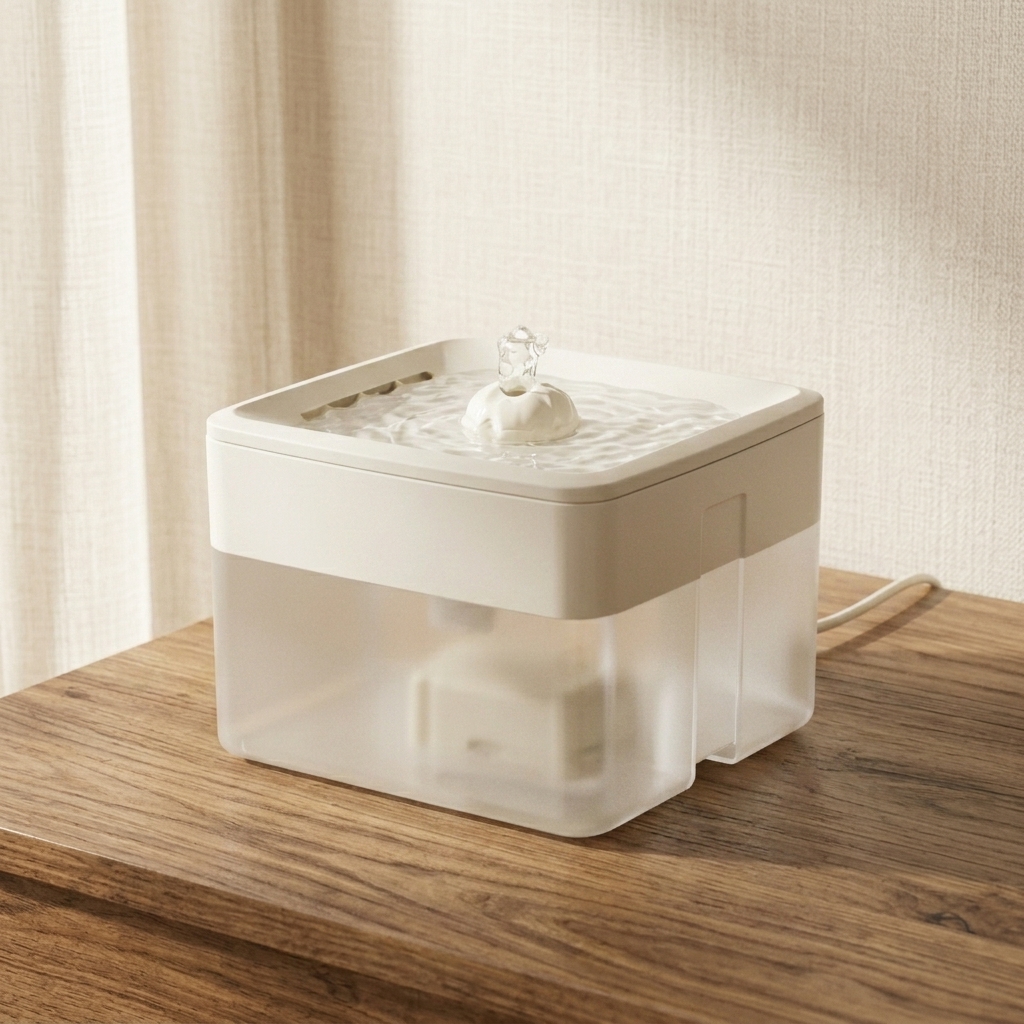
The MeowTested Quiet Fountain
So quiet your cat will hear it before you do.
Initial assembly confused 2 of 12 testers — ease of use scored 4.4/5.0. We've added clearer setup steps to the product page. Once running, it hasn't stopped.