Does Bathing a Cat Help With Shedding?
Yes, but only for a few days. A bath (or a wash in the sink) rinses out fur that had already come loose, so your cat sheds visibly less for a short while. It does not change how much fur your cat actually drops, and brushing a few times a week removes more with none of the stress.
Some links below are affiliate links. If you buy through them, MeowTested may earn a small commission at no extra cost to you, including as an Amazon Associate, where we earn from qualifying purchases, and as a partner of Whisker, the maker of Litter-Robot. We only recommend products that pass our Fit Analysis — and we publish the ones that don't.
Yes — a bath washes away fur that was already loose, so your cat sheds visibly less for a few days. But it does nothing to change how much fur your cat grows and drops, and most cats find bathing genuinely stressful.
For routine shedding control, a few minutes of grooming several times a week removes more fur than an occasional bath — with zero stress. Save baths for when they’re actually needed: something sticky or greasy in the coat, or a vet-directed skin treatment.

What a bath actually does to shedding
Shedding is driven by your cat’s coat growth cycle — hairs grow, rest, release, repeat. That cycle is set by biology, daylight, and health. No bath changes it.
What a bath does do is flush out hairs that had already released but were still sitting in the coat, waiting to end up on your couch. That’s why a freshly bathed cat sheds noticeably less for a few days — the backlog got rinsed down the drain.
Then the growth cycle keeps releasing hair on schedule, the backlog rebuilds, and you’re back where you started. A bath is a one-time clearance of loose fur, not a reduction in shedding — the same clearance a thorough grooming session achieves without water.
Why bathing is usually the wrong tool
Cats are self-cleaning. A healthy cat spends a large share of its waking hours grooming, and its coat generally doesn’t need washing — which is why most cats go their whole lives without needing routine baths.
The welfare math matters too. For most cats, a bath means restraint, water, and noise — three things cats work hard to avoid. A stressed cat isn’t just unhappy in the moment; stress can itself increase shedding (you may have noticed the fur flying at vet visits). Bathing a cat to reduce shedding can literally cause shedding.
When a bath IS the right call:
- Something on the coat that shouldn’t be licked off — grease, paint, sap, anything sticky or toxic
- A vet-prescribed medicated shampoo for a skin condition
- Hairless and semi-hairless breeds (Sphynx and similar) that need routine skin cleaning
- A senior or overweight cat that can no longer groom itself thoroughly — though a grooming routine often serves better than a bath
If none of those apply, the bath is for you, not the cat — and there’s a better way to get the fur.
Bath vs. brushing: the honest comparison
| Method | Fur removed | How long it lasts | Stress on the cat |
|---|---|---|---|
| Bath | High — one-time flush of loose fur | A few days, then backlog rebuilds | High for most cats |
| Grooming glove, 3–4×/week | High — continuous removal | Ongoing — fur never accumulates | Minimal — feels like petting |
| Deshedding tool, 1–2×/week | Highest — reaches the undercoat | Ongoing | Low with slow introduction |
| Grooming wipes | Low — surface fur and dander | A day or two | Minimal |
If you do bathe: do it without the misery
Sometimes the bath is unavoidable. A few rules make it safer and less awful:
- Use a cat-specific shampoo only. Human shampoo is the wrong pH for cat skin, and some dog shampoos contain permethrin, which is toxic to cats. If the label doesn’t say “for cats,” it doesn’t go on a cat.
- Brush first. Removing loose fur and mats before the water hits means less fur in the drain and no mats tightening as they dry.
- Warm water, low pressure, non-slip footing. A rubber mat in the sink and a cup or gentle sprayer beat a running faucet. Slipping is a big part of bath panic.
- Work the coat with a rubber grooming tool while shampooing. Rubber nubs loosen dead undercoat in the lather — this is where the “bath reduces shedding” effect actually gets earned.
- Towel-dry thoroughly, keep the room warm, and let the cat retreat somewhere quiet afterward with a treat.
For spot-cleaning between (or instead of) baths, cat grooming wipes handle dander and surface fur with none of the drama.
What we’d use instead of (or during) a bath
Scored with the MeowTested Fit Analysis — our research rubric across coat types and cat temperaments. The theme: continuous low-stress fur removal beats occasional high-stress washing.
The 2-in-1 Deshedding Glove
Fur removal that reads as petting. The easiest habit to keep 3–4 times a week — which is exactly the cadence that makes baths unnecessary for shedding.
Check price on Amazon Best in the bath
KONG ZoomGroom (rubber brush)
Soft rubber nubs that loosen dead undercoat — dry, or worked through shampoo lather if a bath is genuinely needed. Gentle enough for water-stressed cats.
Check price on Amazon Deepest undercoat reach
FURminator deShedding Tool (long hair)
The heavy hitter for thick-coated shedders — removes more undercoat in one session than a bath will. Use once or twice a week, light pressure.
Check price on Amazon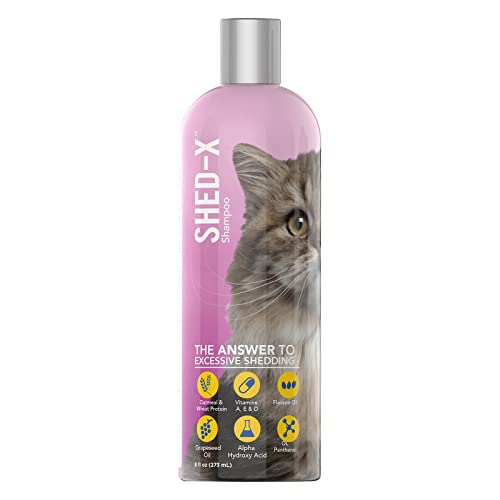 If the bath must happen
Cat-specific deshedding shampoo
A moisturizing, cat-safe formula for the rare justified bath. Never substitute human or dog shampoo. (We’re confirming a specific pick; this is a filtered Amazon search for now.)
See options on Amazon The zero-drama option
Hypoallergenic cat grooming wipes
Surface fur and dander removal for cats that will never accept water. Also useful for seniors who under-groom. (Filtered Amazon search — specific pick coming.)
See options on AmazonBathing and shedding: FAQ
Will bathing my cat help with shedding?
Temporarily, yes — a bath rinses out fur that had already loosened, so you’ll see less shedding for a few days. It doesn’t change how much fur your cat grows and releases, so the effect fades quickly. Regular brushing removes the same loose fur continuously, without the stress of water.
How often can I bathe my cat?
For a healthy short- or long-haired cat: rarely, if ever — cats keep themselves clean. If a bath is genuinely needed (something on the coat, or a vet-directed medicated wash), once is fine; routine bathing more than every month or two risks drying out the skin, which can itself worsen shedding and dander.
Can I use human or dog shampoo on my cat?
No. Human shampoo is the wrong pH for feline skin, and some dog products contain permethrin, which is toxic to cats. Use a shampoo explicitly labeled for cats, and when in doubt ask your vet — especially if the bath is for a skin problem rather than dirt.
My cat hates water — how do I reduce shedding without a bath?
A grooming glove or rubber brush used a few minutes several times a week removes more fur than occasional baths, and most water-averse cats accept it as petting. Grooming wipes handle dander and surface fur in between. See our full shedding guide for the complete routine.
Related reading
- How to reduce cat shedding: 9 things that actually work — the full playbook, of which bathing is a minor chapter.
- Excessive shedding: normal, seasonal, or a vet problem? — when the fur volume itself is the concern.
- Best cat deshedding tools — the tools that do a bath’s job every week.
- How to groom a cat that hates being brushed — if grooming itself is the battle.