Best Cat Deshedding Tools (2026): What Actually Cuts the Fur
A glove for every day, a deshedding edge for the weekly deep pass, and a rake for serious double coats. Here's the system — and the tools that scored highest in our Fit Analysis.
Some links below are affiliate links. If you buy through them, MeowTested may earn a small commission at no extra cost to you, including as an Amazon Associate, where we earn from qualifying purchases, and as a partner of Whisker, the maker of Litter-Robot. We only recommend products that pass our Fit Analysis — and we publish the ones that don't.
No single tool fixes shedding — the owners who win use a layered system: a grooming glove for frequent, low-drama surface passes, and a deshedding edge like the FURminator once or twice a week to pull the loose undercoat a glove can't reach. Thick double-coated cats add an undercoat rake during seasonal blowouts.
The reason for the split: shedding happens in two layers. Surface fur comes off with almost anything your cat tolerates. Undercoat — the soft, dense layer that actually tufts up your couch — only comes out with a tool designed to reach it. Match the tool to the layer and the coat, and the fur problem shrinks fast.
The part most roundups skip: a deshedding edge is a limited-use tool, not a daily brush. FURminator's own guidance is one to two sessions a week, 10 to 20 minutes each. Groomers who see the damage report the same failure mode over and over — owners who use it daily, on the same spots, with pressure. If you only take one thing from this page, take the cadence. For the everyday layer, see our best cat grooming gloves picks.

Why deshedding tools are different from brushes
A slicker brush grabs surface fur and smooths the coat. A deshedding tool has a fine-toothed stainless edge that slides past the topcoat and catches the loose undercoat beneath — fur that was coming out anyway, just onto your furniture instead of your tool.
That difference is also the whole risk profile. The edge works *because* it reaches deep, which means the same geometry that clears undercoat can scrape skin and shred healthy guard hairs if you lean on it. A brush that does less can be used more; a tool that does more has to be used less. Almost every complaint about deshedding tools — patchy coats, pink skin, cats that flee the drawer — traces back to that trade being ignored, not to the tool being bad.
An undercoat rake sits in between: long, rounded pins that rotate through a dense coat and lift packed fur without a cutting edge. On a heavy double coat it does more than a deshedding edge and irritates less. On a short single coat it mostly slides through and does nothing.
Deshedding tools compared
| Tool | Reaches | Best for | Safe cadence |
|---|---|---|---|
| 2-in-1 Deshedding Glove | Surface fur only | Daily upkeep; brush-averse cats; kittens and seniors | Daily — no real limit |
| FURminator deShedding — Long Hair | Loose undercoat | Long coats, heavy shedders | 1–2x weekly, 10–20 min |
| FURminator deShedding — Short Hair | Loose undercoat | Short coats that still shed heavily | 1–2x weekly, 10–20 min |
| Maxpower Planet double-sided rake | Deep, packed undercoat | Double coats, seasonal blowouts, budget buyers | During blowouts; weekly otherwise |
| Hertzko Self-Cleaning Slicker | Surface + light undercoat | Finishing, fluffy coats, tangle prevention | 2–3x weekly |
| Wide-tooth dematting comb | Tangles, not shedding | Breaking up mats before they set | As needed — never with a deshedding edge |
Match the tool to your cat's coat
Short single coat (most domestic shorthairs). A glove plus a weekly short-hair deshedding edge is the whole kit. A rake will mostly pass through without catching anything. If the shedding is light, the glove alone may be enough — don't buy up the ladder for a problem you don't have.
Medium to long single coat. Glove daily, long-hair deshedding edge weekly, slicker to finish. This is the configuration the layered system was built around, and the one most owners are actually in.
Thick double coat (Maine Coon, Norwegian Forest, Siberian, and the many mixed cats with the same dense underlayer). Start with the rake, not the edge. The dense packed layer has to be broken up before a fine edge can do anything useful, and going straight to the edge on a coat like this is how you end up working one spot far too long. Rake first, edge second, slicker to finish.
Senior cats, very thin skin, or any cat with skin conditions. Skip the deshedding edge entirely. A glove or a soft rubber brush, more often, is the right answer. Thin skin and a stainless edge are a bad pairing regardless of technique.
How often is actually safe
FURminator's own published guidance is one to two sessions per week at 10 to 20 minutes, with more frequent use allowed during heavy shedding seasons. That is the manufacturer being conservative about its own product, which is worth noticing — most tool makers are not.
Professional groomers describe the overuse failure mode consistently: hair that looks shredded rather than cut, damaged cuticles, and skin that pinks up under the working area. The mechanism is simple — the edge does not know the difference between loose undercoat and coat that is still attached, so once the loose fur is gone, every additional stroke is working on the coat you wanted to keep.
Practical rules that keep you on the right side of it:
- Stop when the yield drops. When a stroke stops producing a visible clump, that area is done for the session. Chasing a few more hairs is exactly the behavior that causes the damage.
- Move around, don't dwell. Spread the session across the back, flanks and haunches instead of working one patch.
- Light pressure, with the grain. The teeth do the work. Pressure adds skin contact, not fur removal.
- Stop while your cat is still enjoying it. Ending on a good note is not just kindness — it is the only thing that keeps a weekly cadence sustainable, and cadence is what actually reduces the fur in your house.
The best deshedding session is the one that ends early. A tool used twice a week for five minutes beats the same tool used once a month for an hour — and it is the only version your cat will keep agreeing to.
What a deshedding tool won't fix
Mats. A deshedding edge or rake dragged into a mat snags and pulls the skin underneath, which is genuinely painful and is how cats learn to hate grooming. Mats get a wide-tooth dematting comb worked from the outside in, or a groomer. Our long-haired cat brush guide covers the mat playbook in full.
Shedding that has a cause. Tools manage the symptom. Year-round heavy shedding is often diet, stress, indoor heating, or a health issue, and no amount of brushing addresses it. An omega-3 supplement like Nordic Naturals supports skin and coat health, which is working on the cause rather than the fallout. Our shedding reduction guide ranks the fixes by actual impact.
Sudden changes. A shedding spike that arrives out of season, bald patches, or any skin change is a vet conversation, not a tool problem. Excessive cat shedding: when to worry covers where that line sits.
A cat that won't sit for it. This is the most common one and the least discussed. If your cat hides from the tool, the tool's fur-removal rating is irrelevant — the glove you can actually use wins on total fur removed per month. How to groom a cat that hates being brushed is the fix for that, and it comes before any purchase.
The deshedding system we'd buy
Layered the way we always recommend: daily tolerance tool first, weekly extraction tool second, rake only if the coat calls for it. Prices change — check current pricing at each link.
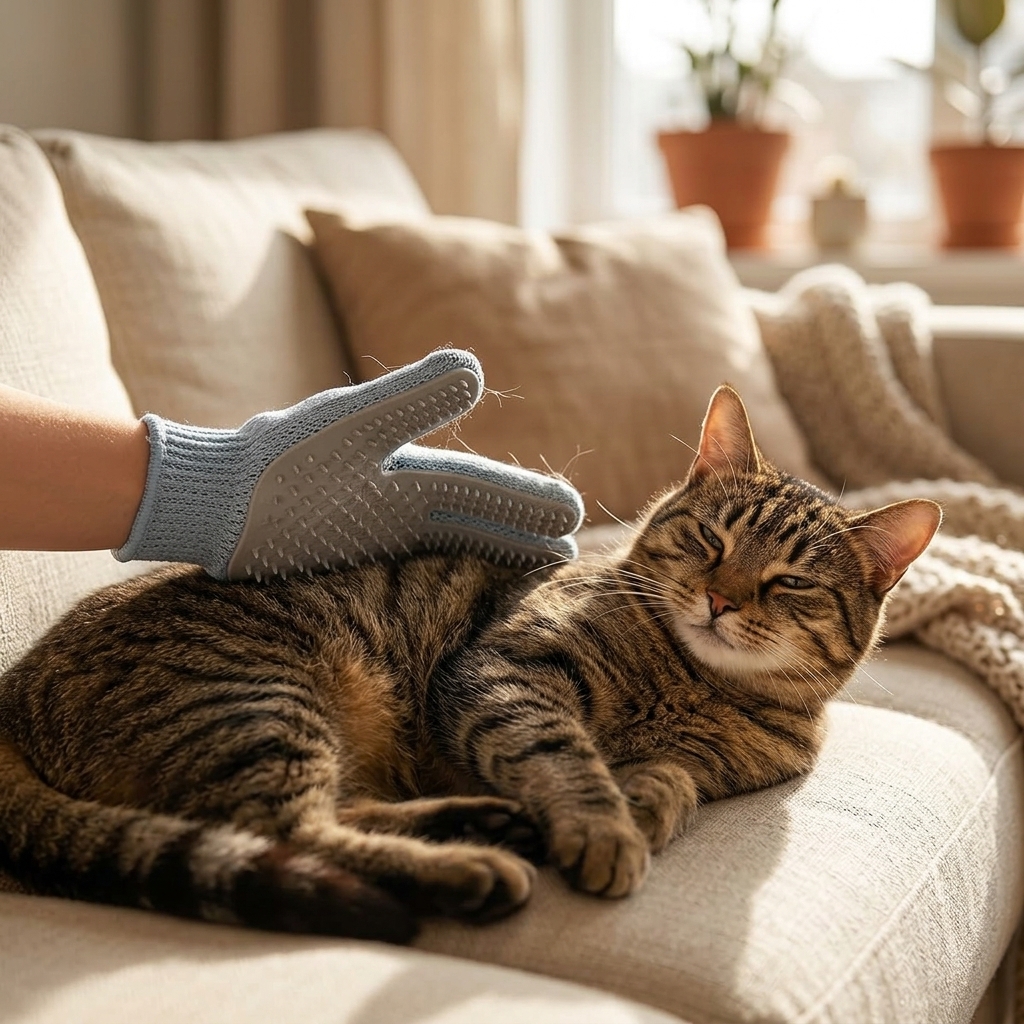
2-in-1 Deshedding Glove
The tolerance tool — reads as petting, not maintenance, so brush-averse cats actually sit for it. Our top Fit-Analysis pick for daily upkeep, and the only layer with no cadence limit.
Check price on Amazon Weekly layer
FURminator deShedding (Long Hair)
The undercoat extractor, and the most expensive thing here — usually in the $30–45 range depending on size. One or two passes a week removes what a week of glove sessions can't reach.
Check price on Amazon For double coats
Maxpower Planet Double-Sided Rake
Rounded pins rather than a cutting edge, so it lifts packed undercoat with less skin risk. The 9-tooth side breaks up dense fur, the 17-tooth side thins it out. A fraction of the FURminator's price, and the right first tool on a heavy double coat.
Check price on Amazon Finishing layer
Hertzko Self-Cleaning Slicker
Lifts surface fur and prevents tangles between deep passes. The retractable pins release the caught fur with a button, which is genuinely convenient mid-session.
Check price on Amazon Coat support
Nordic Naturals Omega-3 Cat
Works on the cause, not the symptom — omega-3s support skin and coat health so there's less loose fur to chase in the first place.
Check price on AmazonDeshedding tools: FAQ
How often should I use a deshedding tool on my cat?
Once or twice a week for most cats, 10 to 20 minutes a session — that is FURminator's own published guidance and it lines up with what groomers recommend. You can go more often during spring and fall blowouts. Daily upkeep belongs to gentler tools like a grooming glove, which has no real cadence limit.
Does the FURminator damage a cat's coat?
Used correctly — once or twice a week, light pressure, with the direction of growth, moving around rather than dwelling — no. Used daily on the same spots with pressure, groomers report shredded hair, damaged cuticles and skin irritation. It is an extraction tool, not an everyday brush, and the cadence is the whole safety margin.
What's the best deshedding tool for short-haired cats?
Short coats that shed heavily still have undercoat, and a short-hair deshedding edge reaches it. For light shedders, a grooming glove or rubber brush alone is usually enough — buying the aggressive tool for a mild problem is the most common overspend in this category.
Is an undercoat rake better than a FURminator?
On a thick double coat, usually yes, and it should come first. Rounded pins lift packed undercoat without a cutting edge, so there is less to get wrong. On a short single coat a rake mostly passes through without catching anything, and the deshedding edge is the better tool. It is a coat question, not a quality ranking.
Can I use a deshedding tool on a matted cat?
No. The edge or the pins snag on the mat and pull the skin underneath, which hurts and teaches your cat to avoid grooming entirely. Work mats apart with a wide-tooth dematting comb from the outside in, or take a badly matted cat to a groomer. Deshedding comes after the coat is tangle-free.
Why is my cat shedding so much?
Season, indoor heating, diet, stress, or health. Spring and fall spikes are normal. A sudden year-round increase, bald patches, or skin changes are vet territory. Our shedding guide covers the fixes in order of impact.
Related reading
Start with the system in how to reduce cat shedding. For the everyday layer, our best cat grooming gloves picks cover the tool most cats tolerate best — and if you're skeptical they do anything, do cat grooming gloves actually work is the honest answer. Long-haired cat? The long-hair brush guide covers combs, slickers and mats, and best cat undercoat brushes & rakes goes deeper on the rake side. The full 12-tool field we scored lives in our grooming tool roundup.
Full Scorecard: Grooming Glove

The 2-in-1 Deshedding Glove
Your cat thinks you're petting them. You're actually grooming.
Check price on Amazon