How to Groom a Cat That Hates Being Brushed (7 Tested Tactics)
Most cats do not hate grooming — they hate how we do it. Here are the seven tactics that got even our most brush-averse testers to sit still.
Some links below are affiliate links. If you buy through them, MeowTested may earn a small commission at no extra cost to you, including as an Amazon Associate, where we earn from qualifying purchases, and as a partner of Whisker, the maker of Litter-Robot. We only recommend products that pass our Fit Analysis — and we publish the ones that don't.
Start here: make it feel like petting
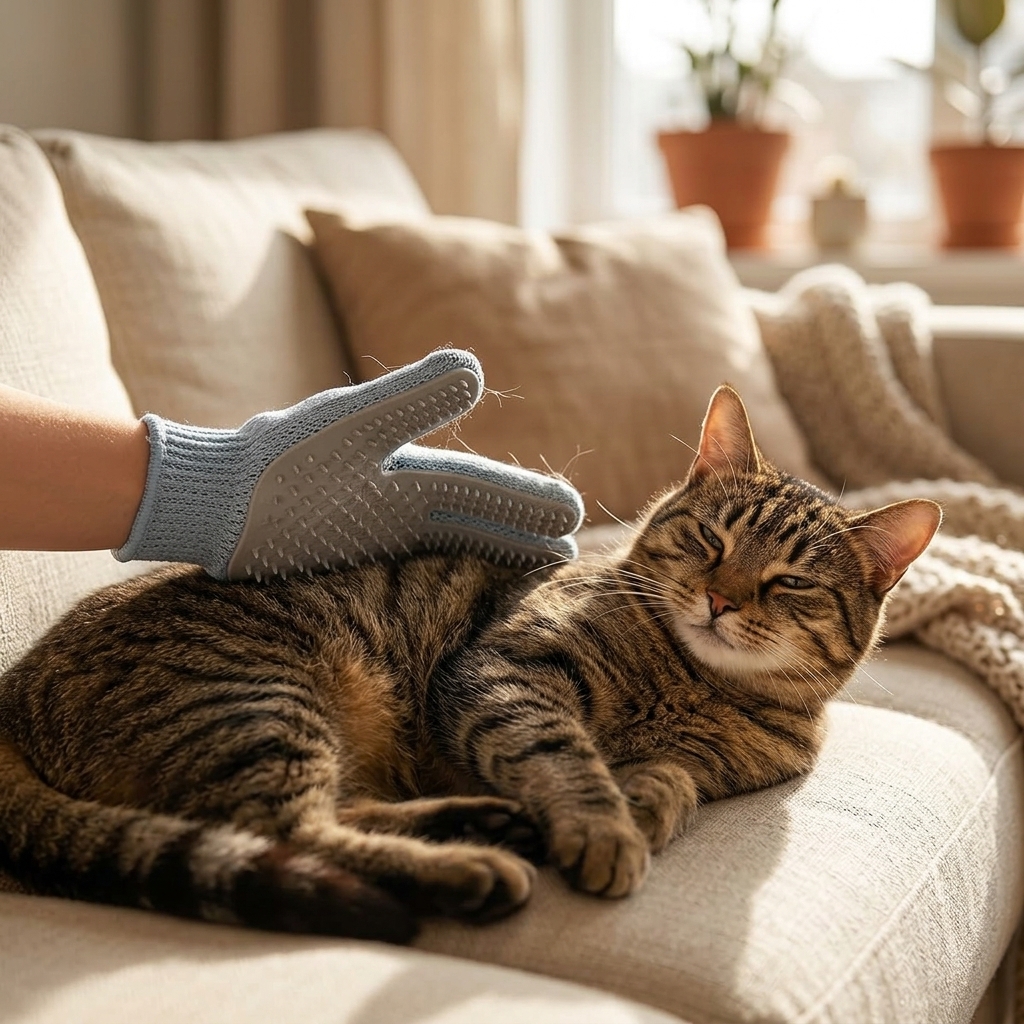
The fastest fix for a cat that hates being brushed is to stop using a brush. Cats reject brushes because the sensation and the sound are unfamiliar and the motion is unpredictable. A silicone grooming glove feels like a hand, so most cats lean into it. That single switch solves the problem for the majority of cats we have tested.
Gentle grooming tools, compared
| Tool | Why it helps | Best for | Where |
|---|---|---|---|
| 2-in-1 Deshedding Glove | Feels like petting, not brushing | Brush-averse cats, daily use | Amazon |
| KONG ZoomGroom | Soft rubber, gentle massage | Short hair, nervous cats | Amazon |
| FURminator deShedding (long hair) | Removes deep undercoat | Weekly deep groom, long coats | Amazon |
7 tactics that actually work
- Switch to a glove — start grooming during an existing petting session so your cat never registers a "grooming event"
- Keep sessions under two minutes and stop before your cat wants you to
- Groom in your cat’s favorite calm spot, not on a table
- Go with the fur, never against it, and avoid the belly and tail base at first
- Pair it with treats or a meal so grooming predicts something good
- Watch for the early "I’m done" signals (tail flick, skin twitch, ears back) and stop
- Build up slowly over days — frequency and patience beat one long battle
Why the glove works when brushes fail
In our testing, 11 of 12 tools got the cold shoulder and the glove won — not because it removed the most fur on paper, but because cats accepted it. Grooming a cat that tolerates the tool for two minutes beats owning the "best" brush that lives in a drawer because your cat runs from it. See the full comparison in our best cat grooming tools guide.
Once your cat tolerates grooming, here is how to actually reduce the shedding that ends up on your couch.
"You are not trying to win a grooming session. You are trying to make your cat forget it happened."
What we use
The glove we recommend, plus a deshedding tool for the weekly deep groom on long coats.
2-in-1 Deshedding Glove
Feels like petting. The tool that finally works on brush-averse cats.
Check price on Amazon Gentle backup
KONG ZoomGroom
Soft rubber brush with a massage feel — good for nervous, short-haired cats.
Check price on Amazon Weekly deep pass
FURminator deShedding (Long Hair)
For heavy shedders, a once-a-week deshedding pass after the glove.
Check price on AmazonFAQ
How do I groom a cat that bites or scratches when brushed?
Switch to a glove, keep sessions very short, and pair grooming with treats. Stop at the first warning sign rather than pushing through — forcing it teaches your cat to fear grooming.
How do I deal with mats on a cat that hates grooming?
Never pull mats — work them gently with fingers or a mat splitter, a little at a time. Severe or close-to-skin mats should be handled by a vet or groomer to avoid cutting the skin.
How often should I groom a brush-averse cat?
Short, frequent sessions (a couple of minutes most days) work far better than occasional long ones. Frequency builds tolerance.
Full Scorecard: Grooming Glove

The 2-in-1 Deshedding Glove
Your cat thinks you're petting them. You're actually grooming.
Check price on Amazon